How to photograph Kaftan Suit
Draped garments · 10 reference shots in our library. Everything below applies to kaftan suit specifically — the general rules are in the main guide.
Lay it out like this
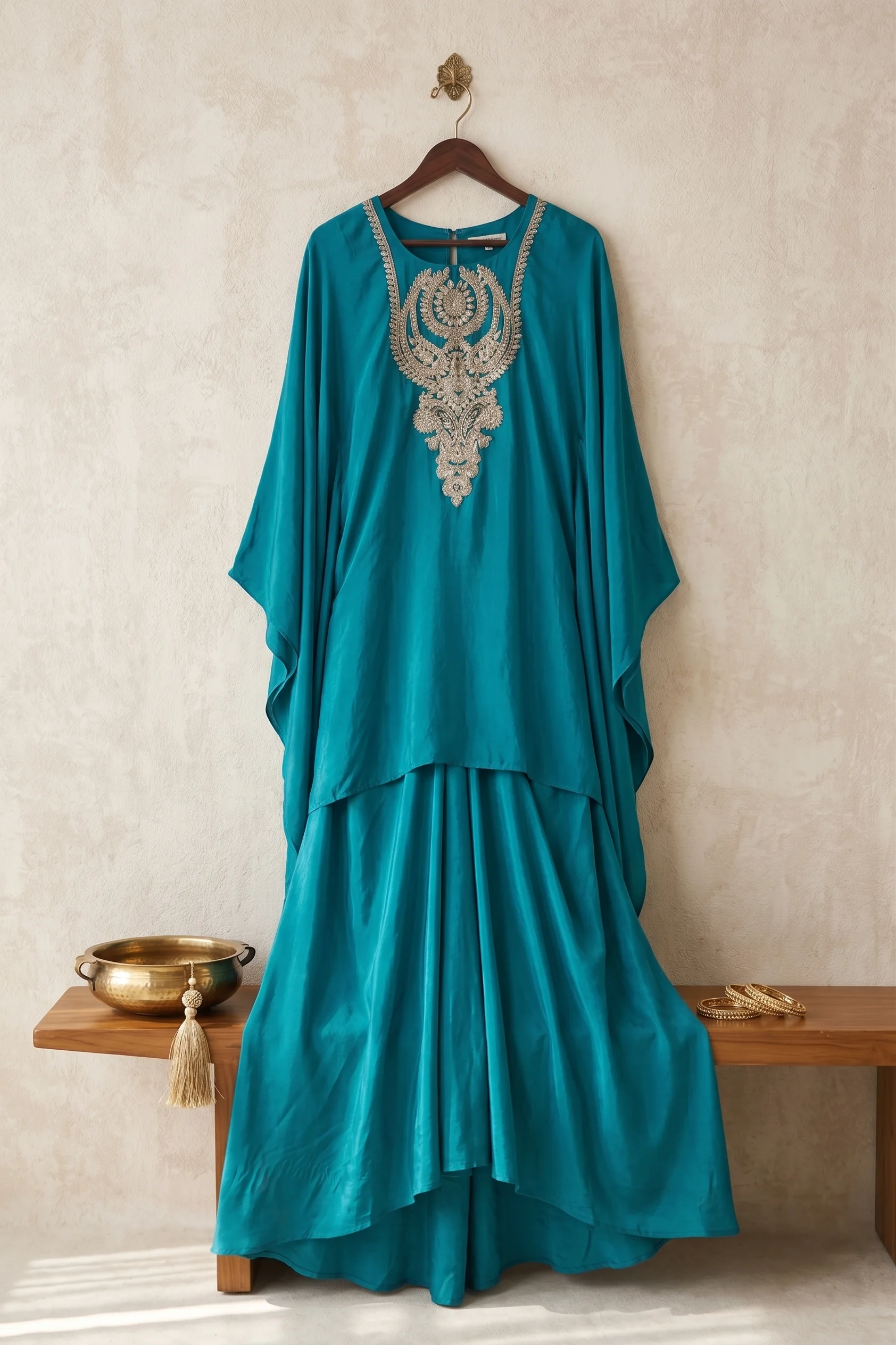
Hang it so the fall is visible rather than folding it flat. A saree, dupatta or cape is read by its drape, and a flat rectangle throws that information away.
What the Studio needs to see
- The full length in one frame, including the border or edge finish
- The pallu, hem or trailing edge clearly separated from the body of the cloth
- Any zari, embroidery or block-print at a size where the motif is legible
A close frame of the border pays for itself here — it is the detail buyers zoom into.
Reference shots for this garment
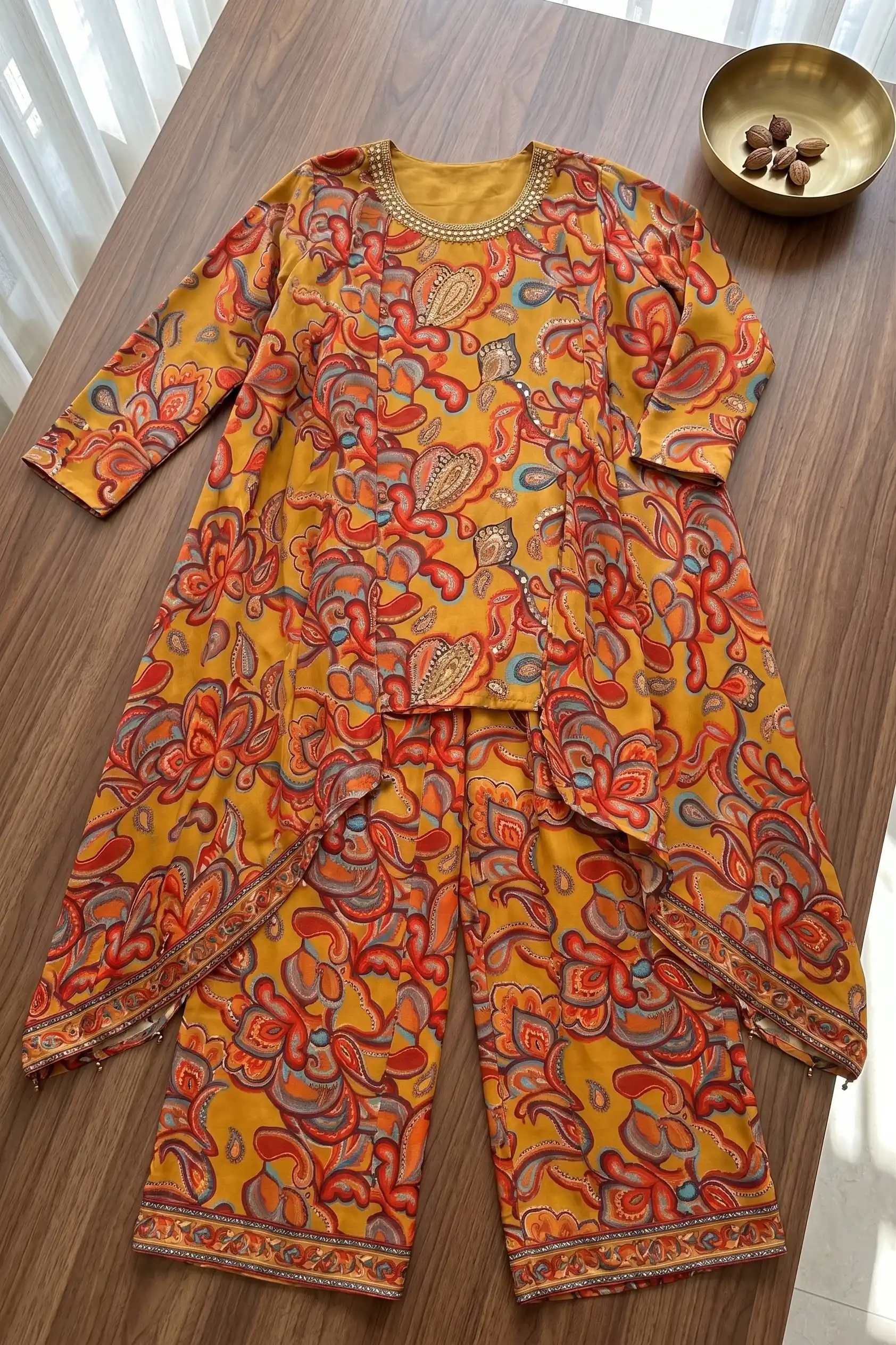
Real kaftan suit uploads from our own library. This is the framing, background and distance to aim for.
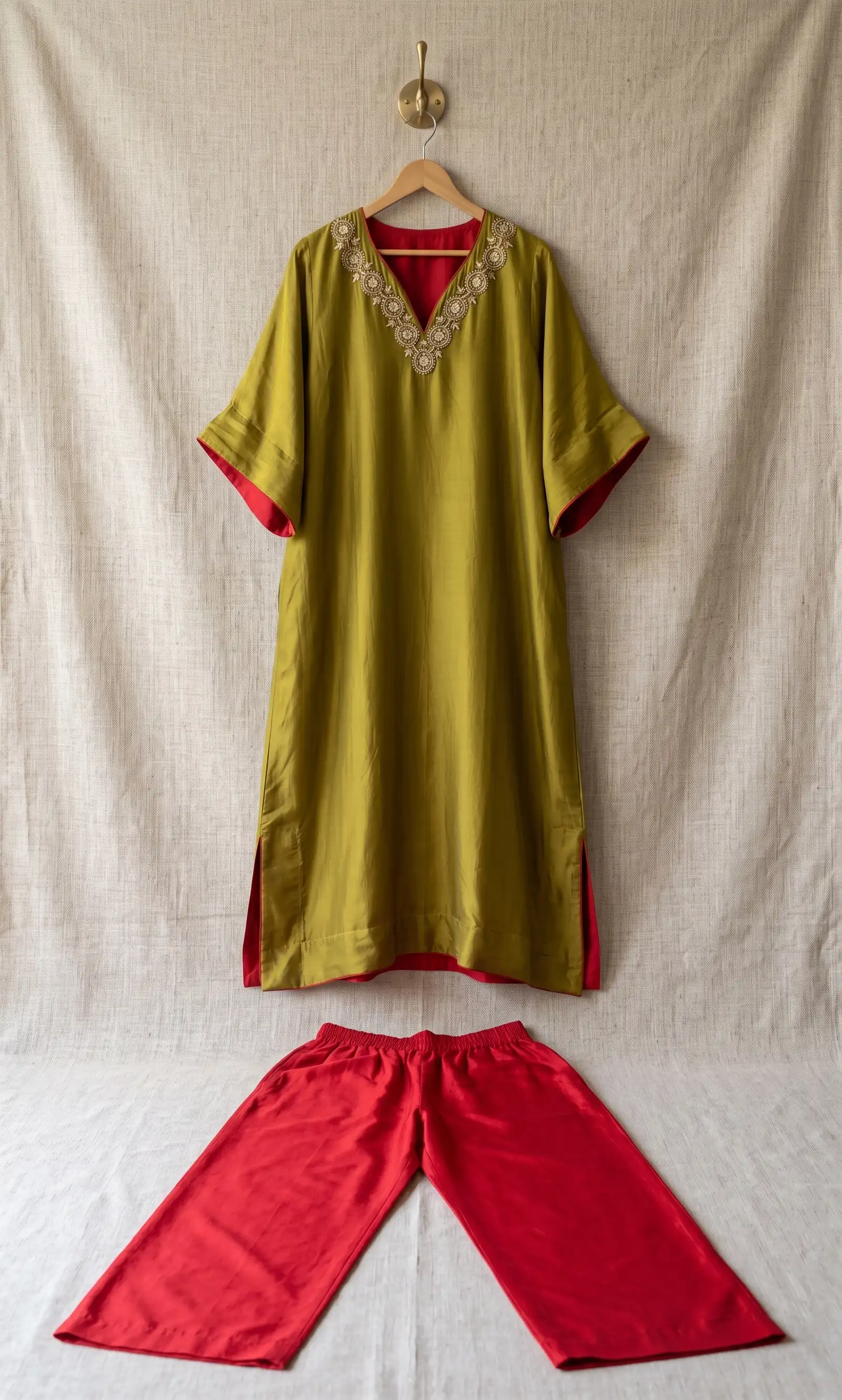
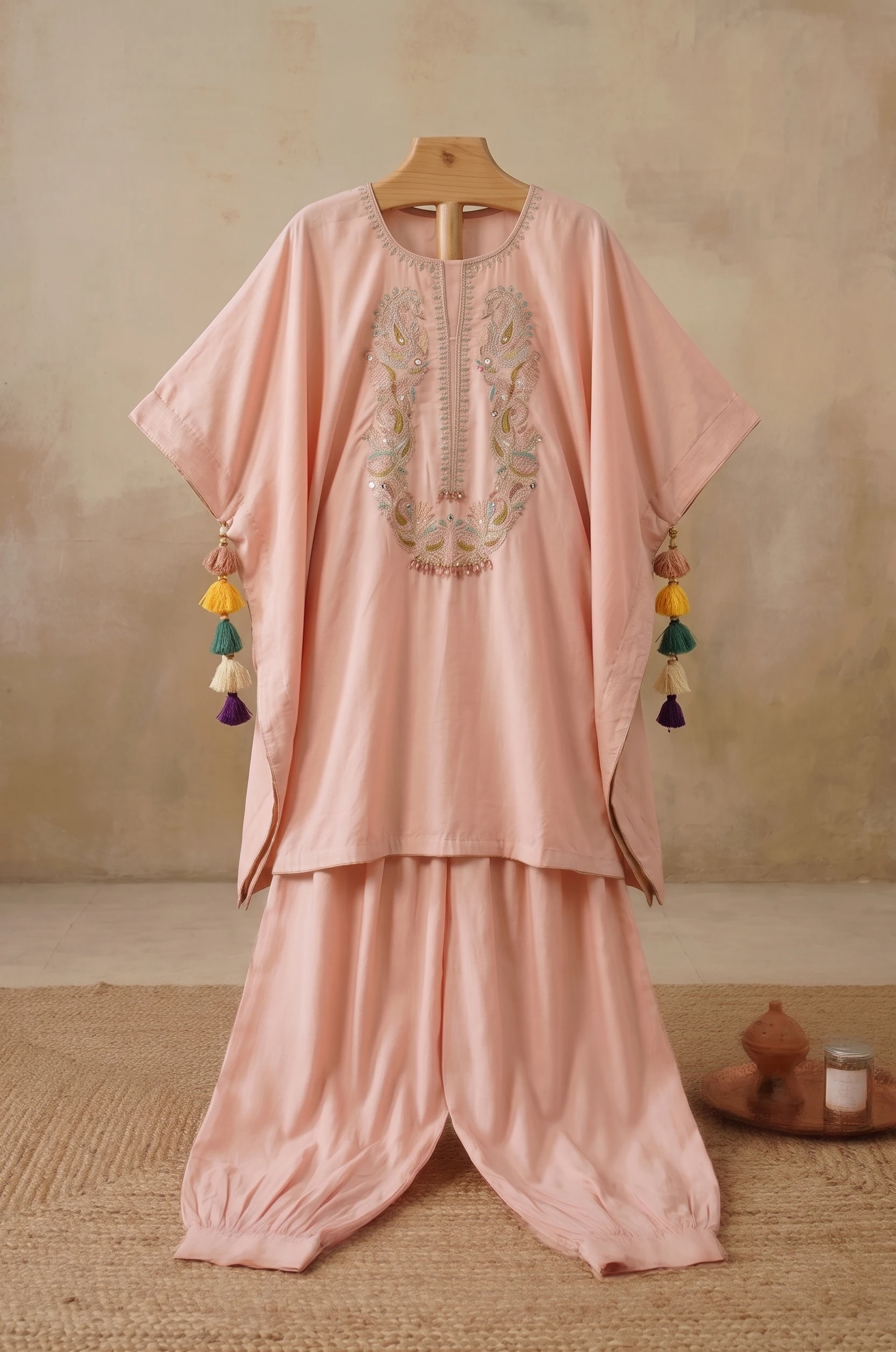
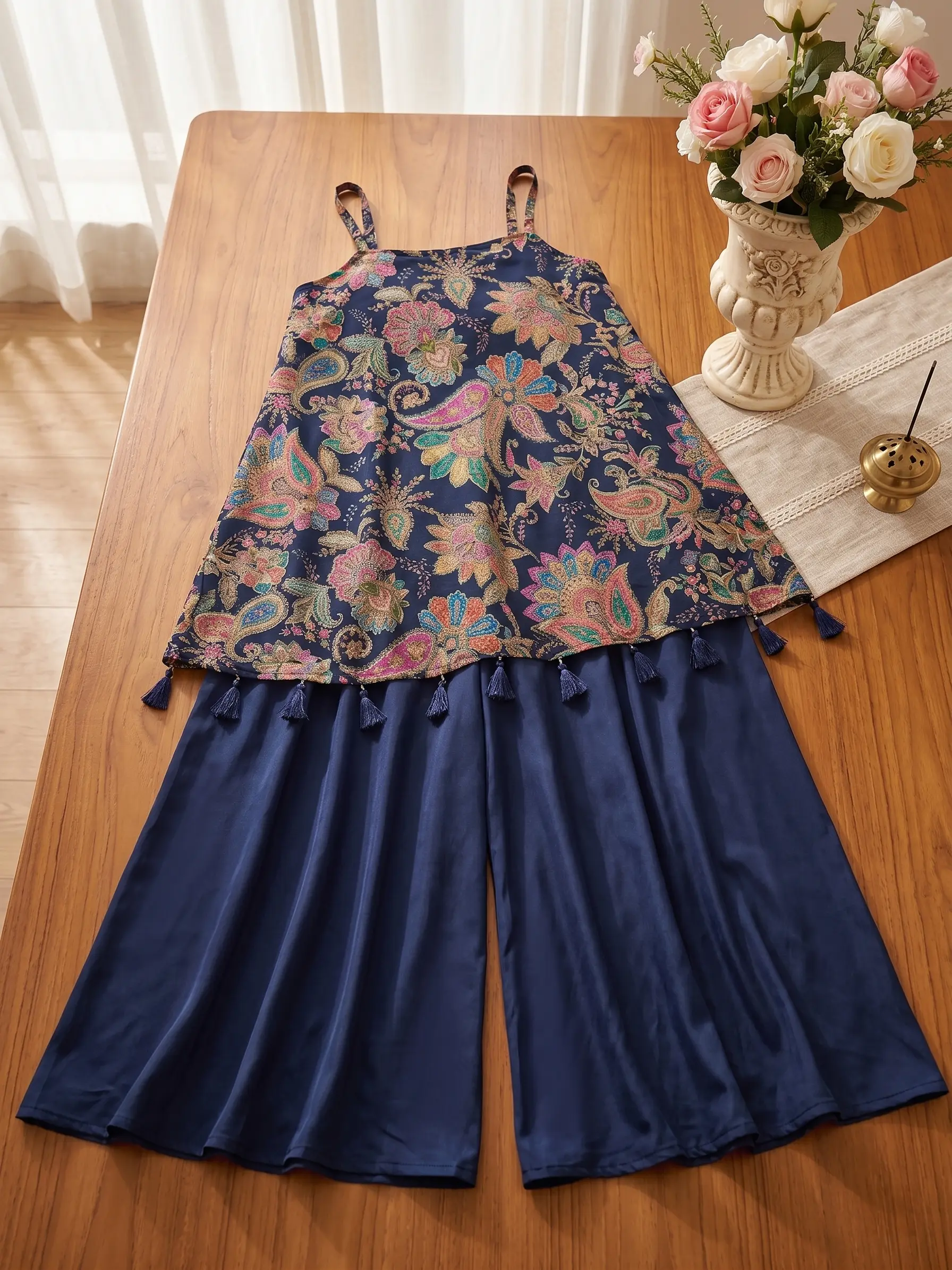
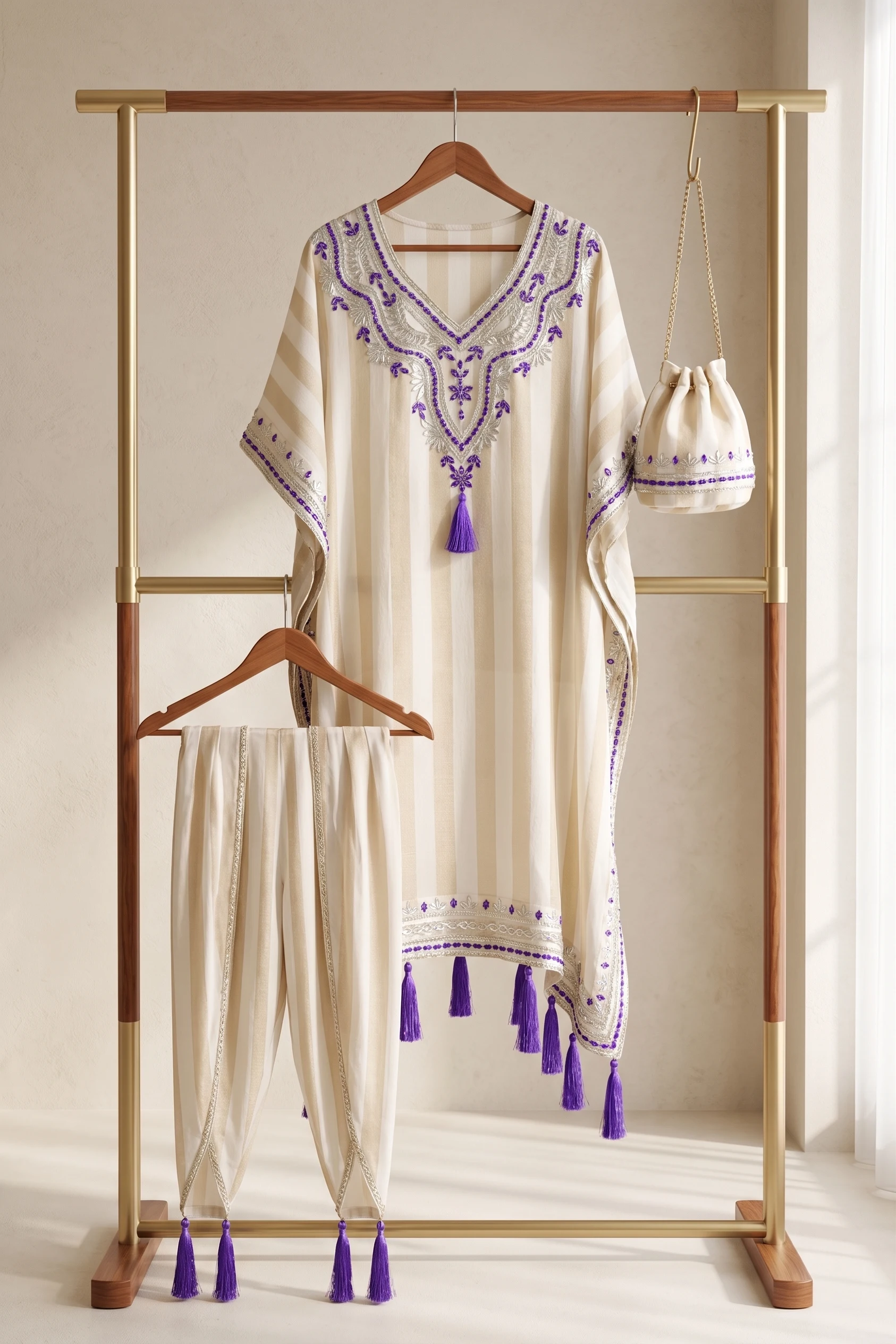
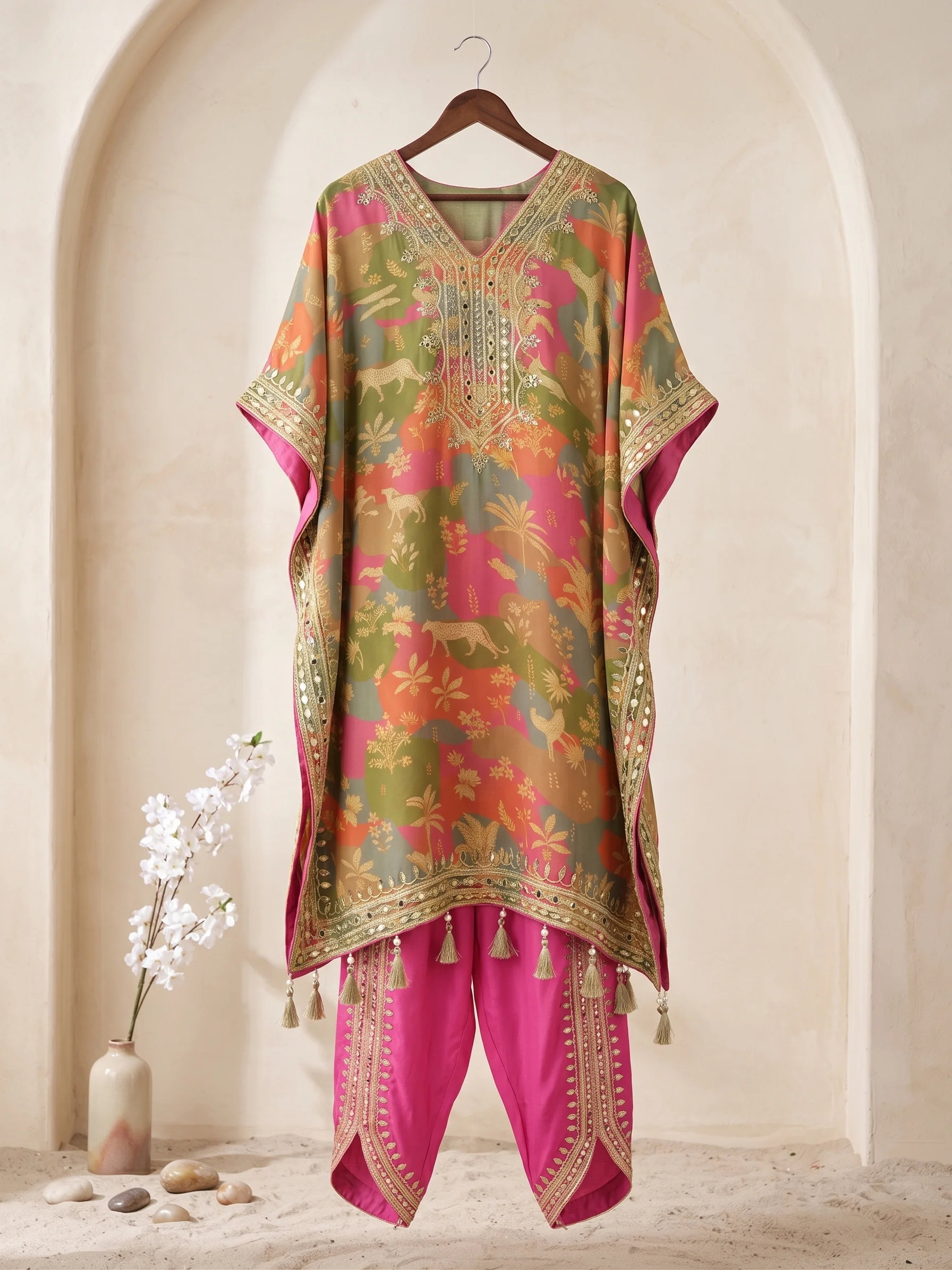
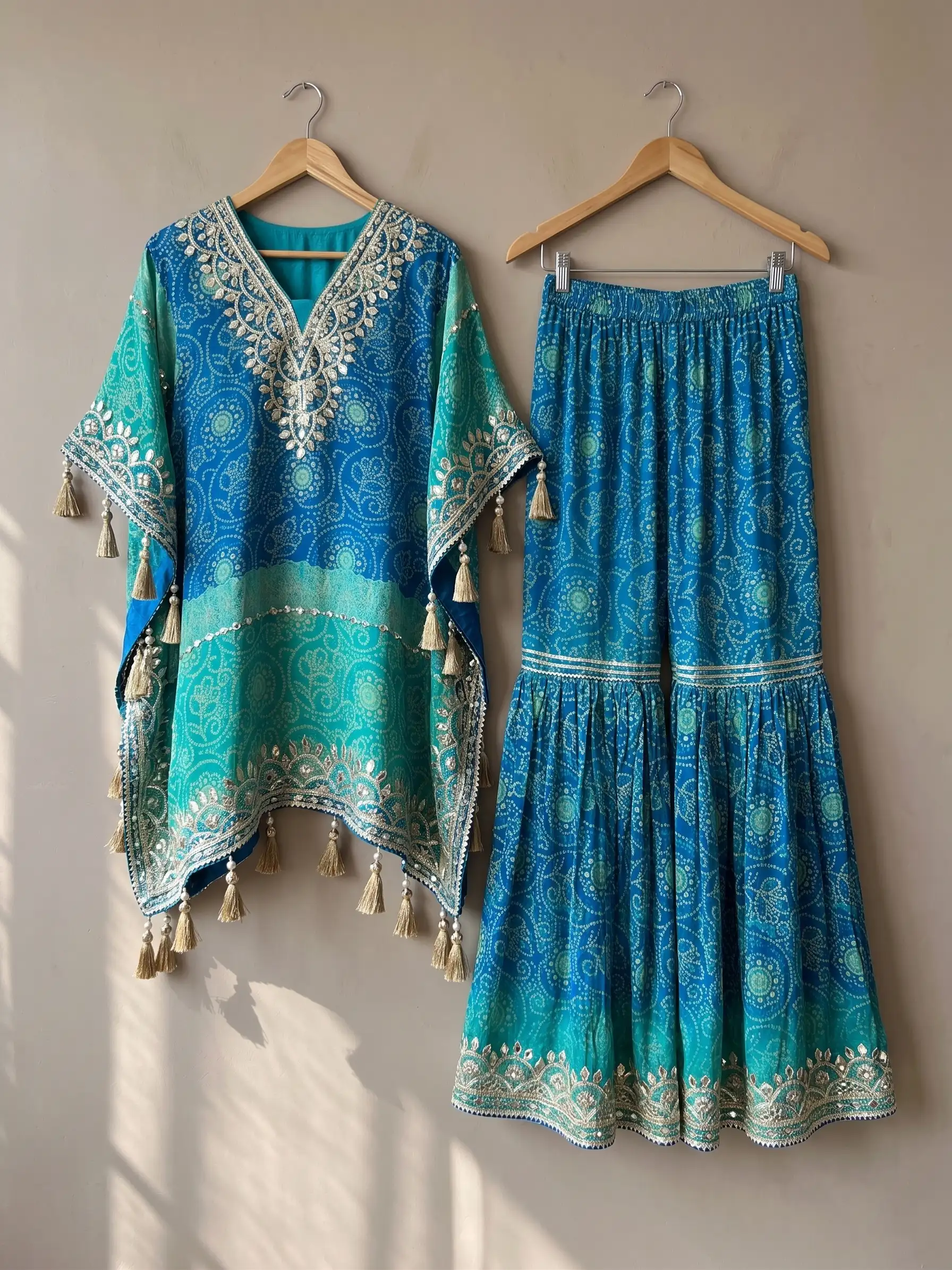
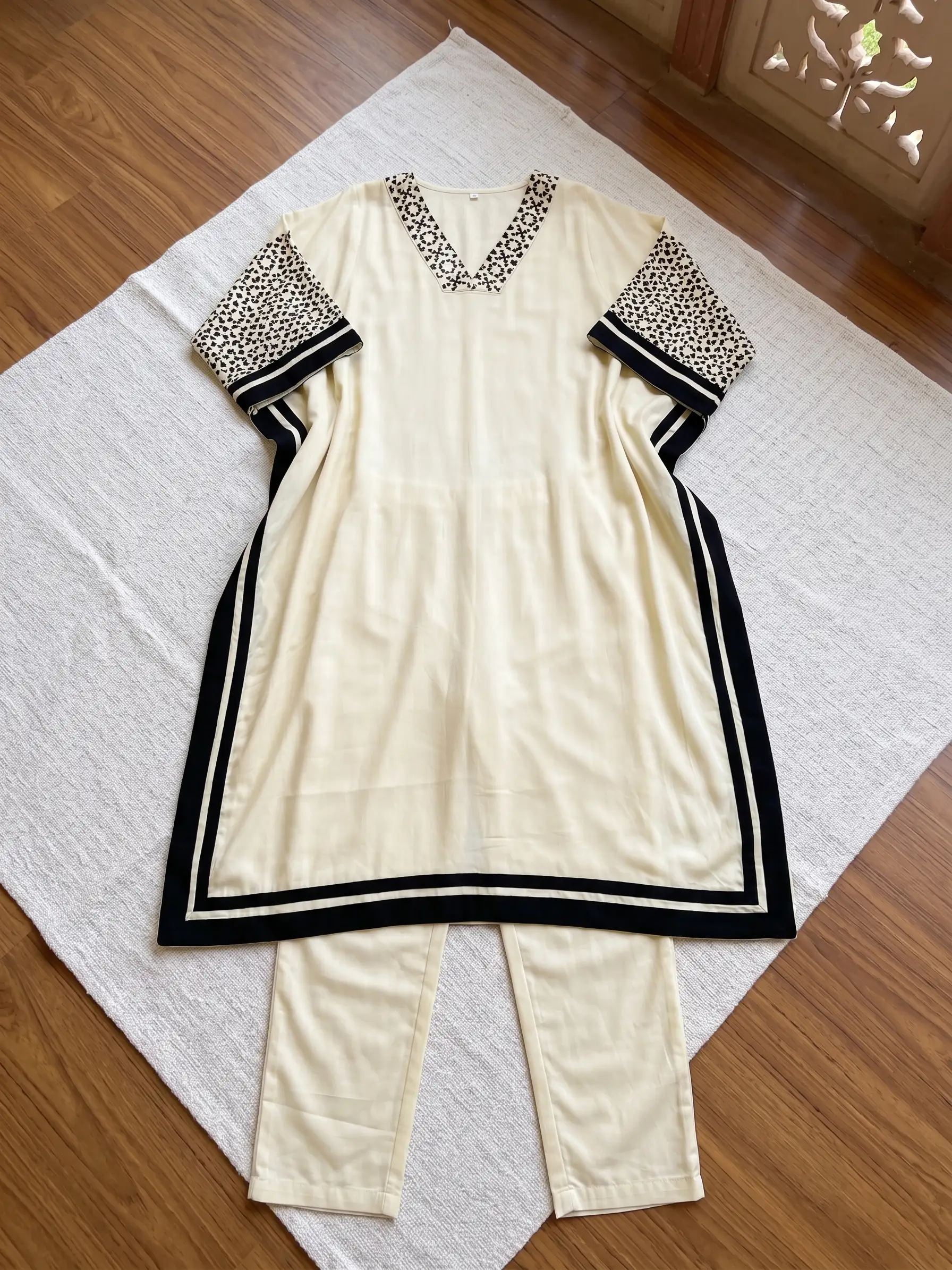
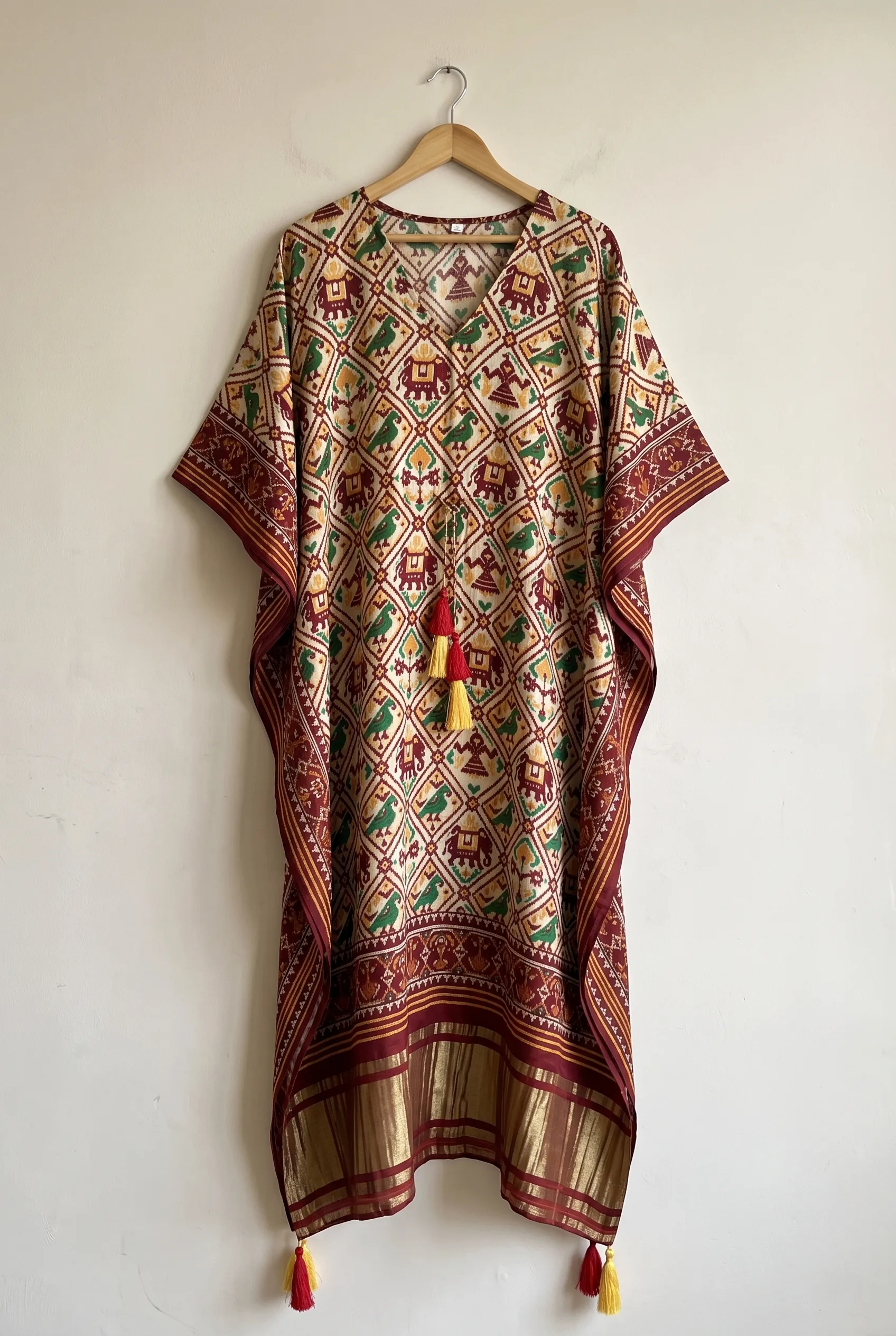
The rules that never change
- One garment per upload. Two garments in a frame produce a shot with two garments on one model.
- Plain, even background — a white sheet or a clean floor beats a patterned bed.
- Daylight, indirect. Direct sun blows out the highlights; a bulb overhead casts the fold shadows the model will inherit.
- Fill the frame. A garment occupying a fifth of the photo gives a fifth of the detail to work from.
- Shoot square-on. A photo taken at an angle bends the garment, and the output bends with it.
- JPG, PNG or WEBP, up to 20MB.
Shot the same way
Upload your kaftan suit
Two free images on signup — judge the output against the shots above.