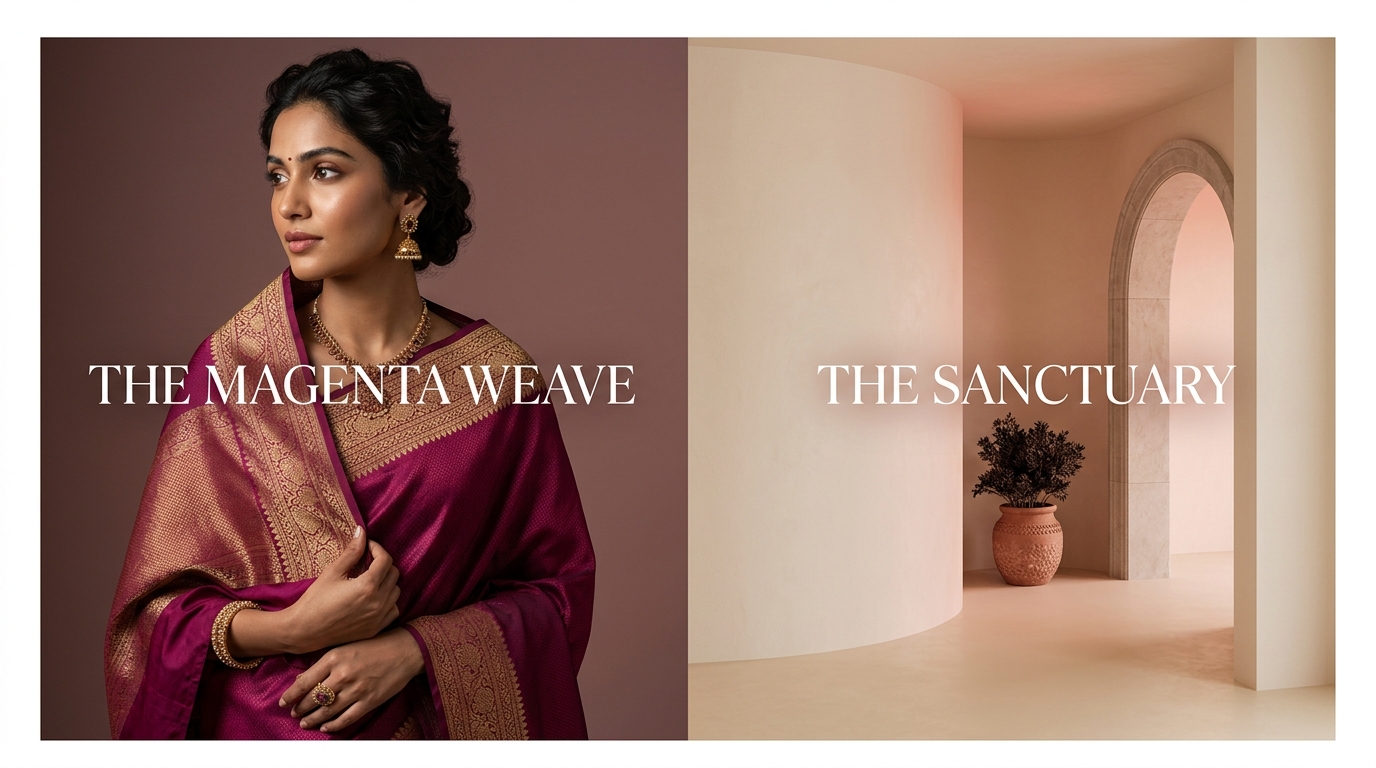
For dupatta photography with AI, hang the piece so the fall is visible, fit the full length and border in one frame, and add a straight-on close-up of embroidery or edge. Sheer fabrics are the hardest to reproduce, so compare every result with the real piece before you list it.
Dupattas, stoles and scarves are the accessories sellers treat as an afterthought, then wonder why they do not sell. The reason is simple: lying flat on a bed, a dupatta is a rectangle. Customers are buying how it hangs from a shoulder, how the border catches the light and how sheer the fabric is. Our upload guide for draped garments puts it directly: a flat rectangle throws that information away.
Dupatta photography: how to shoot the piece
- Hang it or drape it on a rail
Use a rail or a clean wall hook so the fall is visible. Avoid folding it as it came out of the packet; the generator can only place what it can see, and a folded end comes back as a flat panel.
- Get the full length in one frame
Include the border or edge finish and the trailing end. Step back if you must, then crop tight afterwards. Fill the frame so detail is legible.
- Separate the border from the body
Make sure the border, pallu-style end or tassels are clearly separated from the body of the cloth so the studio can tell which is which.
- Add a straight-on close-up of border or embroidery
A phone photo held square to the fabric. This is the frame that carries zari, thread work, mirror work or a woven border.
- Check the colour in daylight
Indirect daylight, no filters. A colour cast in your photo shows up in the output.
Dupatta product photography, fabric by fabric
| Fabric | What to do | Watch for |
|---|---|---|
| Chiffon, georgette, net (sheer) | Hang it against a plain, contrasting background so the transparency and edges read | Sheer layers are the hardest to reproduce; compare every result |
| Silk, banarasi, tissue | Even light, add a close-up of the weave | Highlights from direct sun blow out the sheen |
| Cotton, mulmul, khadi | Plain background, show the hand-feel texture in a close-up | Wrinkles are read as part of the fabric |
| Wool, pashmina, stole | Hang it so it falls naturally, show the edge or fringe | Heavy fabrics fall differently from silk; judge the result against the real drape |
| Printed or block-printed | Show the repeat clearly and fill the frame | Placement prints and all-over prints need different photos, as with sarees |
How the studios handle a dupatta
- A dupatta sold with a suit or lehenga belongs in the set photo. Our upload guidance for two-piece sets says to arrange the pieces as worn, dupatta beside them, because a missing piece is simply absent from the result.
- Drape Studio's upload includes a Close-Up / Embroidery Detail slot for zari, embroidery or border close-ups, which is where a dupatta's border photo belongs.
- Pose Changer can generate front, side, walking and close-up angles from one upload, which helps for accessories where movement sells the piece.
If your dupatta comes with a saree or lehenga, our posts on photographing each saree type for AI and on setting the pallu line show how Drape Studio treats a long piece of cloth with a decorated end.
Honest limits
- A hung, full-length photo with a border close-up gives the studio what it needs.
- Several angles from one upload through Pose Changer.
- Set photos that keep the dupatta with the suit or lehenga it is sold with.
- Very sheer fabrics and fine net can lose transparency or edge definition.
- Fine borders, tassels and mirror work may come back simplified; compare them against your close-up.
- Draping style can differ from what you intended.
- A scarf or stole alone is a small part of an on-model shot. Consider a product-only photo as the first image on the listing.
A 1K image you generate yourself costs about ₹20–₹25 depending on your pack, and a Create order is roughly ₹8–₹10 per 1K shot. New accounts get up to 4 free 2K images on a Create order, enough to test a dupatta before you decide.
How should I photograph a dupatta for AI?
Hang it so the fall is visible, get the full length in one frame including the border, and add a straight-on close-up of border or embroidery.
Can I upload a dupatta with its suit or lehenga?
Yes, and you should if you sell them together. Arrange the pieces as worn in one frame; a missing piece is simply absent from the result.
Will a sheer dupatta come out accurately?
Sheer fabrics are among the hardest to reproduce. Compare every result with the real piece and re-shoot if transparency or edges are off.
Does it work for scarves and stoles?
The same photography rules apply. A scarf alone is a small part of an on-model shot, so also keep a clear product photo for the first listing image.
How do I show the fabric fall of a dupatta in photos?
Hang it from a rail or wall hook so it falls naturally, and photograph the full length in one frame rather than folded flat.
Do I need a close-up of the border?
It is worth it. Borders, tassels and embroidery are what buyers zoom into, and a straight-on close-up gives the studio more detail than a full-length photo.