To reduce clothing returns, give buyers what they need to choose correctly before they order: a size chart in centimetres, honest fit notes, the model's height and the size worn, and photos that show true colour, length, back and fabric. Then read your own return reasons and fix the listing that causes them.
Returns cost money whichever way they happen. Our guide on return to origin covers the cost lines and why accurate catalogue photos matter. This guide is the practical companion: what to put on the listing so a buyer picks the right size and knows what they will receive.
Start with your own return reasons
Before you change anything, open the return report in each seller panel and sort returns by the reason the buyer gave. The reasons usually fall into a few groups, and each group points to a different fix.
| Return reason | What it usually points to | What to change on the listing |
|---|---|---|
| Size too small or too large | Unclear sizing | Measured size chart in cm, fit note, model height and size worn |
| Colour different from the photo | Photo colour does not match the cloth | Check shots against the real garment in daylight; add a fabric close-up |
| Length or fit not as expected | Length or silhouette not shown | Full-length frame with the hem in view; state the length in cm |
| Fabric not as expected | Material not visible | Close-up of the weave; name the fabric and weight in the text |
| Print or work looks different | Detail not shown or not accurate | Detail photos from your own close-up; check generated shots at full size |
Size charts that reduce clothing returns
- Give measurements in centimetres, with inches beside them if your buyers use both.
- Say whether the figures are body measurements or garment measurements. They are not the same, and mixing them up is a common source of wrong sizes.
- Cover the measurements that decide fit for that garment: chest or bust, waist, hip, shoulder and length for a kurti; blouse and skirt measurements for a lehenga.
- Keep one chart per product style, not one generic chart for everything you sell.
- Make the chart an image in the gallery as well as text, so it is seen where buyers look. Snapdeal's own document recommends a size chart in centimetres as the sixth image for fashion categories.
- Update the chart when a factory changes a pattern. A chart that does not match the parcel is worse than none.
Fit notes buyers can use
A chart tells a buyer the numbers. A fit note tells them how those numbers feel. Write one or two lines near the sizes:
- Cut: straight, A-line, flared, relaxed, fitted.
- Stretch: stretchy, a little give, or none, which matters for a stitched blouse.
- Length: the length in cm, and where it ends on the model.
- Advice: if the buyer is between sizes, which to choose, and why.
- The model's height and the size she is wearing, so the buyer can compare herself to someone.
Photos that set honest expectations
| Photo | What it prevents |
|---|---|
| Full-length front with the hem in view | Surprise about length and silhouette |
| Back view | Surprise about the back neck, closure or back design |
| Three-quarter or side | Surprise about fall, flare and sleeve shape |
| Fabric close-up from your own photo | Surprise about weave, texture and print scale |
| Detail of the work | Surprise about embroidery, zari or print |
| Size chart image | Wrong-size orders |
| Set contents in one frame | Disappointment that a piece is not included |
- Check every shot against the real garment in daylight before you publish. Colour that differs from the parcel is a mismatch you can catch before the buyer does.
- Review each generated shot at full size for hem, print and colour, and redo any that do not match. A model photo must show the real product, with the same colour, print and details.
- Use your own close-up of the cloth as the fabric image. It is the most honest material shot.
- Do not retouch the garment itself: no colour boosting and no smoothing away of details the parcel will have.
Sarees and unstitched material
Sarees and dress material have no size chart, so the information a buyer needs is different. State the length and width of the saree and blouse piece, say whether the blouse is stitched or unstitched, and show the pallu, border and the colour in daylight. For dress material, state the length of each piece in metres. The photos carry most of the load here: if the pallu and the border in the photo are not what arrives, the parcel comes back.
Where Vastralook helps, and where it does not
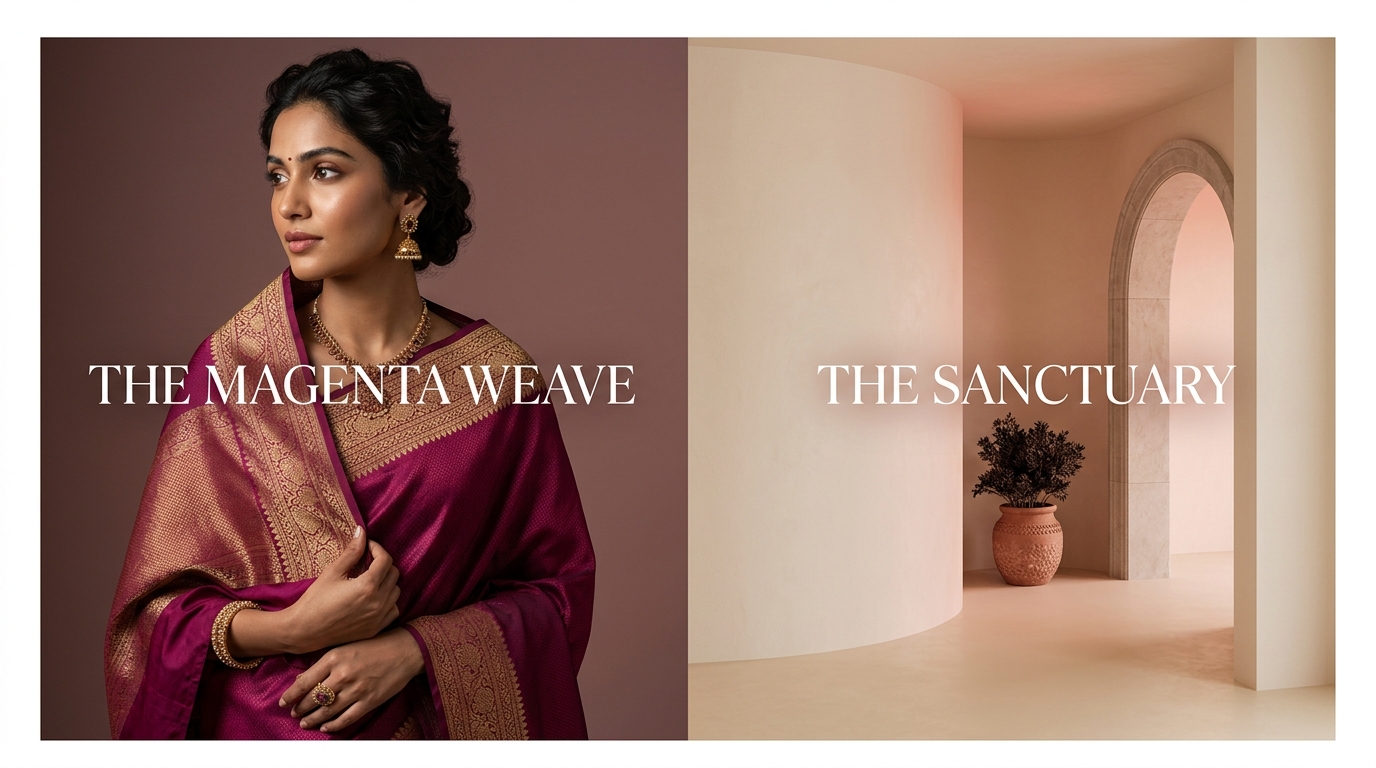
Vastralook makes the on-model photos: a front, a back, a closer crop and a movement frame from your flat-lay. About ₹40–₹50 per 2K image if you generate them yourself, or about ₹10–₹13 per 2K shot on a Create order, ready in about 3–4 minutes. It does not make your size chart or know your measurements, so measure the garment yourself and keep the chart as a separate image. It also cannot promise that returns will fall; the photo is one input among sizing, price, delivery and the product itself.
- Return reasons pulled from each seller panel and grouped.
- A size chart in centimetres, marked body or garment measurements.
- A fit note, the model's height and the size she wears.
- A full-length frame with the hem in view.
- A back view and a fabric close-up from your own photo.
- Every shot checked against the real garment in daylight.
- The size chart added as a gallery image, not only as text.
How do I reduce clothing returns on Myntra, Meesho or Flipkart?
Start with your own return reasons in the seller panel, then fix the listing: a size chart in centimetres, a fit note, the model's height, and photos that show true colour, length, back and fabric.
What should a size chart include?
Measurements in centimetres for the dimensions that decide fit, a clear label for body or garment measurements, and a chart specific to that product style.
Do size charts reduce returns?
They remove one cause: the buyer picking the wrong size for lack of information. We do not quote a figure, so test it by comparing your size-related return reasons before and after you add a chart.
Do better product photos reduce returns?
Photos that show the real colour, length and fabric remove surprise at the doorstep. Photos that look better than the parcel add to returns. We make no claim about a percentage.
Should I show the model's height and size worn?
Yes. It gives the buyer someone to compare herself to, and it costs one line of text.
Do AI model photos increase returns?
Only if they do not match the product. Check each generated shot against the real garment for colour, print and fit before you publish, and redo any that differ.