A Surat saree wholesale catalogue works when a buyer can open it, find a design by number, see every colourway and reply with an order. That depends as much on how you organise the catalogue as on the photos, so this guide covers the structure first and the images second.
Our earlier posts cover how a mill can shoot without a studio and how B2B line sheets replace physical sampling. This one is about the part those leave out: how the catalogue itself is built, so that a retailer in another city can use it without phoning you for every detail.
What a wholesale buyer needs from a Surat saree catalogue
A retail customer buys one saree because it looks good. A wholesale buyer picks a set of designs they can resell, and has to place the order in a message. Everything in the catalogue should make that message easy to write.
- A design number on every picture, visible and in the same place each time.
- Every colourway of a design shown together, with the colour name or number beside it.
- A plain photo of the fabric itself, so the buyer can judge the print and weave.
- The practical details a reseller needs: fabric, length, blouse piece included or not, and your minimum order. State what you actually offer.
- Your contact details on the catalogue, so a forwarded copy still leads back to you.
Number your designs before you shoot
Pick a scheme and keep it for every catalogue. A short prefix for your firm or collection, then a running number, then a colour suffix works for most sellers. What matters is that the same design never carries two numbers in two different catalogues.
| Part | Example format | Why it helps |
|---|---|---|
| Collection prefix | Two or three letters for your label or season | Buyers can tell catalogues apart when they hold several |
| Design number | A running number that never repeats | One design, one number, across every catalogue you send |
| Colourway suffix | A letter or number per colour | A buyer can order a design in a colour without describing it |
| Set size note | Quantity per set or lot, if you sell in sets | Removes a back-and-forth before every order |
Group colourways, then group designs
The most common catalogue mistake is a long, flat list where the same print appears six times in six places. Build the catalogue in two layers instead: one page or section per design, with every colourway under it, and designs grouped by type, such as daily-wear, party-wear and bridal.
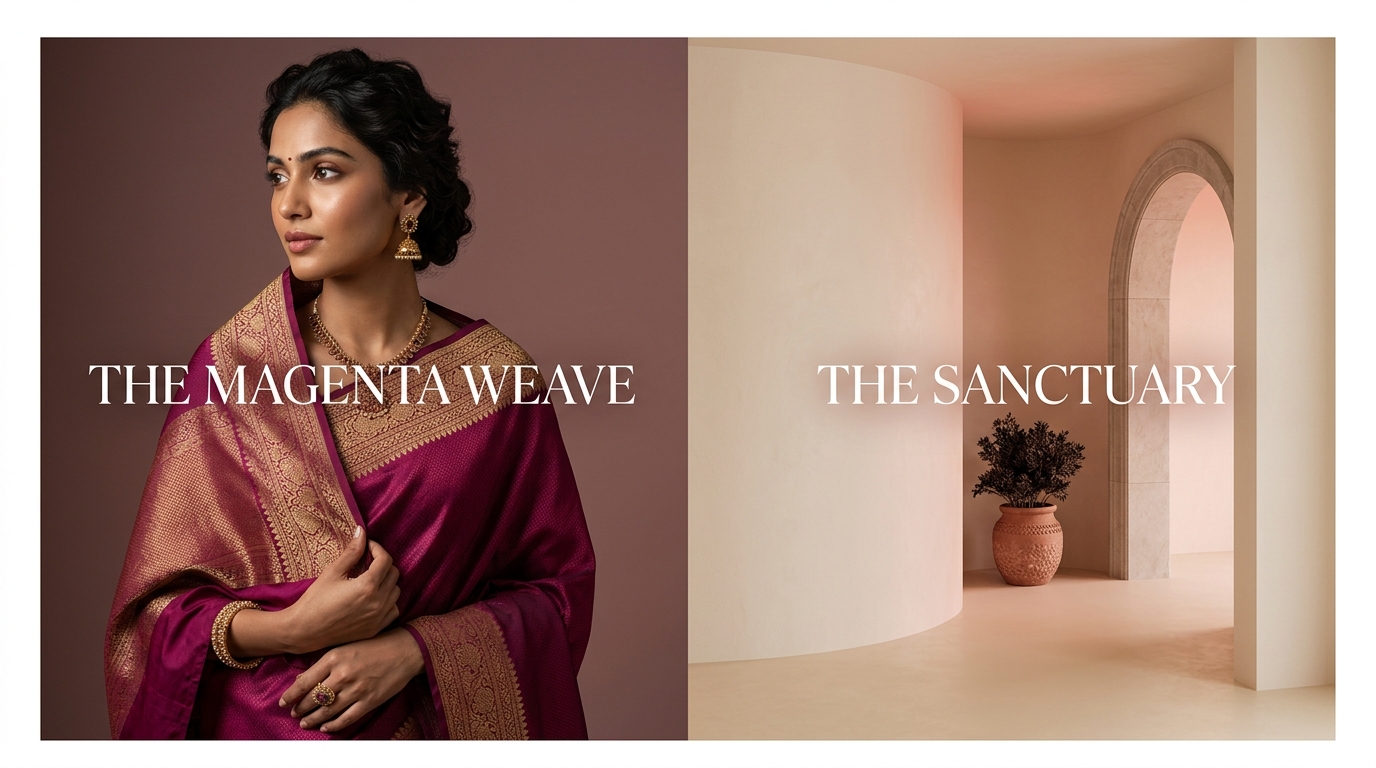
In Drape Studio you upload the saree fabric and mark the pallu line, so a new colourway is a new upload of the same design, not a new shoot. Keep the model and setting the same across colourways and the buyer's eye compares colour, not photography.
Two or three catalogues, not one for everybody
A retailer who sells bridal sarees has no use for a hundred daily-wear designs, and one who runs a budget shop does not want to scroll through zari-heavy pieces. Sort once and send the right version.
| Catalogue version | Who gets it | What goes in |
|---|---|---|
| Full range | Your regular, high-volume buyers | Every current design, grouped by type, with all colourways |
| Focused edit | A new buyer or a specialist shop | One category only, so the first impression is relevant |
| New arrivals | Everyone on your list, each cycle | Only designs added since the last send, with numbers continuing the same scheme |
Keep a master folder so catalogues are cheap to rebuild
Every catalogue you will ever send starts from the flat fabric photo of a design. Save it once, name it by design number and colour, and keep it. Next season's colourway, a re-numbered range or a focused edit is then a re-run from files you already have, not a new capture.
- 1. Name every fabric photo by design number and colour
Use the same scheme as the catalogue, so the file and the picture can never disagree.
- 2. Sort the folder by type
Daily-wear, party-wear, bridal, so a focused edit is a folder, not a search.
- 3. Generate in batches
Sarees go through Drape Studio. Dress material and other garments go through Catalogue Studio, where garments x models x styles is the number of shots in the batch.
- 4. Export in the sizes you send
Keep a lighter version for chat and a larger one for a PDF or print.
In Catalogue Studio a Standard order is made at 2K and takes about 3–4 minutes. At 10 credits a shot, that is roughly ₹10–₹13 depending on your pack. Open the Summary tab to see the full batch total before you pay, then set it against what you spend on sampling.
Sending it: WhatsApp, PDF or both
- WhatsApp: send a few designs per message, each as an image with the design number in the caption, so a reply can quote it.
- PDF: one page per design with every colourway, for buyers who like to scroll and forward. Keep the file small enough to open on a slow connection.
- A broadcast list is permission-based. Send to people who asked for your catalogue and respect those who ask you to stop.
How do I make a saree wholesale catalogue in Surat?
Number your designs first, photograph the fabric flat, group every colourway of a design together, then generate on-model pictures and export them as a PDF or WhatsApp images. The structure matters more than the number of pictures.
Do I need a different catalogue for each buyer?
Not for each buyer, but a few versions help: a full range, focused edits by category and a new-arrivals list. Sending relevant designs gets more replies than sending everything.
How should I number designs and colourways?
Use one scheme for every catalogue: a collection prefix, a running design number and a colour suffix. A design should never carry two numbers in two catalogues.
Can I show every colourway without shooting each one?
Yes. Upload each colourway's fabric photo and generate it with the same model and setting. Check each result against the real fabric before sending.
Which studio do I use for sarees and which for dress material?
Sarees go through Drape Studio, where you upload the fabric and mark the pallu line. Dress material, kurtis and other garments go through Catalogue Studio.
Is a PDF or WhatsApp better for wholesale catalogues?
Many sellers use both: images in chat for quick updates and a PDF for the full range. Ask your buyers which they prefer.