"Make it look premium" is not a brief. It is a feeling, and feelings do not survive the trip to another person or another system. A usable brief has six components, and the difference between a vague one and a specific one is usually the difference between six attempts and one.
1. Subject
What is being worn, by whom, and what state are they in. Not just "a woman in a dress" — the garment specifics that matter, the model's rough age and build, and whether they are standing, walking, seated, mid-turn. Vagueness here produces a different person every time.
2. Framing
Full length, three-quarter, waist up, or a detail crop. Camera height relative to the subject. Whether the subject is centred or offset. This is the component people skip most often and the one that most often makes an image unusable — a beautiful shot cropped at the wrong point does not fit the layout it was made for.
3. Setting
Where this happens, and how much of it is visible. A seamless studio backdrop, a specific interior, an outdoor location, an abstract gradient. Say how present the background should be — an out-of-focus wall behind the subject is a different image from a room the subject is standing in.
4. Light
Direction, hardness, and colour. Soft window light from the left. Hard direct sun with defined shadows. Even, shadowless studio light. This one component does more to set the mood than anything else, and it is the one most briefs describe last or not at all.
5. Mood
The adjectives, but anchored. "Editorial" means different things to different people; "editorial — high contrast, cool tones, subject looking away from camera" does not. Anchor every mood word to something visible in the frame.
6. Output spec
Aspect ratio, resolution, and where it is going. This is not creative, which is why it gets left out, and then you discover the shot you love does not fit the banner slot it was for.
| Component | Vague | Specific |
|---|---|---|
| Subject | A woman in a dress | Model standing, three-quarter turned, red midi dress as photographed |
| Framing | — | Full length, camera at chest height |
| Setting | Somewhere nice | Plain warm-grey seamless backdrop, no props |
| Light | — | Soft from the front left, gentle shadow on the right |
| Mood | Expensive | Calm, editorial, subject looking off-camera |
| Output | — | 4:5, 2K |
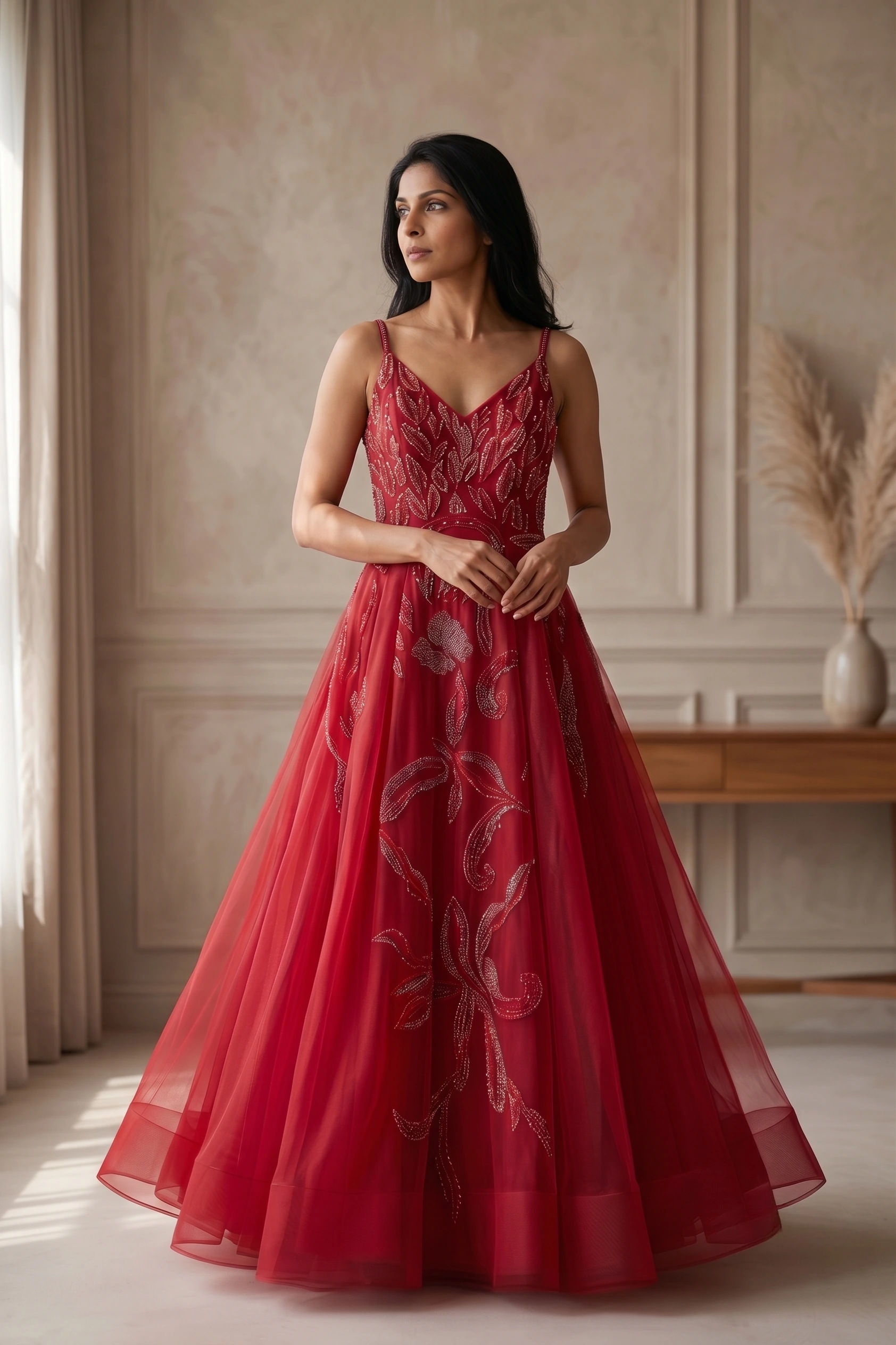
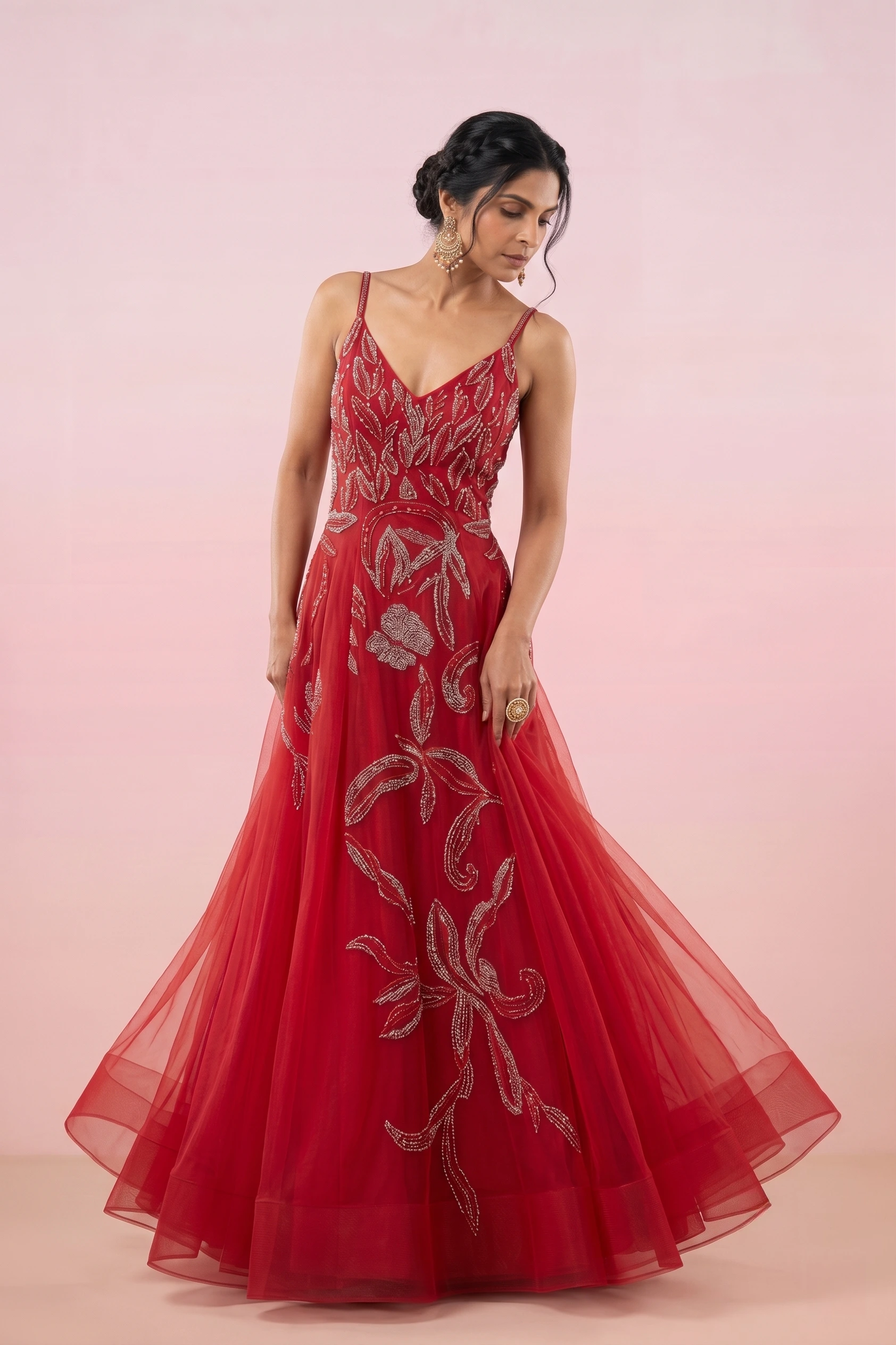
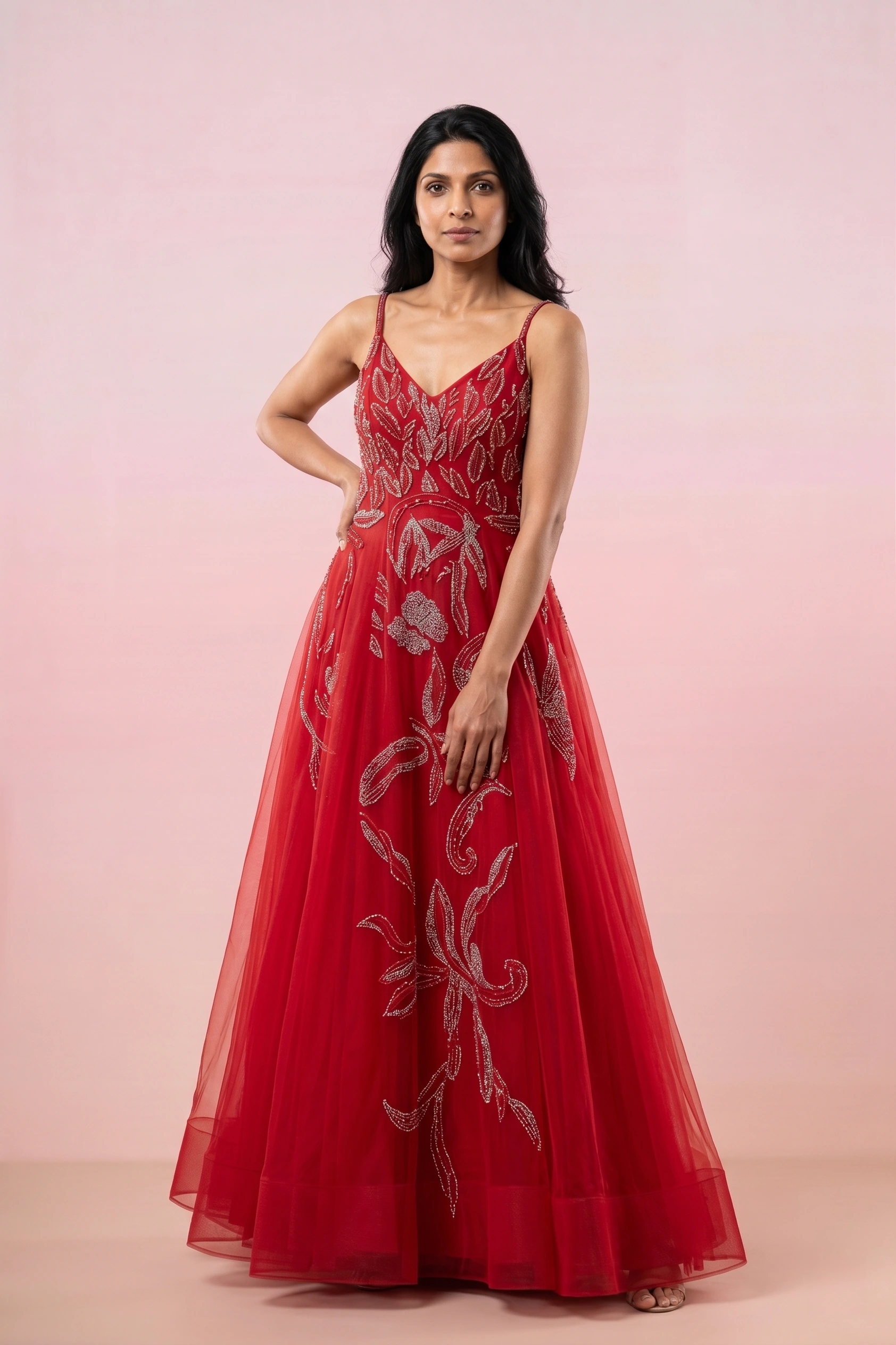
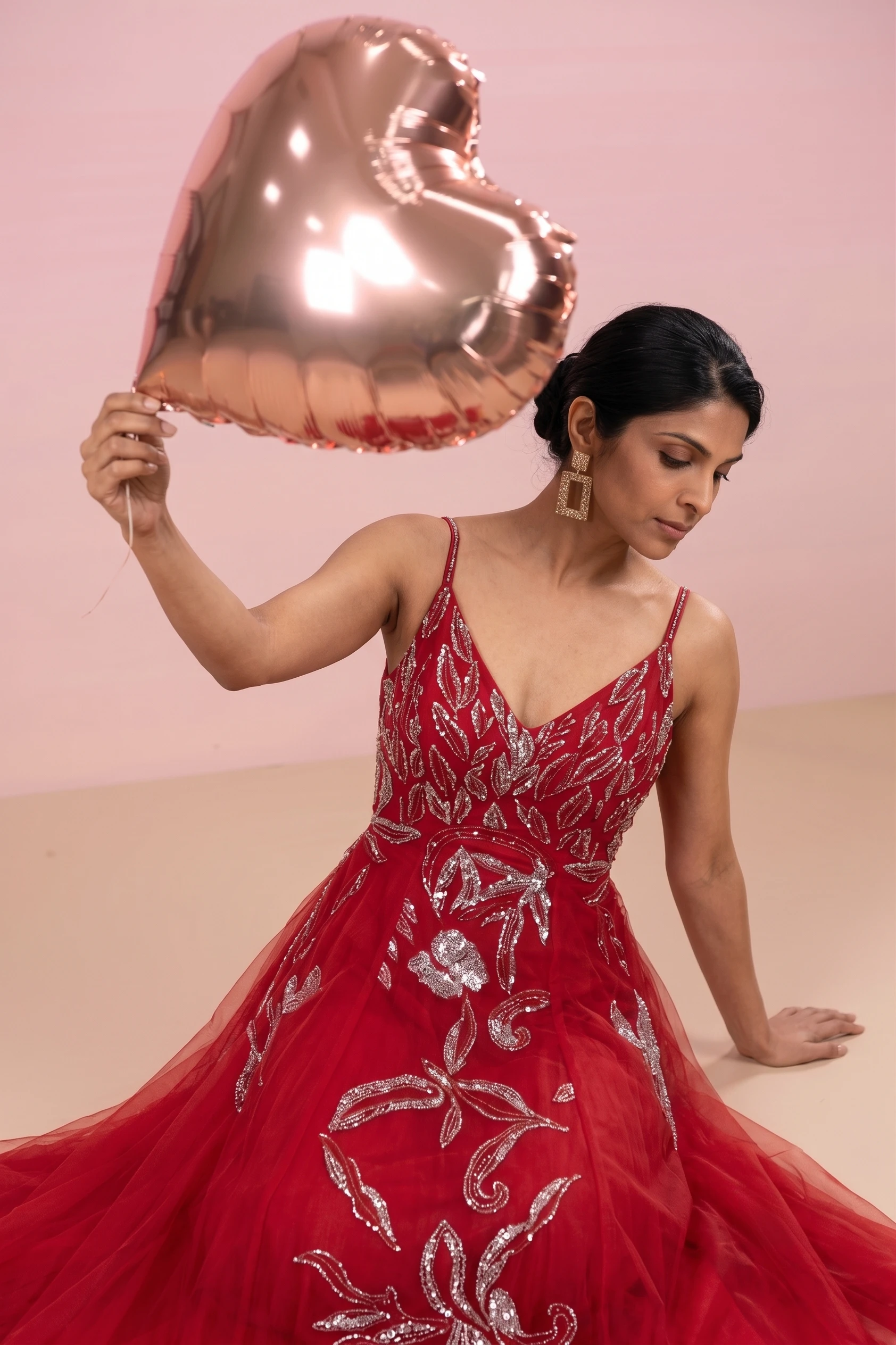
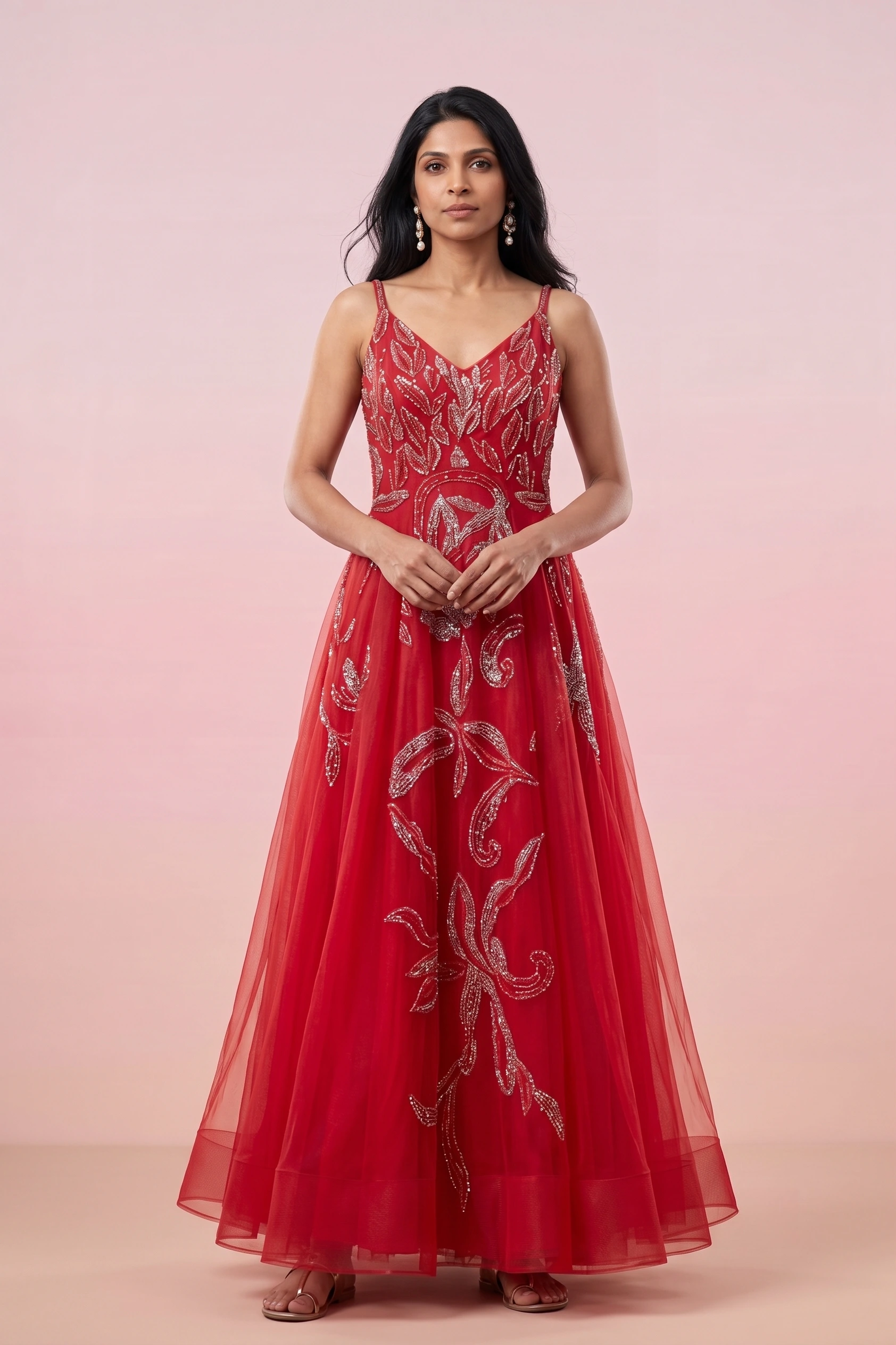
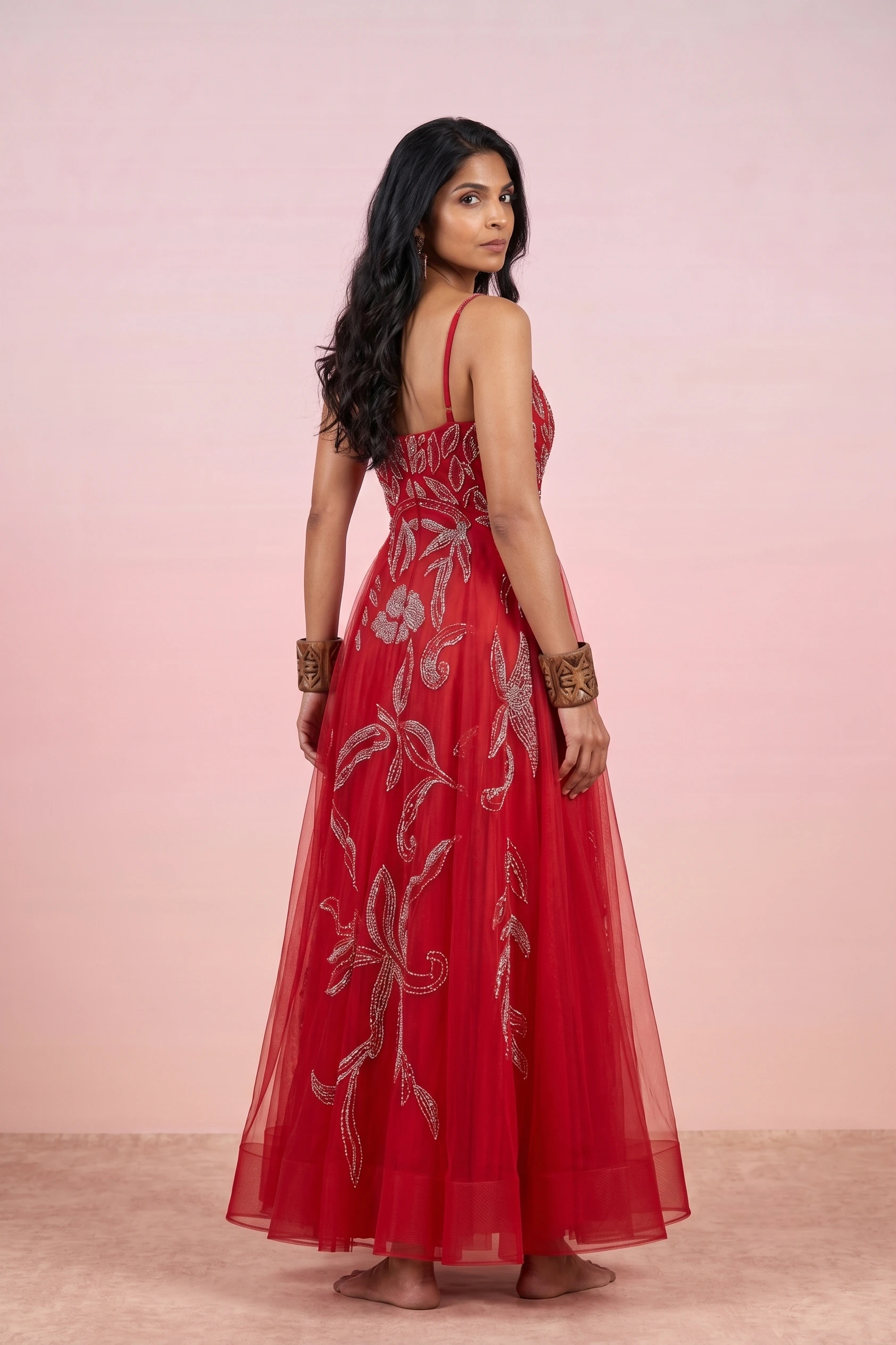
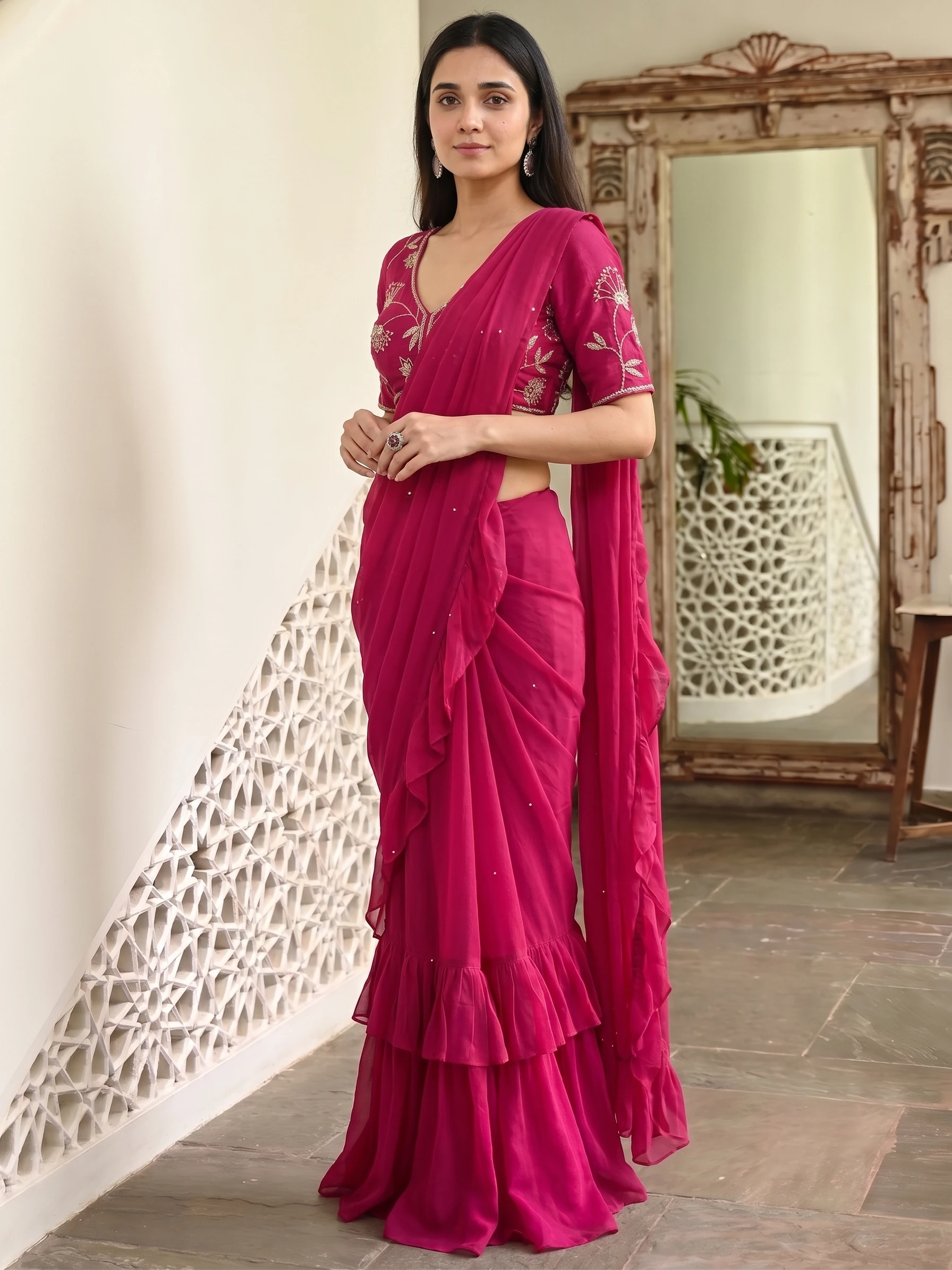
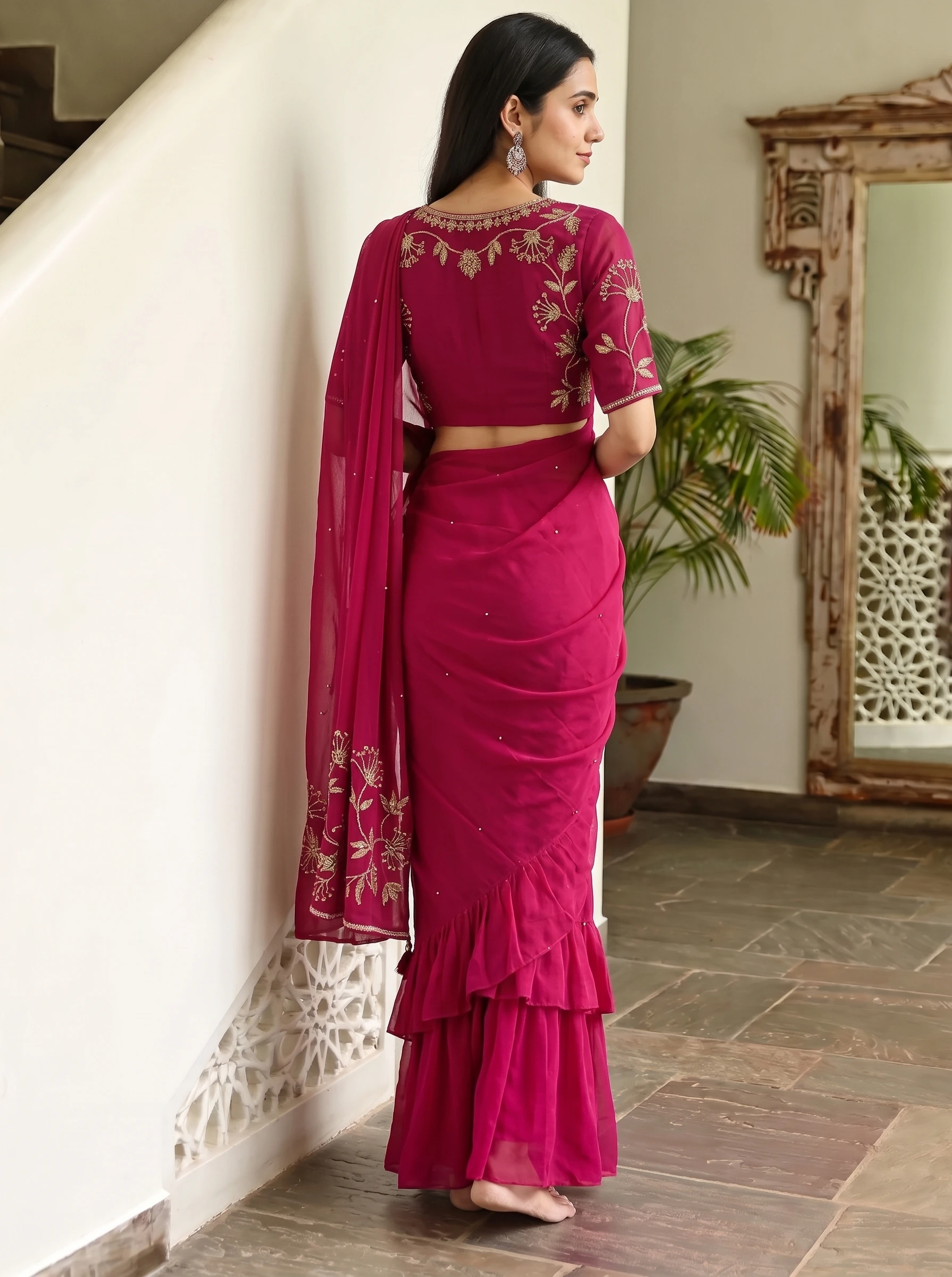
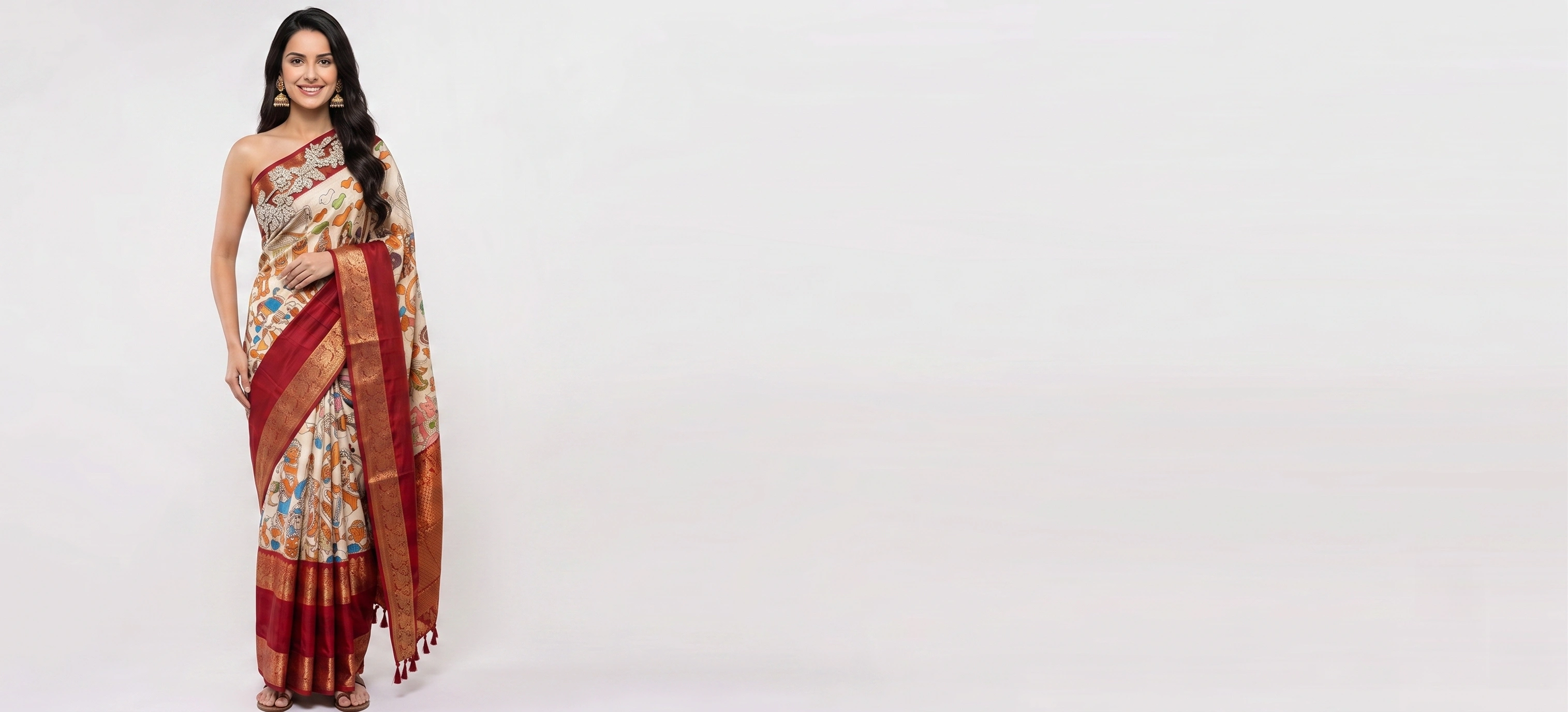
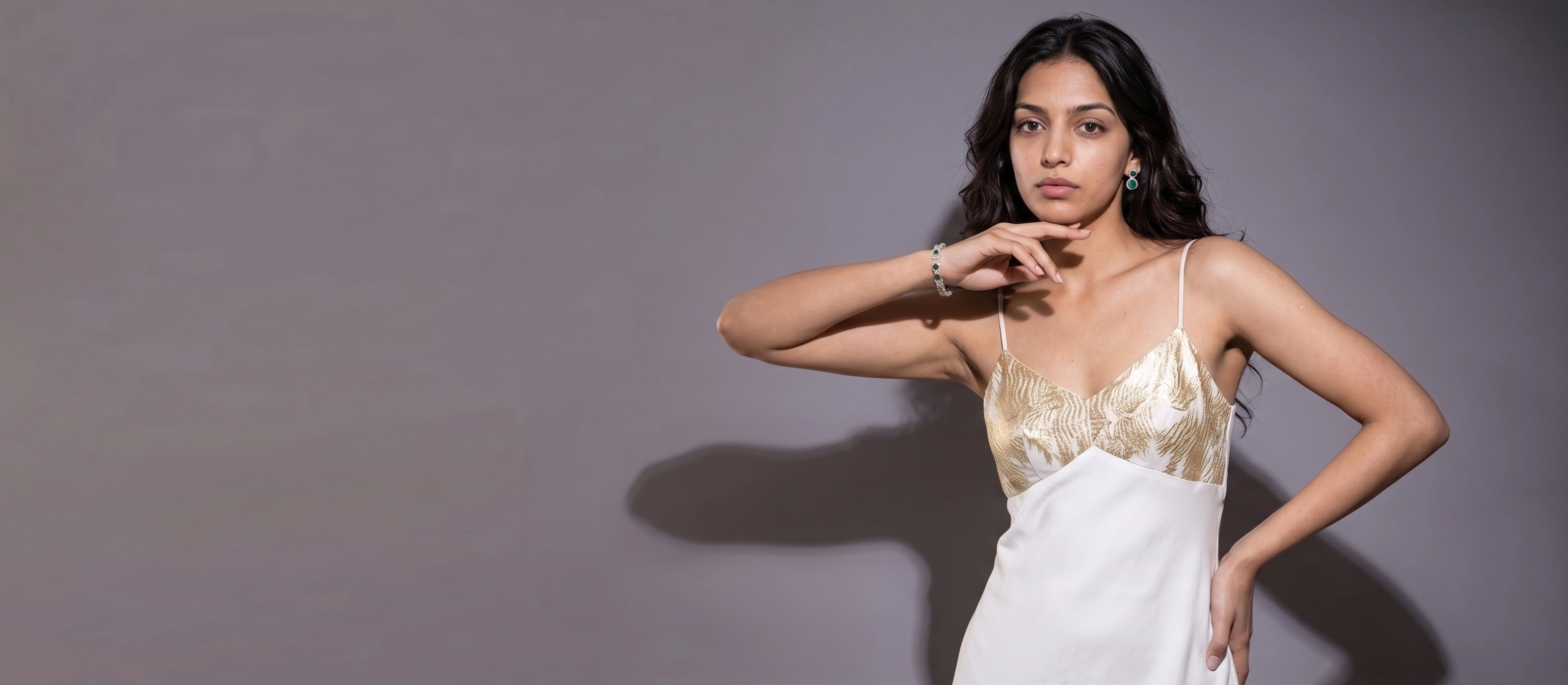
The gown does not change across these frames. Framing, light, setting and mood do — which is exactly the list a brief has to specify, because anything you leave out is decided differently on every run.
Worked example
Before: "Nice photo of the red dress, make it look expensive."
After: "Full-length shot, camera at chest height, model standing three-quarter turned. Red midi dress as photographed. Plain warm-grey seamless backdrop, no props. Soft light from the front left, gentle shadow on the right. Calm, editorial, subject looking off-camera. 4:5, 2K."
The second one is not longer for the sake of it. Every added clause removes a decision the system would otherwise make for you — and it will make a different one each run.
The discipline that makes briefs improve
Keep the briefs that worked. When an image comes out right, save the exact brief that produced it before you move on. Over a season you accumulate a small library of setups you can trust, which is what art direction actually is — not inspiration on demand, but a set of things you know work, reused deliberately.
And change one component at a time. If a result is close but the light is wrong, change the light clause and nothing else. Rewriting the whole brief teaches you nothing about which part was responsible.