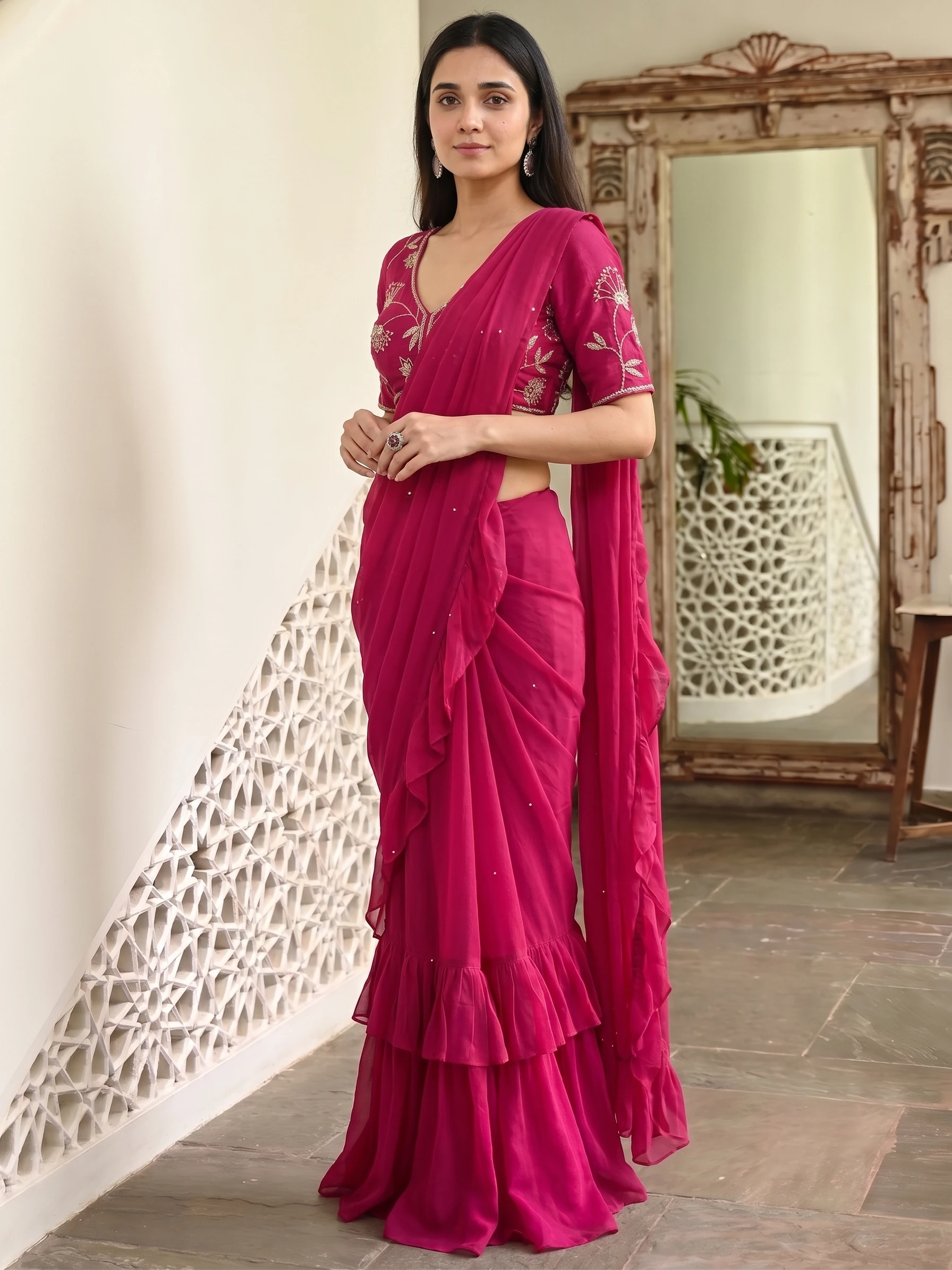
For years, retail tech vendors promised that live Augmented Reality (AR) webcam try-on would replace product photography. However, real-world data from Indian fashion e-commerce tells a different story. In 2026, AR try-on remains an expensive novelty widget with low consumer completion rates, while AI on-model catalogue photography has become the standard engine driving real purchase orders.
The Technical Reality: AR Mesh vs Generative AI Studio
| Evaluation Factor | Webcam AR / 3D Try-On | Vastralook AI Catalogue Studio |
|---|---|---|
| Visual Realism | Low (Stiff 3D polygon mesh, floating fabric edges) | Ultra-High (Photorealistic fabric drape, light bounce & texture) |
| Mobile User Friction | High (Requires camera permission, good lighting, fast 5G) | Zero (Instant high-res image loading on all devices) |
| Saree & Ethnic Compatibility | Fails (Cannot simulate 6-yard pleat folds or heavy zari) | Native (Specialized Drape Studio with pallu & pleat markers) |
| Integration & Cost | Expensive 3D modeling fees ($50–$200/SKU) + Monthly SaaS | Affordable (From ₹22 per image, zero SDK integration) |
| Conversion Impact | Gimmicky engagement; minimal purchase uplift | +30% to +45% verified listing conversion increase |
Why do AR try-on widgets fail on sarees?
A saree is not a rigid pre-stitched 3D shape; it is 6 yards of fluid unstitched fabric whose drape depends on pleating and body motion. Real-time browser 3D engines cannot calculate these physics without severe distortion.