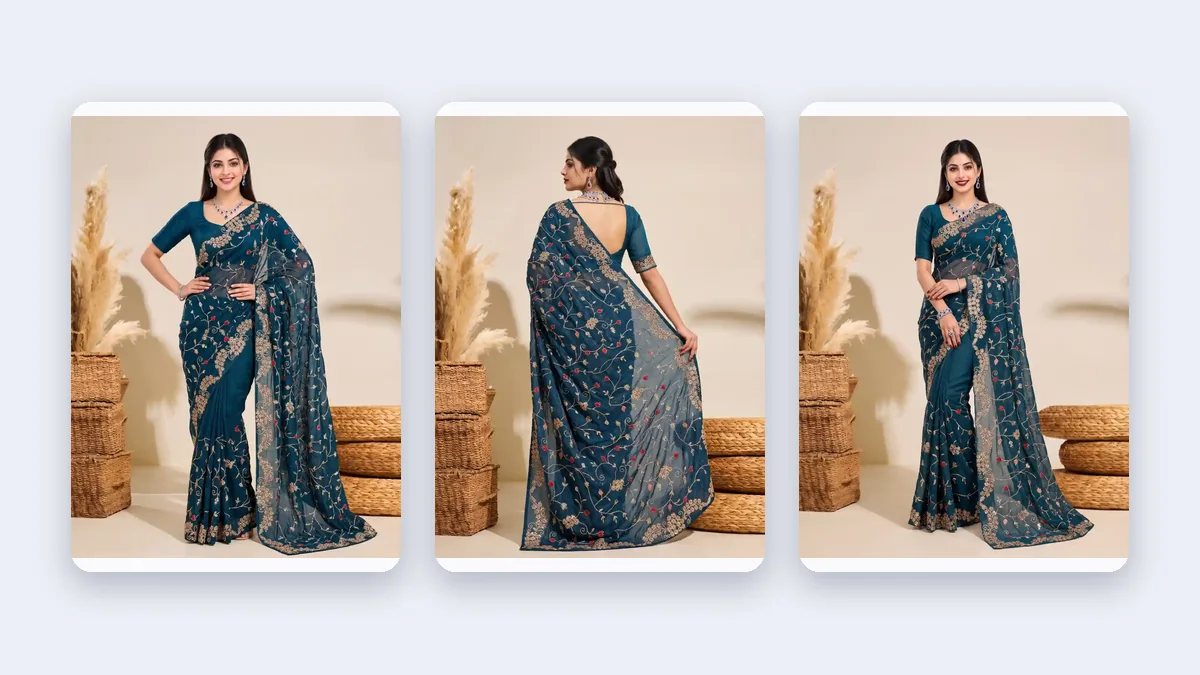
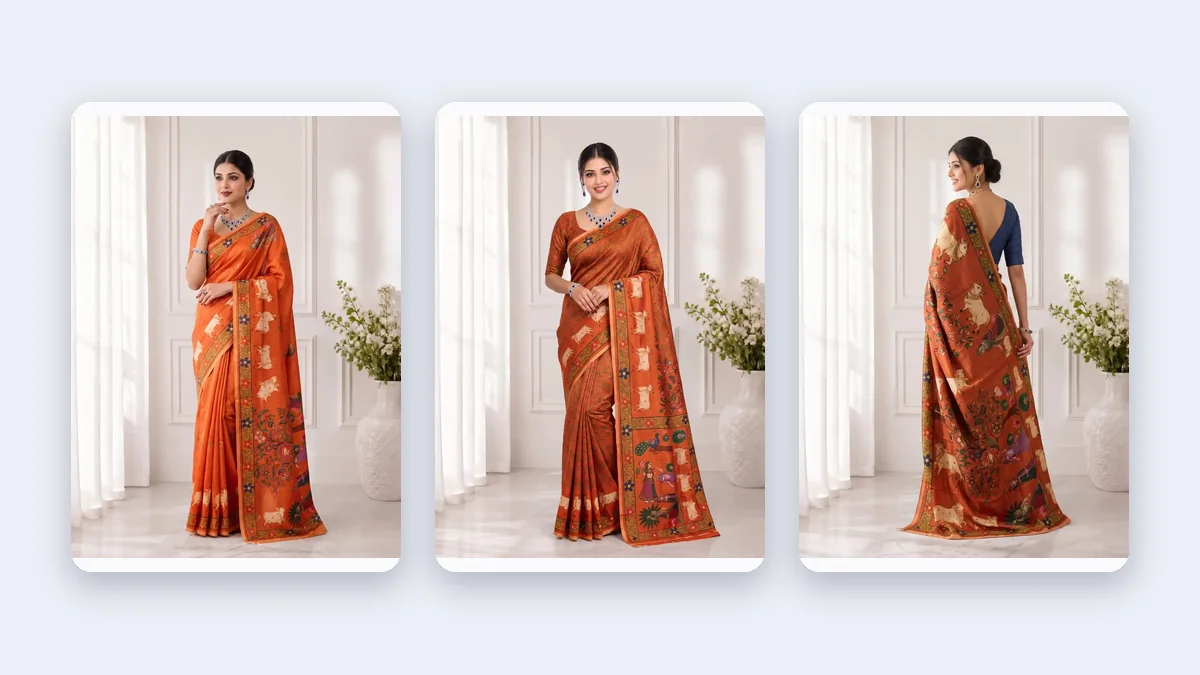
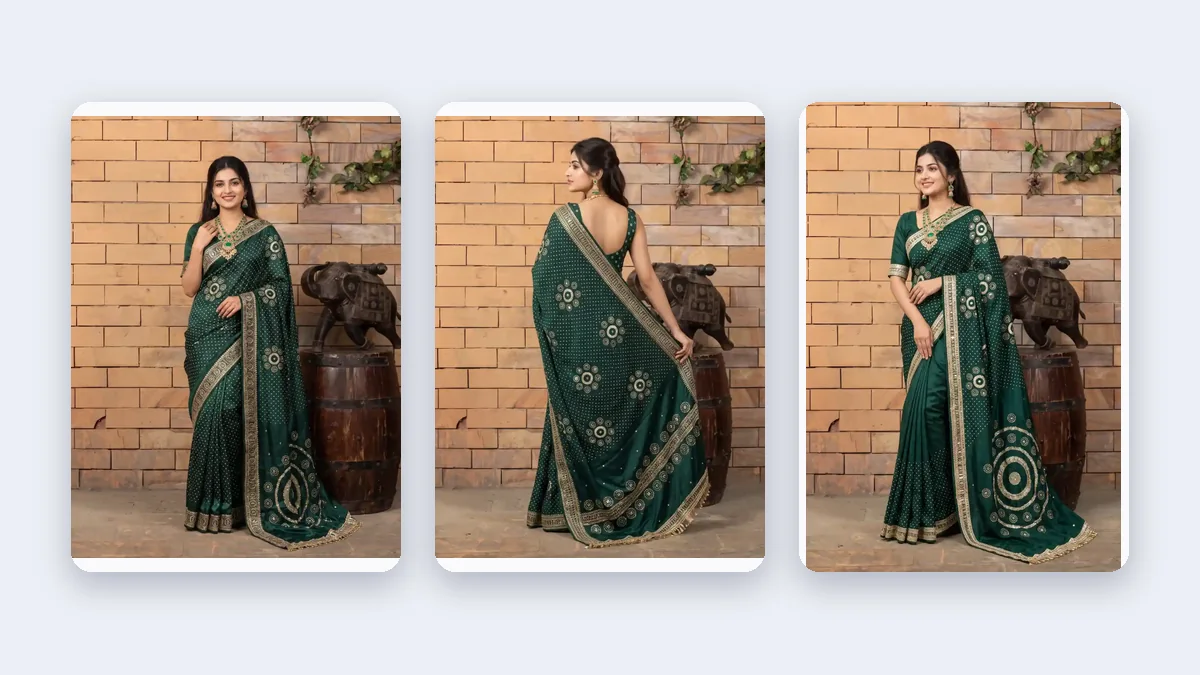
AI jewellery photography is a tempting idea for Indian imitation, Kundan and gold jewellery brands. A shoot with a good model, a macro photographer and a retouching team can run into tens of thousands of rupees, and showing a piece worn on a real neckline is the clearest way to communicate scale and styling. So where does AI actually help, and where would it let you down? This guide is deliberately honest about both, because a jewellery brand lives or dies on whether the picture matches the piece the customer receives.
Why is jewellery so hard to photograph?
Three things make jewellery different from clothes. Metal reflects the room, so a bright window or a white wall turns into a glare patch on a gold surface. Stones and polki cuts catch light from specific angles, so a small change in lighting changes how the piece looks. And the buyer is judging tiny details: how many rows a haar has, how the stones are set, whether the kundan work is crisp or clumsy.
On top of that, the buyer cannot hold it. They have to decide from the picture how long the necklace falls, whether the choker sits high on the neck, and how large a jhumka will look against an ear lobe. A piece on a black velvet box or a plastic bust stand tells them very little about any of this.
What can Vastralook do for a jewellery brand, and what can't it do?
Vastralook is an AI photoshoot studio built for garments: sarees and lehengas in Drape Studio, and every other garment in Catalogue Studio. It is not a jewellery product-photography tool. You cannot upload a photo of your own necklace and expect the studio to reproduce it exactly on a model.
What Drape Studio does offer is styling. In the left panel you can pick jewellery from the StyleMuse library, along with a hairstyle, a model and a background. The jewellery pieces are what the model wears, and the makeup is styled to match them. That makes it useful for complete looks, such as a saree with a temple necklace, but the pieces come from the library, not from your catalogue.
- Showing a saree or lehenga with a coordinated jewellery look for a lookbook or an Instagram post
- Trying different neckline and jewellery pairings on a saree before you shoot anything in real life
- Giving a clothing catalogue a finished, styled feel without hiring a jewellery stylist
- Letting a garment brand show how its outfit looks with traditional jewellery
- Reproducing the exact design of your own Kundan, Polki or temple piece
- Replacing macro photographs of stones, enamel or fine work
- Proving size, weight or finish to a buyer who is about to spend real money
- Replacing the real photographs a marketplace may expect for jewellery listings
How should you match jewellery to the neckline?
Whether you are styling a real shoot or choosing a look in Drape Studio, the pairing rules are the same. Jewellery competes with the neckline for the eye, and the wrong pairing hides the piece.
- 1. Match the blouse neckline to the jewellery shape
Chokers look best with deep sweetheart necklines. Long Rani Haars and temple necklaces pair best with classic U-necks or a rich Banarasi silk blouse, where the piece has room to fall.
- 2. Use soft, diffused light to prevent glare
On a real shoot, indirect softbox-style light keeps gold and gemstone facets warm and rich, without blinding white highlights. On a generated look, choose a soft, even background in StyleMuse over a harsh, high-contrast one.
- 3. Keep the hair tucked to reveal the earrings
Choose an elegant bridal bun or a side-swept style so heavy jhumkas, chandbalis and maang tikkas are not covered. In Drape Studio the hairstyle is its own pick in StyleMuse.
Which jewellery goes with which garment?
| Jewellery | Works well with | Watch for |
|---|---|---|
| Choker | Deep sweetheart or boat neck blouses, plain or lightly worked | A high collar hides it completely |
| Long haar or Rani Haar | U-neck or round-neck blouse, rich silk saree | A heavy pallu falling over the haar |
| Temple necklace | Kanjivaram or Banarasi silk, solid or contrast borders | A busy zari border fighting the pattern on the necklace |
| Jhumkas and chandbalis | Almost any look, with hair tucked back | Loose hair or a dupatta covering the ear |
| Maang tikka | Bridal looks, with a centre parting | A veil or dupatta sitting over the forehead |
How do you shoot real jewellery photographs well?
Because the piece itself needs real photography, here is a short checklist that works with a phone and a window. None of it needs special equipment, only patience.
- Shoot near a large window, but not in direct sun. Soften harsh light with a white curtain or a sheet of paper.
- Use a plain, non-reflective background: matte cloth or paper, not shiny.
- Keep the phone steady, on a stand or a pile of books, and tap to focus on the stones.
- Take one wide shot of the whole piece and a close shot of the finest detail.
- Check the colour of the metal and stones on your phone against the real piece before you publish.
- Photograph a real wearer if you can, so scale is clear: even one picture on a neck or an ear helps.
How do you build a lookbook that sells the whole outfit?
The most practical use of on-model jewellery for an Indian brand is cross-merchandising. Pairing your sarees with matching Kundan and temple jewellery creates a complete aspirational look, and shoppers who see a finished outfit are more likely to think about buying the whole ensemble than a single piece.
A clean way to plan this is one garment, one fixed model and one fixed background across the whole lookbook, changing only the jewellery and hairstyle between frames. Keeping everything else the same makes the differences easy to compare, and it keeps your feed looking planned instead of random. Generate a small set first and check each shot, because pose, drape and fine detail can differ from the reference.
- Choose one hero saree and show it with two or three different jewellery looks.
- Keep one model and one backdrop across the set so the jewellery is the only variable.
- Pair rich silk with traditional pieces, and lighter fabrics with simpler ones.
- Add your real macro photographs of the jewellery next to the styled looks, so buyers see both the effect and the actual piece.
Should you check every shot before you publish?
Yes, always. Jewellery is the first place buyers look for inconsistency. Check that the necklace falls where you expect, that the earrings are not hidden by hair, and that nothing looks smudged or oddly shaped near the neck and ears. If a shot has missed, a shot that failed has its credits returned automatically, and you can ask for half the credits back on a shot that was generated but missed. Details are on the pricing and guide pages.
AI jewellery photography: is it right for you?
If you sell only jewellery and need accurate pictures of your own designs, the answer is mostly no: use real photographs, with good light and a clean background, and treat AI as at most a source of styling ideas. If you sell sarees, lehengas or other garments and want your look to feel complete, with traditional jewellery and a considered hairstyle, Vastralook can help you build those looks quickly. Be clear with yourself and with your customers about which picture shows what.
Can I showcase both the saree and the jewellery in the same shoot?
Yes. In Drape Studio you can pick jewellery from the StyleMuse library for the model to wear alongside your saree. The jewellery comes from the library, not from your own catalogue, so it styles the look rather than showing your exact piece.
Can Vastralook photograph my own Kundan or Polki necklace?
No. Vastralook is built for garments. It cannot reproduce the exact design of your own piece, so use real photographs for any piece you are selling.
How do I stop glare on gold jewellery photos?
Use soft, indirect light, such as a window with a white curtain, and a matte background. Avoid direct flash and shiny surfaces near the piece.
Which neckline suits a choker?
A deep sweetheart neckline shows a choker best. High collars hide it, and a very busy neckline competes with it.
Why can customers not judge jewellery from a bust stand?
A stand or a box gives no sense of how long a necklace falls, how a choker sits or how large a jhumka looks. A picture of the piece worn on a person answers those questions.