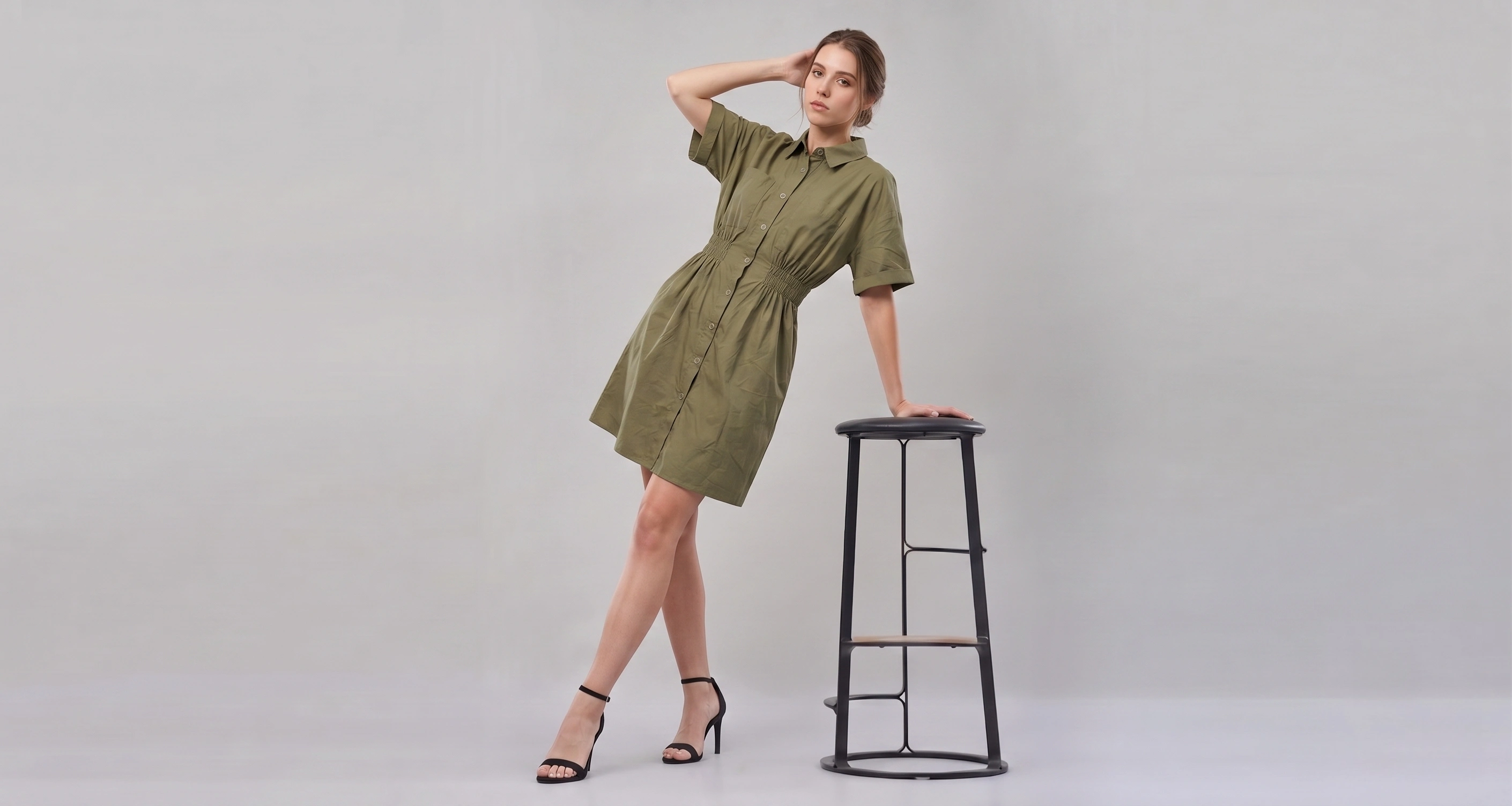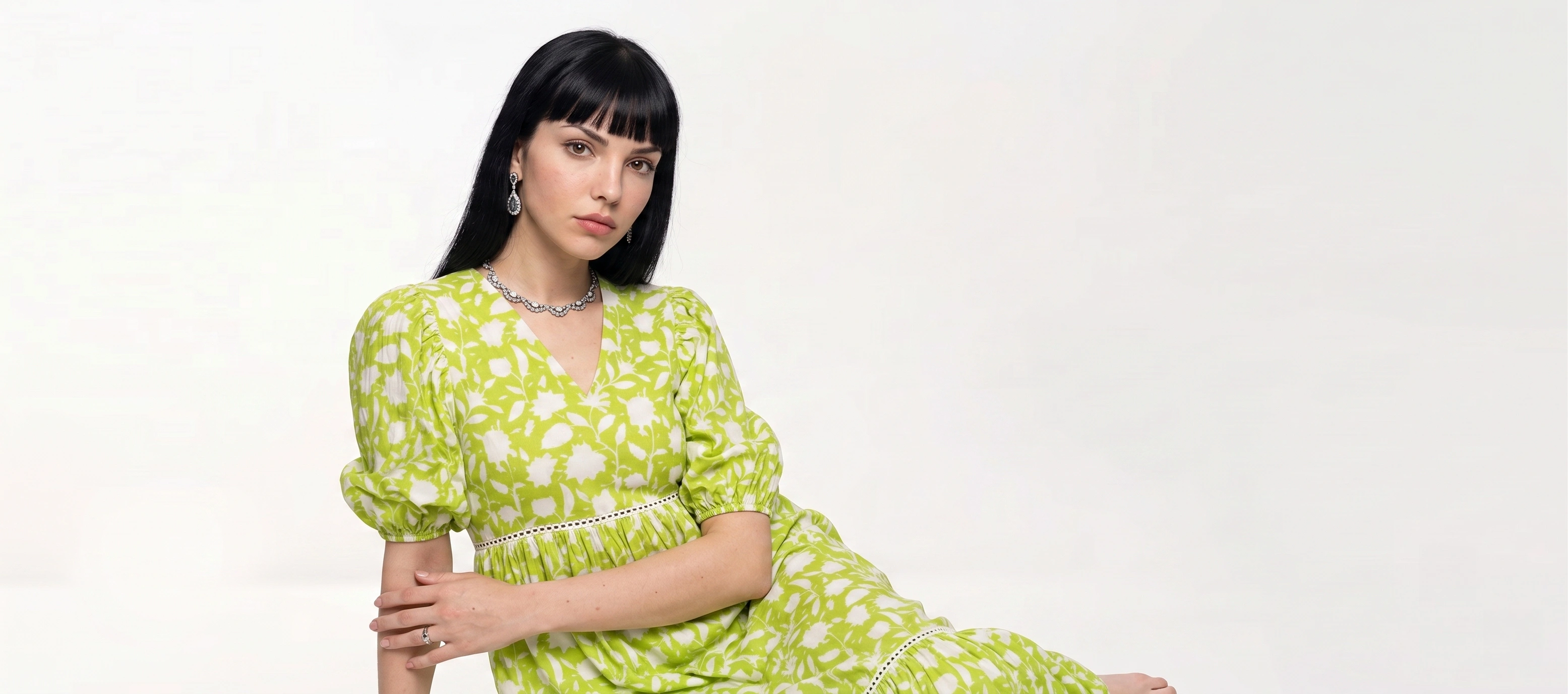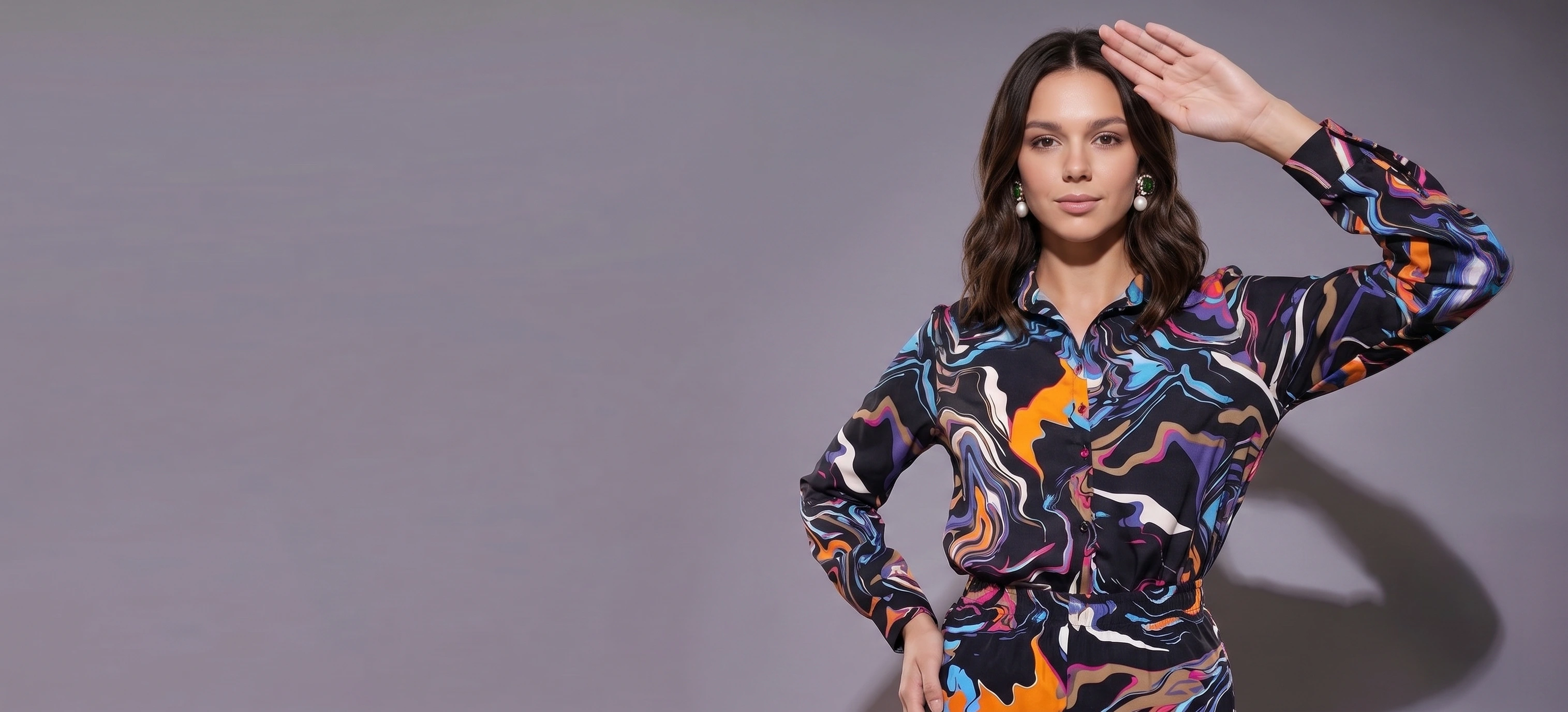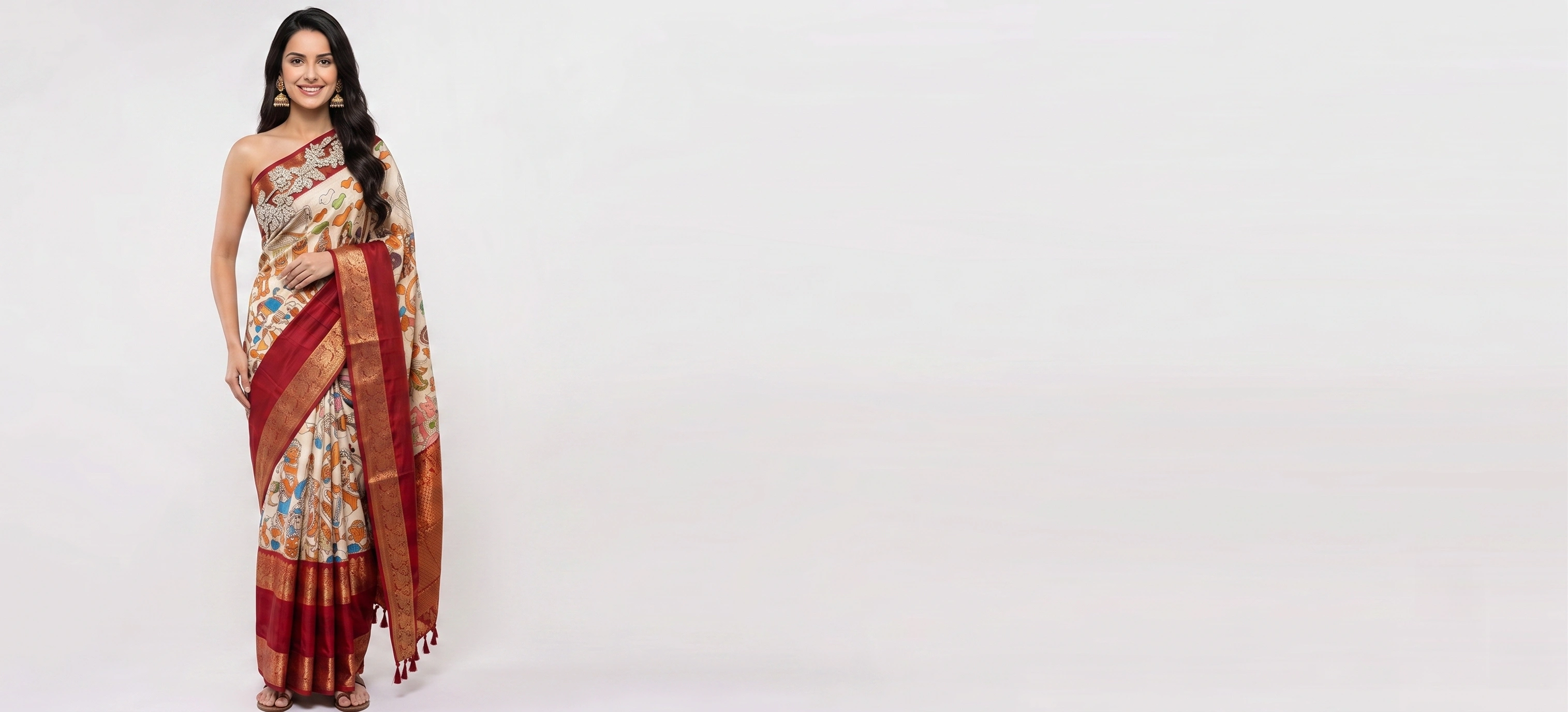
Ethnic wear is the hardest category in this space and the one with the most to gain. Hardest because a saree is defined by how it is draped, and drape is exactly what a flat garment photo does not contain. Most to gain because the category has enormous SKU counts, huge colourway ranges, and shoot costs that make on-model photography impossible below the hero pieces.
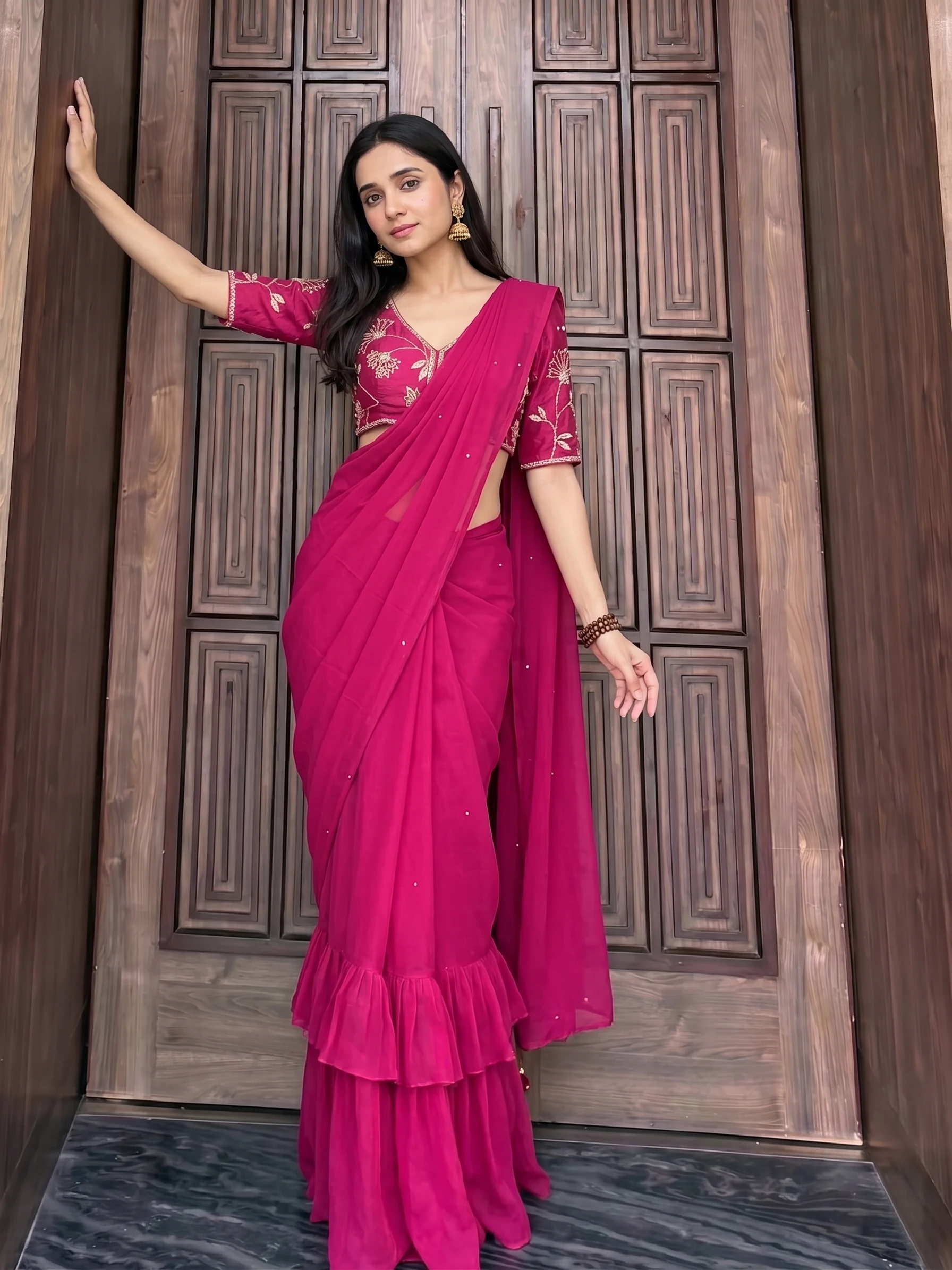
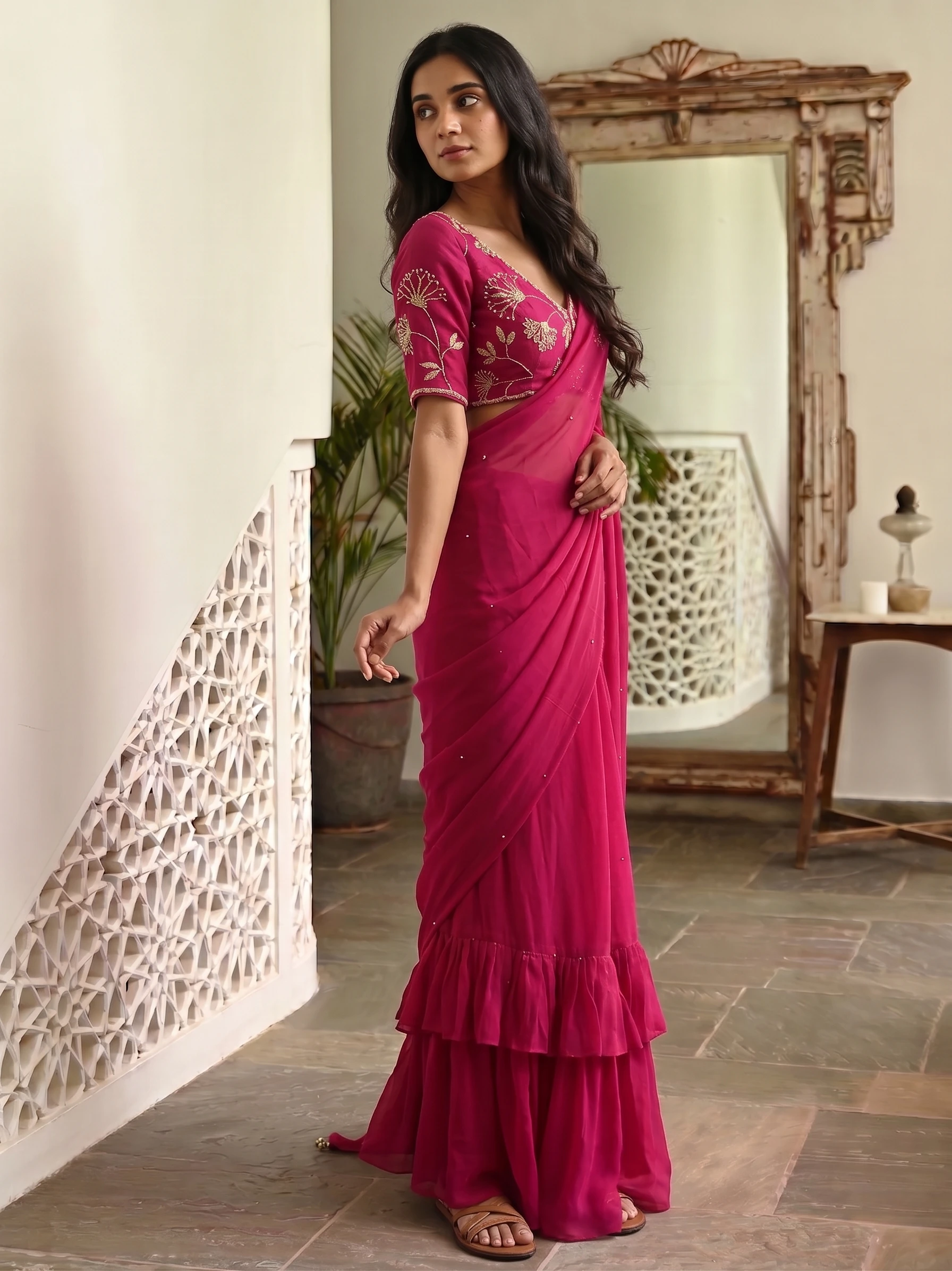
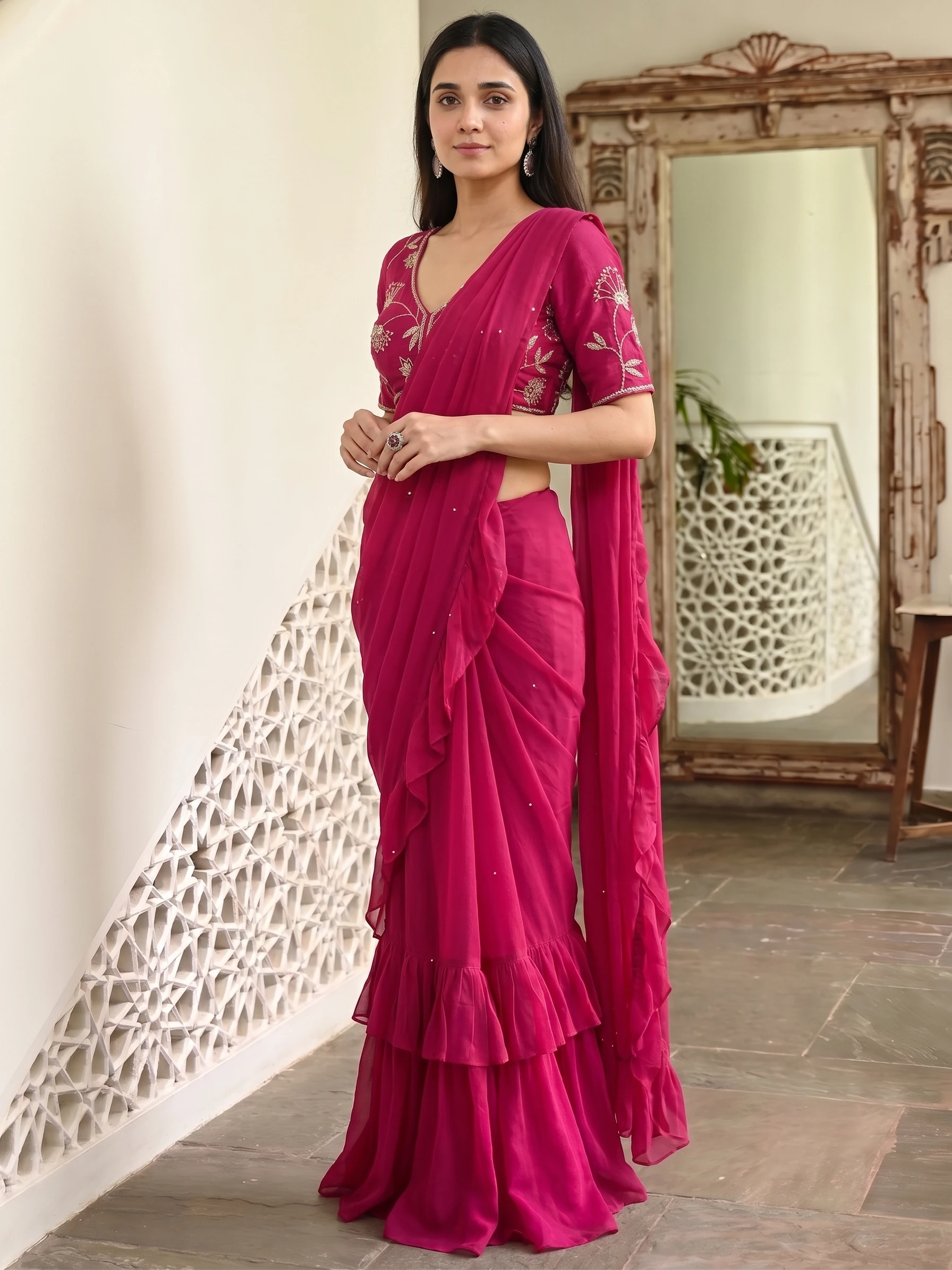
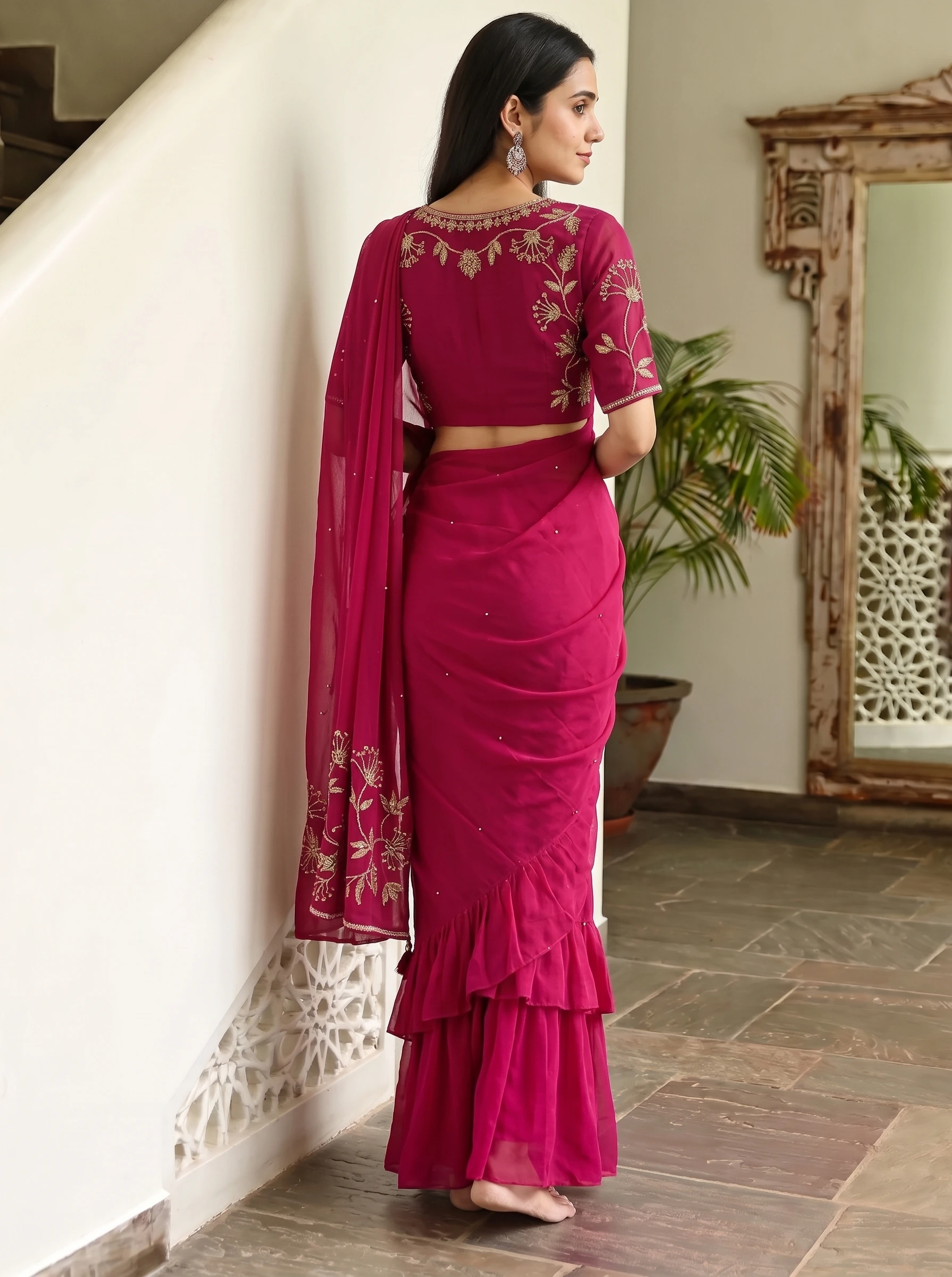
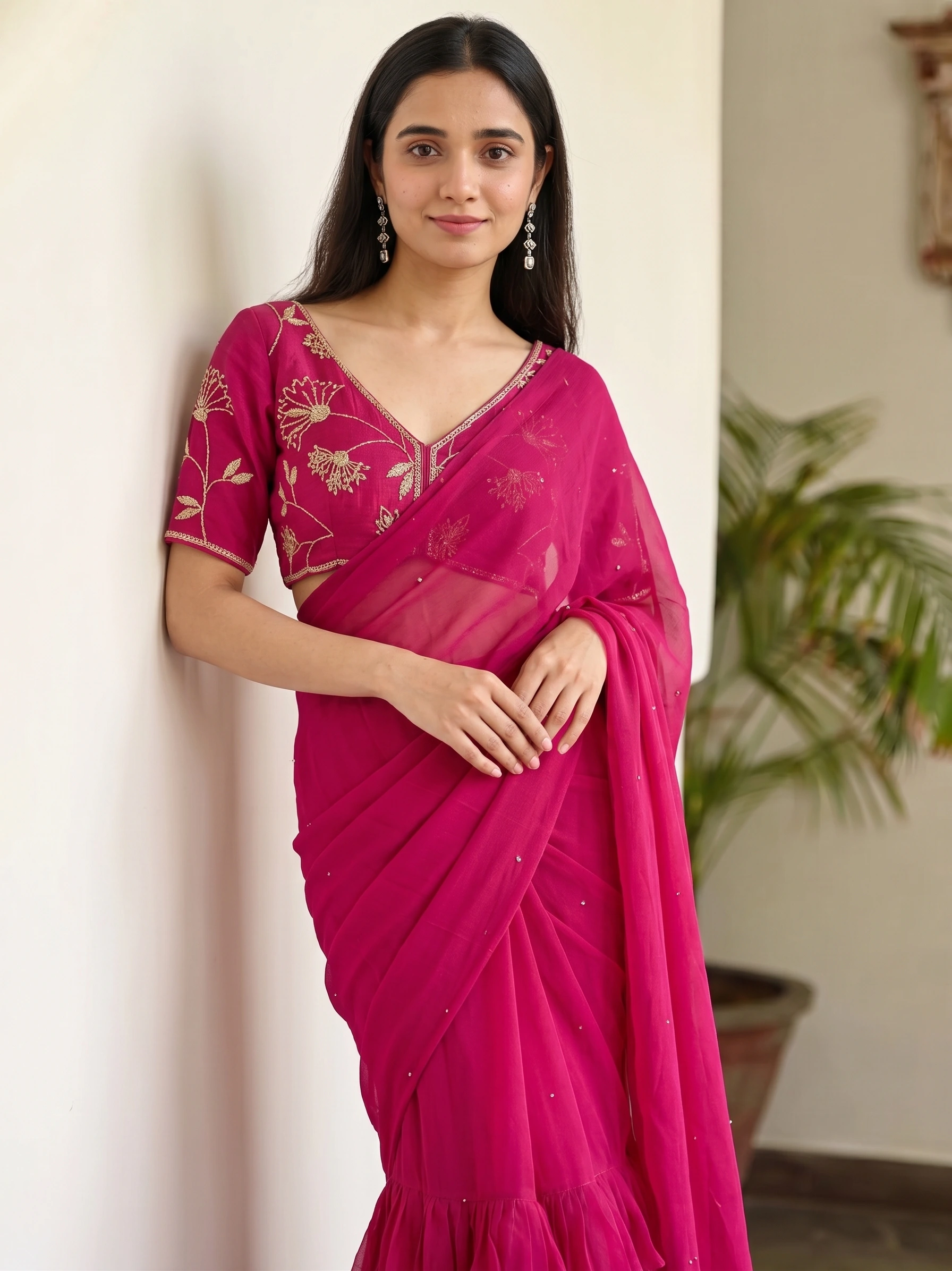
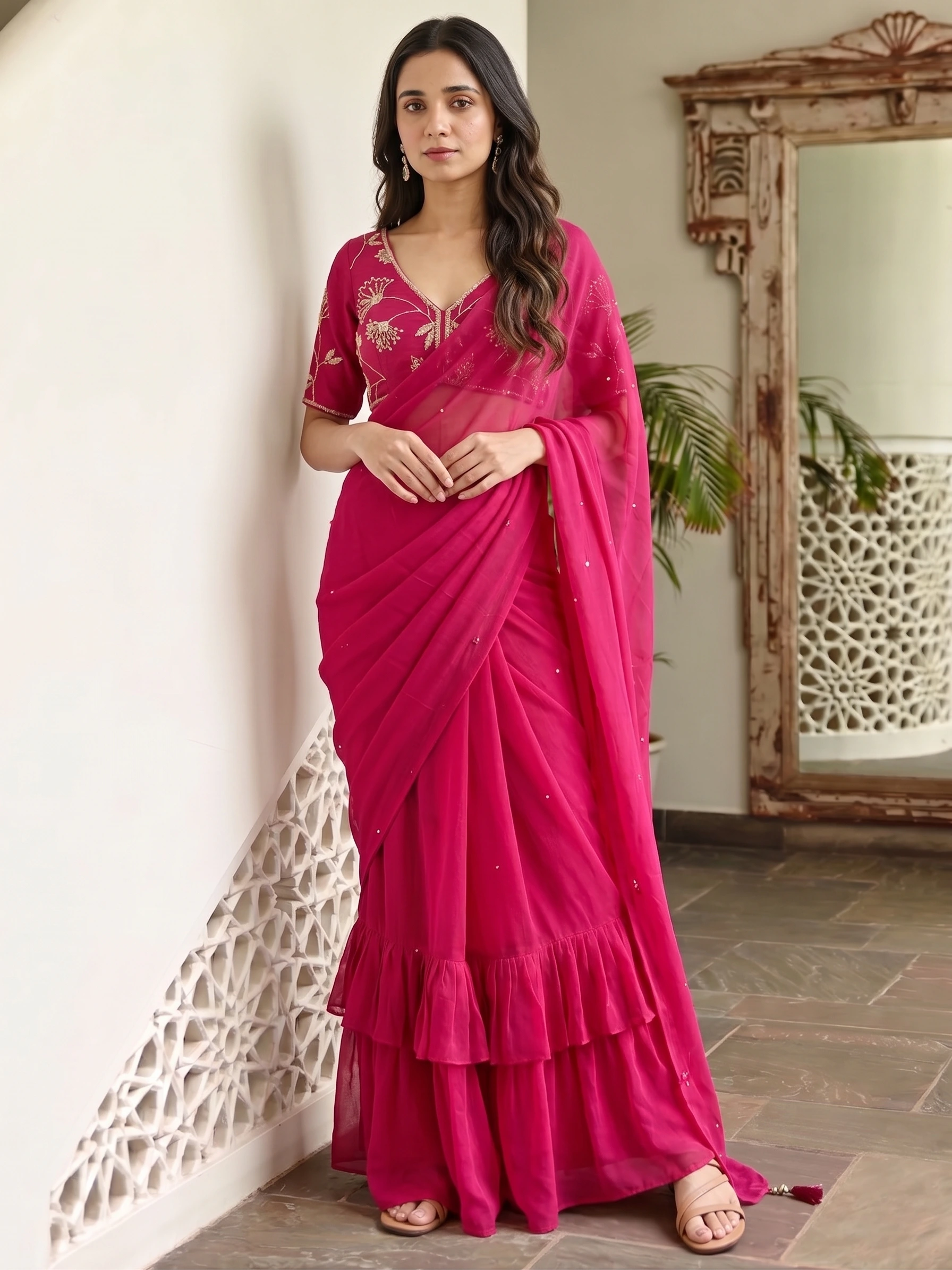
Pre-draped and stitched pieces reproduce reliably because the drape is part of the construction rather than a styling decision. Check the border and pallu placement in every frame — that is the check this category lives or dies on.
What works well
- Colourways. A design that exists in twelve colours needs twelve on-model shots and almost never gets them. This is the single highest-return use in the category.
- Kurtas, suit sets and anything with a fixed construction. These behave like any other garment and reproduce reliably.
- Lehenga sets, where the silhouette is structural rather than draped.
- Seasonal and festive re-shoots of existing inventory — new setting, new mood, same product, no sample logistics.
- Marketplace variants, where the same product needs different crops and backgrounds per channel.
Where to be careful
Drape is a decision, not a property
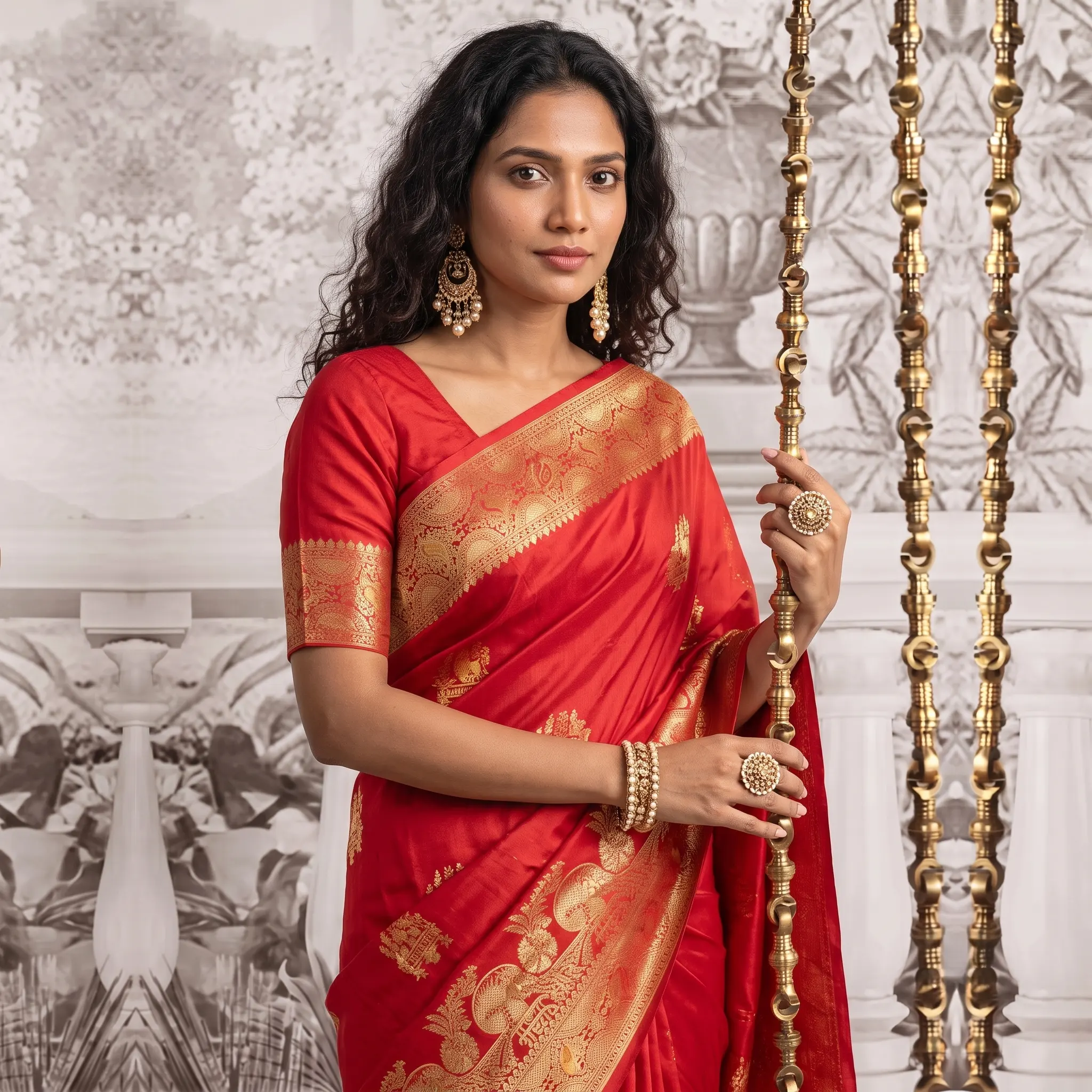
A saree can be draped a dozen ways, and the drape changes the product's whole appearance. Generating a draped saree from a flat photograph means the drape is being invented. If your customer is buying partly for how a specific drape falls, show a real one — or be explicit that the image is a styling illustration.
Embroidery and zari detail
Fine metallic thread, sequins, mirror work and dense hand embroidery are where fidelity is most likely to break down. Two mitigations, both practical: photograph the garment at high resolution with even, diffuse light so the detail is unambiguous in the source, and generate at the highest quality tier for anything where the work is the selling point. Then check the result at full size — this category is judged at 200% zoom.
Pallu, dupatta and border placement
Borders and pallu placement carry meaning and price. Verify these on every image rather than spot-checking, because a border that has migrated is not a cosmetic error — it is a different product.
The rule that keeps you safe: the image may present the product, but it must not invent the product.
- Colourways of a design you have already shot
- Kurtas, suit sets, anything with fixed construction
- Lehenga sets — structural rather than draped silhouettes
- Festive re-shoots of existing inventory
- Per-marketplace crops and backgrounds
- Saree drape, which is being invented rather than reproduced
- Fine zari, sequins and dense hand embroidery
- Pallu and border placement — a moved border is a different product
- Anything judged at 200% zoom, which is most of this category
A workflow that fits the category
Shoot the hero pieces of a collection properly, on a model, with a real drape. Generate everything underneath: colourways of those heroes, the secondary designs, the channel variants, the festive re-crops. You keep truthfulness where the customer is scrutinising and get coverage where they were previously seeing a flat photo on a white background.
For the model choice specifically, keep one model across a collection. Ethnic wear catalogues live or die on looking like a collection rather than a marketplace listing, and model consistency does more for that than any individual image.