For apparel manufacturers, wholesalers, and growing ecommerce sellers, setting up an in-house product photography studio feels like a natural rite of passage. Booking third-party photography studios every week becomes tedious, samples get delayed in transit, and creative consistency suffers when different photographers handle different product drops.
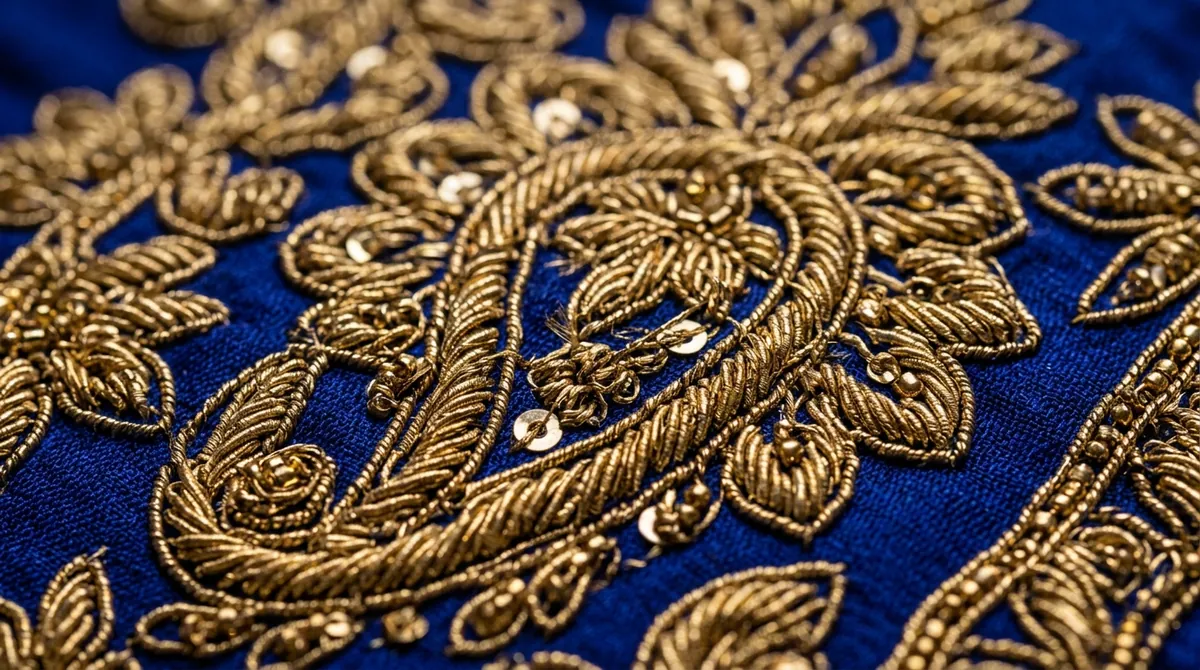
However, building a functional, commercial-grade photo studio requires more than buying a DSLR camera and pointing two LED lights at a white wall. Fabric textures, metallic embroidery, sheer dupattas, and color-critical silk weaves demand disciplined lighting techniques, color management, and specialized rigging.
This guide walks through everything required to build an efficient in-house apparel photography studio—from floor space requirements and light positioning to camera settings—as well as modern AI virtual studio alternatives that eliminate physical hardware completely.
In this guide:
- Space and room requirements for apparel photography
- Essential camera bodies, lenses, and tripods
- The core 3-point lighting setup for garments
- Seamless background sweeps and rigging
- Color accuracy: ColorCheckers and white balance calibration
- Physical studio vs AI virtual studio comparison
- Frequently asked questions (FAQ)
1. Space and Dimensions: How Much Room Do You Need?
Shooting clothing requires significantly more physical room than shooting tabletop items like watches or cosmetics.
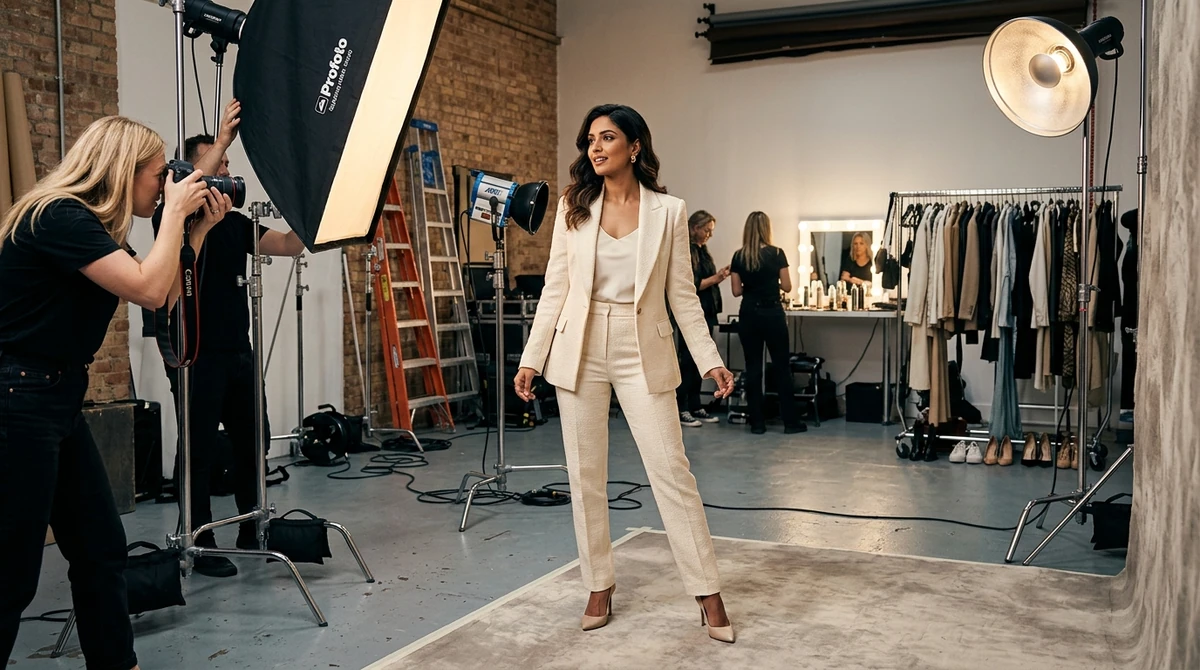
- Minimum Ceiling Height: At least 10 to 12 feet. A standing model is approximately 5'8" to 6'0"; overhead hair lights and large octabox softboxes must sit at least 3 feet above their head.
- Studio Depth: At least 20 to 25 feet. You need 6 to 8 feet between the model and the background to prevent spill shadows, plus 10 to 14 feet between the camera and model to shoot with flattering, non-distorting focal lengths (70mm to 105mm).
- Studio Width: At least 12 to 15 feet to accommodate light stands, reflectors, and styling racks.
2. Essential Equipment Checklist
| Category | Recommended Gear | Purpose |
|---|---|---|
| Camera Body | Full-frame mirrorless (Sony A7 IV, Canon EOS R6 II, or Nikon Z6 III) | Clean dynamic range, dual card slots, high tethering reliability |
| Focal Length Lens | 24-70mm f/2.8 or 85mm f/1.8 prime | Eliminates wide-angle barrel distortion; keeps garment proportions accurate |
| Main Key Light | 400W–600W Strobe (Godox QT600III / Bowens) | High-speed flash freezing micro-movements, crisp textile texture |
| Fill & Rim Lights | Two 300W–400W Strobes (Godox AD400 / SK400) | Softens shadows; separates model/garment from background |
| Light Modifiers | 47" to 60" Octabox with grid + 1x4 ft Strip boxes | Diffuses flash into gentle, wrapping commercial light |
| Background Rig | 9-foot Wall-Mounted Seamless Paper Roller (Arctic White / Neutral Grey) | Instant crease-free backdrop sweep |
| Tethering Cable | TetherPro USB-C to Laptop with Capture One Pro | Real-time review on color-calibrated monitor |
3. The Standard 3-Point Lighting Setup for Apparel
[ Seamless Paper Backdrop ] | [ Rim Light L ] [ Model ] [ Rim Light R ] \ / \ / \ / [ Large Key Softbox ] | [ Camera ]
- Key Light (Main Exposure): Positioned 30 to 45 degrees to the left or right of the camera, elevated at 8 feet and angled 45 degrees downward toward the chest. This creates natural, gentle contour shadows that reveal fabric drape.
- Fill Light or V-Flat Reflector: Placed opposite the key light to bounce soft ambient fill into shadowed pleats and folds.
- Background / Rim Lights: Two strip softboxes placed behind the subject, pointed back at the model's shoulders and hair to create crisp edge separation from the backdrop.
4. Solving the Biggest In-House Studio Headache: Color Accuracy
The number one reason ecommerce clothing brands receive returns is: *"Color does not match the online photo."*
In physical studios, ambient window light, fluorescent bulb cycling, and automatic white balance cause subtle color shifts. To guarantee true colors:
- Block Ambient Light: Black out all windows with blackout blinds.
- Use a Datacolor SpyderCHECKR or X-Rite ColorChecker: Take one reference frame at the start of every shoot, and apply the custom camera calibration profile in Lightroom or Capture One.
- Lock Manual White Balance: Set your camera to a fixed Kelvin temperature (typically 5600K for studio strobes). Never shoot ecommerce catalogues on Auto White Balance (AWB).
5. Physical Studio vs AI Virtual Studio: The Modern Reality
While setting up a dedicated studio offers control, it represents a substantial ongoing overhead:
| Comparison Metric | Physical In-House Studio | Vastralook AI Virtual Studio |
|---|---|---|
| Initial Capital Outlay | ₹2,50,000 – ₹7,00,000 | ₹0 |
| Monthly Rent & Electric | ₹25,000 – ₹60,000 | ₹0 |
| Full-Time Personnel | In-house photographer, stylist, retoucher | Single operator uploading product photos |
| Model Booking Costs | ₹15,000 – ₹40,000 per shoot session | Built-in diverse on-model catalog |
| Output Scalability | Max 20-30 garments per day | Hundreds of variations in minutes |
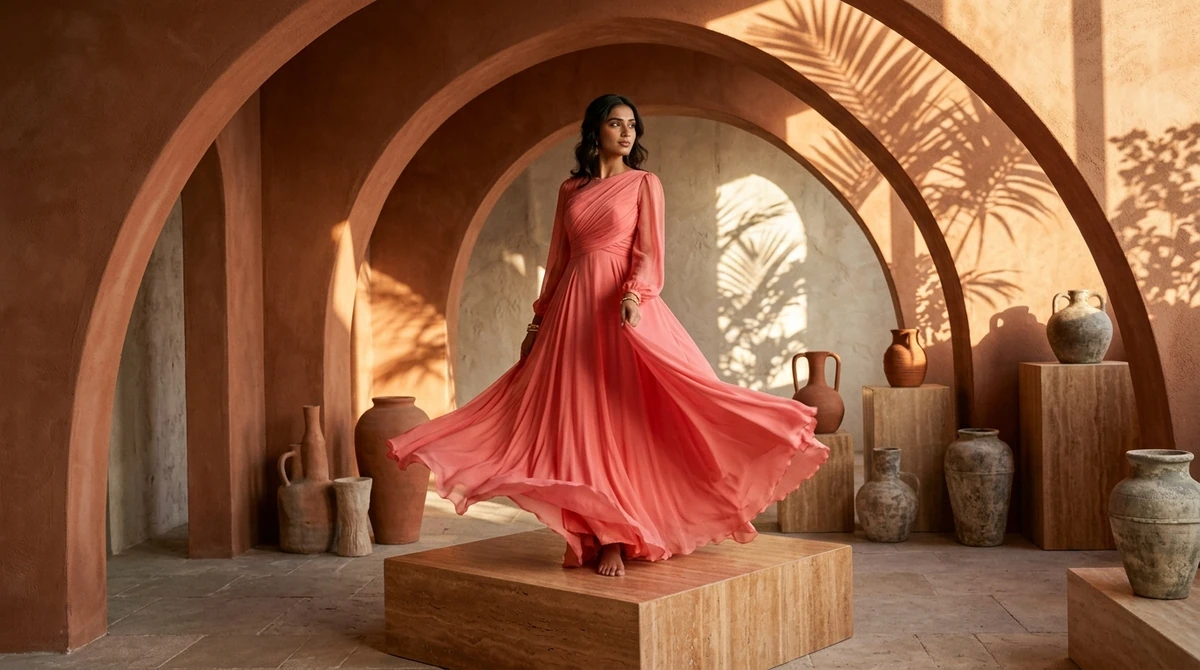
With Vastralook, you can shoot garments using simple natural light on a mannequin, and instantly transform them into multi-angle model shots in pristine studio environments.
Frequently Asked Questions
What is the best camera lens for clothing product photography?
An 85mm prime lens or a 24-70mm f/2.8 zoom lens set between 50mm and 70mm is ideal. Avoid wide-angle lenses under 35mm, as they warp proportions and make garments look distorted.
Continuous LED lights or Strobes: Which is better for clothes?
Studio flash strobes are vastly superior for apparel. They deliver substantially higher light output, allow shooting at sharp apertures (f/8 to f/11), and freeze tiny model movements without motion blur.
What background color is best for ecommerce listings?
A neutral 18% grey or soft off-white seamless paper sweep is best. Pure stark RGB (255,255,255) white often causes glare and washes out light-colored fabrics like white chikan or cream silk.
How much does it cost to set up an entry-level clothing photo studio?
A basic setup with two entry-level Godox strobes, softboxes, light stands, a backdrop system, and a refurbished full-frame camera costs between ₹1,20,000 and ₹1,80,000.