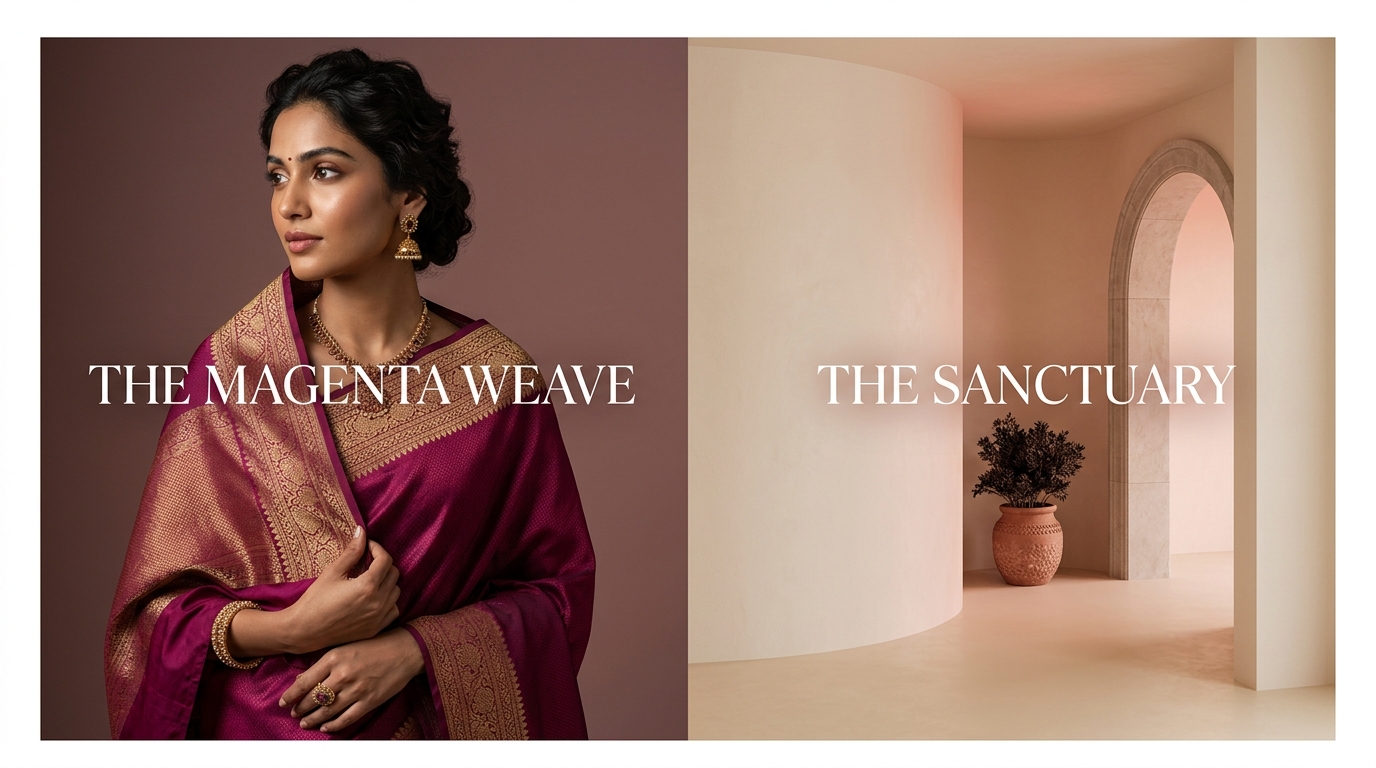
Saree photography lighting at home comes down to one soft source, usually a window, and control of what reflects off the fabric. Silk shows sheen, zari throws glare and a bulb shifts colour, so the aim is gentle light from one direction and no mixing of light types.
Our smartphone guide already covers the basics: a window, a flat surface, the phone overhead and the three photos to take. This post goes deeper on light, because that is what separates a saree photo that looks like the fabric from one that does not.
Why saree lighting is harder than it looks
A cotton saree is forgiving. A Kanjivaram or a Banarasi is not: silk reflects light at an angle, so the same fabric can look pale from one side and deep from another, and metallic zari catches light as bright points. A camera records all of this literally, and a viewer reads it as the colour and quality of the saree.
Saree photography lighting setups at home
| Setup | How to do it | Good for | Watch out for |
|---|---|---|---|
| Window light, side-on | Saree on a table beside a window, light falling across the fabric | Most sarees, and the best starting point | Shadow on the far side; a white board or sheet can soften it |
| Window light, diffused | Window covered with a thin white curtain or sheet | Silk, satin and zari: softens glare | Light drops, so check focus and shake |
| Open shade outside | A porch or shaded spot, in daylight | Colour accuracy on any fabric | Wind, dust and the surface the saree lies on |
| Overhead ceiling light | Switched on above the saree | Avoid | Warm cast, harsh shadows, mixed with window light |
| Phone flash | On-camera flash | Avoid | Hot spots on zari and a flat, washed look |
Silk sheen: keep it, don't blow it out
The sheen is part of what a buyer is paying for, so a dull photo undersells the saree. But sheen turns to a bright patch when the light is small and close.
- Make the light bigger and softer: a thin curtain over the window works.
- Keep the saree flat. Folds make sheen run in bands and look uneven.
- Shift the saree or the phone slightly and watch the screen. A small move changes where the sheen sits.
- Take one photo with the sheen visible and one from a slightly different angle if a design shows two tones.
Zari glare: control the reflection
Zari is metal-based thread and reflects like a mirror in small areas. Glare is a reflection of the light source, so changing the angle between the light, the zari and the camera changes it.
- 1. Soften the light
Diffuse the window. Hard light makes bright points on every thread.
- 2. Change the angle
If the border glares, rotate the saree or move the phone until the bright patches shrink.
- 3. Take a close-up of the border
A tight shot at a slightly different angle shows the weave and the metal colour. In Drape Studio there is a close-up slot for zari and embroidery detail.
- 4. Check zoomed in
Open the photo and zoom on the border. If the threads look like white blobs, the light was too hard.
Colour accuracy: one light source, no filters
- Switch off every other light in the room. Daylight and a yellow bulb together give a cast you cannot cleanly remove later.
- Shoot at the same time of day for the whole batch, because daylight changes through the day.
- Turn off beauty, vivid and auto-enhance modes, which push saturation.
- Hold the real saree next to the phone screen in the same light and compare. If they differ, change the setup, not just the photo.
- Avoid shooting next to a coloured wall, which bounces colour onto the fabric.
A quick lighting check before you upload
- One light source only, soft and from one side
- No ceiling light, lamp or flash on
- Zari and border show texture, not white blobs
- Silk shows sheen without a hard bright patch
- Colour on the screen matches the real saree in the same light
- No shadow of you or your phone across the fabric
- Beauty and auto-enhance modes off
Once the photo is right, upload it to Drape Studio, mark the pallu line and see how the saree looks on a model. Our post on common drape mistakes explains what to look for in the result.
How do I light a saree for photography at home?
Use one soft source, such as a window with diffused daylight, and switch off other lights. Lay the saree flat beside the window so the light falls across it evenly.
How do I photograph a silk saree without glare?
Make the light larger and softer, for example by covering the window with a thin sheet, and keep the saree flat. Move the saree or phone slightly until the bright patches shrink.
How do I stop zari from looking white in photos?
Zari reflects the light source, so soften the light and change the angle between the light, the border and the camera. Take a separate close-up of the border to show the weave.
What is the best time of day to photograph sarees?
When the window light is bright but indirect, usually mid-morning to early afternoon. Avoid direct sun on the fabric, and shoot the whole batch at about the same time of day.
Can I use a ring light or flash for saree photos?
It is not recommended for silk and zari. Small bright sources create hot spots on metallic thread and sheen. Soft daylight gives a more accurate, flattering result.
Why does my saree colour look different in the photo?
Mixed light, a warm bulb, a coloured wall or an auto-enhance mode can shift colour. Use one light source, switch off enhancement and compare the screen with the real saree.