To start an online saree business in India, pick one narrow niche, buy a small first lot from a supplier you can reach again, choose one place to sell, photograph every saree the same way and publish your first 50 listings before you add anything else. Tax and marketplace fees are covered below by pointing you to official pages.
People who want to start an online saree business usually ask the same few things in the same order: what to sell, where to buy it, where to list it, how to photograph it and what to charge. This guide follows that order. It gives you a plan, not a promise of sales, and it does not quote earnings because those depend on your stock, your price and your effort.
Start online saree business step 1: choose a niche
A shop that sells every saree to everyone has nothing to be remembered for. Narrow by one of these and write it down in one sentence, for example: cotton sarees for office wear, or festive silk-look sarees for gifting.
| Way to narrow | Example | What it makes easier |
|---|---|---|
| Fabric | Cotton, linen, georgette, silk-blend | One care note and one photo style for the whole range |
| Occasion | Office, festive, wedding guest, daily wear | A clear buyer and a clear caption |
| Region or weave | A named handloom tradition you can source directly | A story you can tell truthfully |
| Price band | Budget, mid-range, premium | A consistent look and fewer pricing arguments |
Sourcing sarees for an online saree business
- Buy a small first lot from a supplier you can reach again, rather than a large lot of one design.
- Ask for the fabric name, the saree length, whether a blouse piece is included and its length, and the wash-care instruction. You will need every one of these for the listing.
- Keep your own record per saree: supplier, date, price you paid, and a code that will also go on the photos.
- Check a piece in daylight before you list it. Colour is the thing buyers return most often to complain about.
- Compare more than one supplier for the same kind of saree before you commit to a bigger order.
Where to sell sarees online in India
| Channel | Good for | Check before you start |
|---|---|---|
| Marketplace (for example Meesho, Amazon, Flipkart, Myntra) | Reaching buyers who already search there | The seller registration steps, fee page, return policy and image rules on the marketplace's own seller site |
| Instagram or Facebook page | Showing a look and talking to buyers | How you will take orders and payments, and your own return rules |
| WhatsApp catalogue | Repeat buyers and local customers | How you will take payment and keep a record of orders |
| Your own store (for example Shopify or WooCommerce) | Control over the brand and customer details | Hosting cost, payment gateway terms and the time to set it up |
Pick one. A new seller who opens three channels in the first month usually ends up with three half-finished catalogues. If you choose a marketplace, its photo rules matter from day one, and the marketplace image sizes are collected in one place on this site.
GST and registration: what to check
Whether you need to register for GST, and how, depends on what you sell, where you sell it and how you sell it. We did not verify the current thresholds or rates for this post, so we do not state them. Read the official GST portal (gst.gov.in) and the seller registration page of the marketplace you choose, and ask a chartered accountant or tax professional if you are unsure.
Photos for your first saree listings
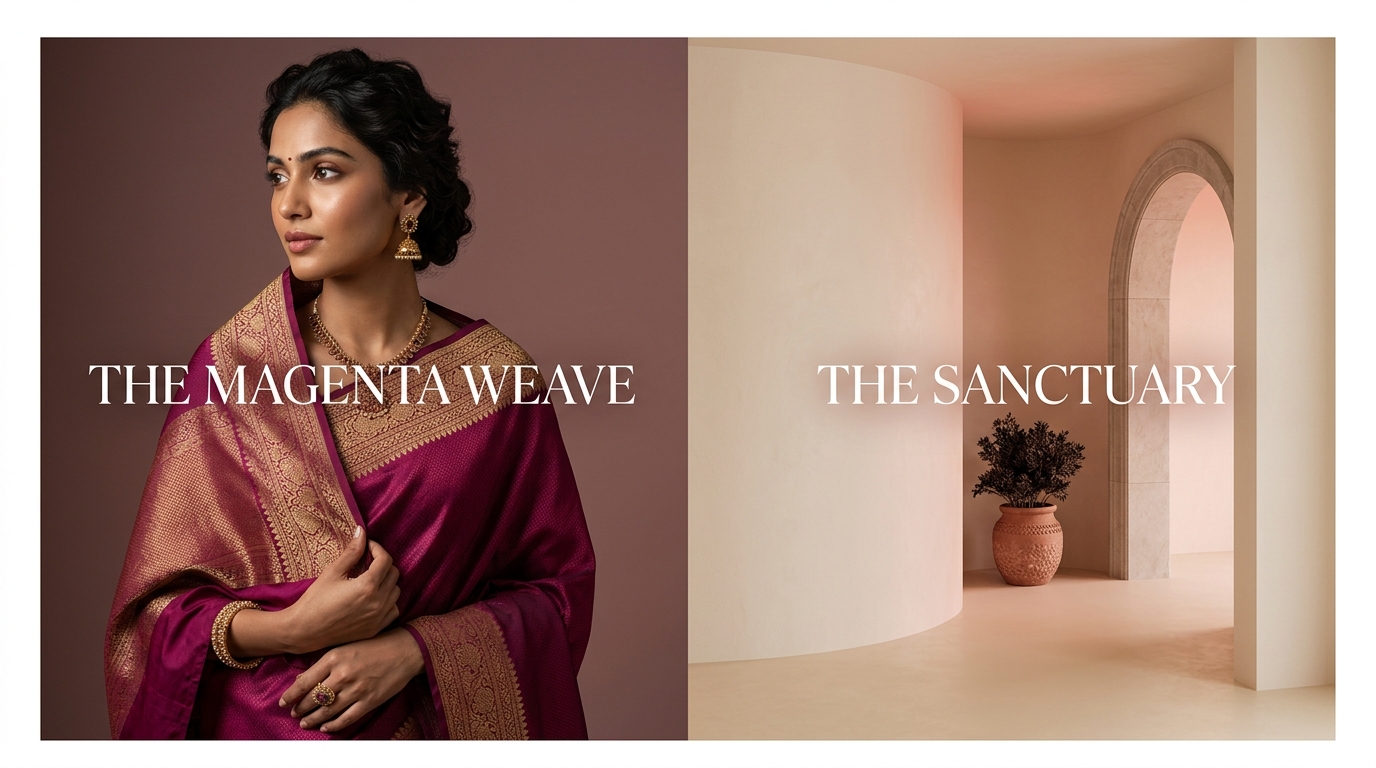
A buyer cannot touch the cloth, so the photo has to show colour, border, pallu and texture. A plain, bright background and the same angle on every saree make a small catalogue look planned. Natural window light and a phone are enough for a start.
- One full-length shot, one pallu shot, one border close-up and one fabric close-up for every saree.
- The same background, the same distance and the same light across the whole catalogue.
- Add a short note on the real colour if your screen shot looks different from the cloth in hand.
If you want the saree shown draped on a model without hiring one, Vastralook's Drape Studio and Catalogue Studio make still pictures from your own garment photo. A Create order costs ₹8–₹10 per 1K shot and is usually ready in 3–4 minutes; a shot you generate yourself costs ₹20–₹25 at 1K. Check the order button for larger sizes. It is an option, not a requirement, and a plain flat photo of the real saree should stay in every listing.
Your first 50 saree listings
- 1. Number every saree
Give each a code and write it on the photos' file names. It stops mix-ups when you have 20 look-alike pieces.
- 2. Photograph in one session
Set up once and shoot every saree in the same light and angle. Shooting across several days makes colours drift.
- 3. Write each listing from a template
Fabric, length, blouse piece, care and colour note, in the same order every time.
- 4. Price with the costs written down
Use a cost sheet, not a guess. The pricing guide below shows a worked layout.
- 5. Publish in batches of 10
After each batch, look at what buyers ask. Fix the listing wording before you publish the next 10.
- 6. Write your return and shipping rules down
Decide before the first order, so every buyer gets the same answer.
- I can describe my niche in one sentence.
- I have a supplier I can reach again, and a second one to compare.
- I chose one channel and read its seller fee and return pages.
- I checked the GST rules on the official portal or with a tax professional.
- Every saree has a code, a cost on record and four photos.
- My return and shipping rules are written down.
How do I start an online saree business with little money?
Start with a small first lot from one supplier, one niche and one selling channel. Use your phone and natural light for photos. Keep a cost sheet from the first piece so you know your price before you list it. We do not quote a minimum budget because it depends on what you buy.
Which platform is best to sell sarees online in India?
There is no single best one. Marketplaces bring buyers who already search there but have their own fees and image rules. A social page or WhatsApp catalogue gives you more control but you find the buyers. Choose one, read its seller pages, and add a second later.
Do I need GST registration to sell sarees online?
It depends on how and where you sell, and the rules change. We did not verify the current figures for this post. Check the official GST portal and the seller page of your marketplace, or ask a tax professional.
How many sarees should I list at the start?
Fifty listings is a practical first target, published in batches of ten, so you can fix wording and photos from buyer questions before you list the next batch. This is a working method, not a rule from any platform.
Can I start a saree business without a studio?
Yes. A phone, a plain background and window light are enough for clear product photos. You can add model pictures later, by hiring a model or by making still images with a tool such as Vastralook.
Where do I buy sarees to resell?
Ask suppliers you can meet or call more than once, compare at least two for similar pieces, and ask for fabric, length, blouse piece and care details before you pay. Check the colour in daylight on the first lot.