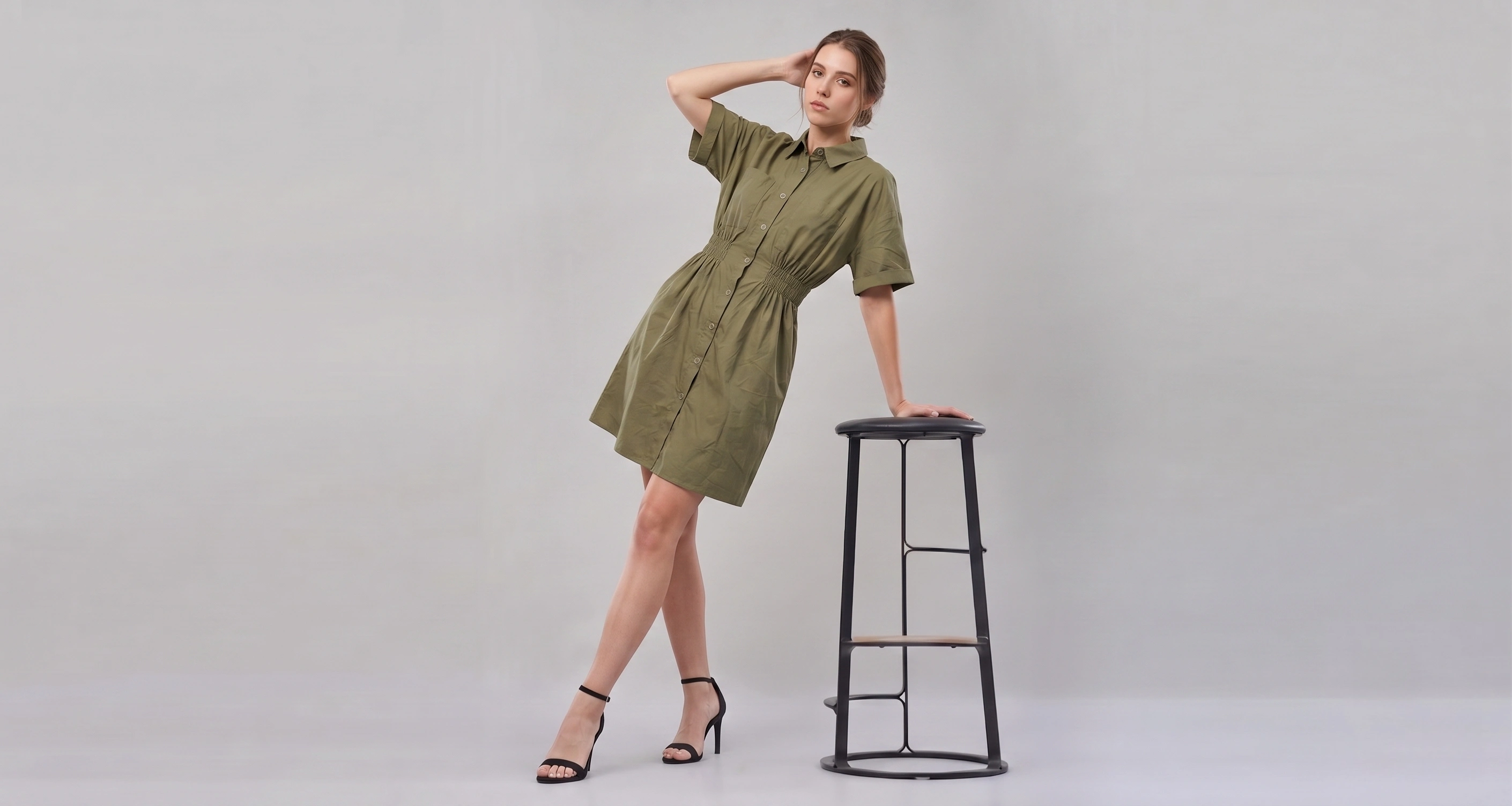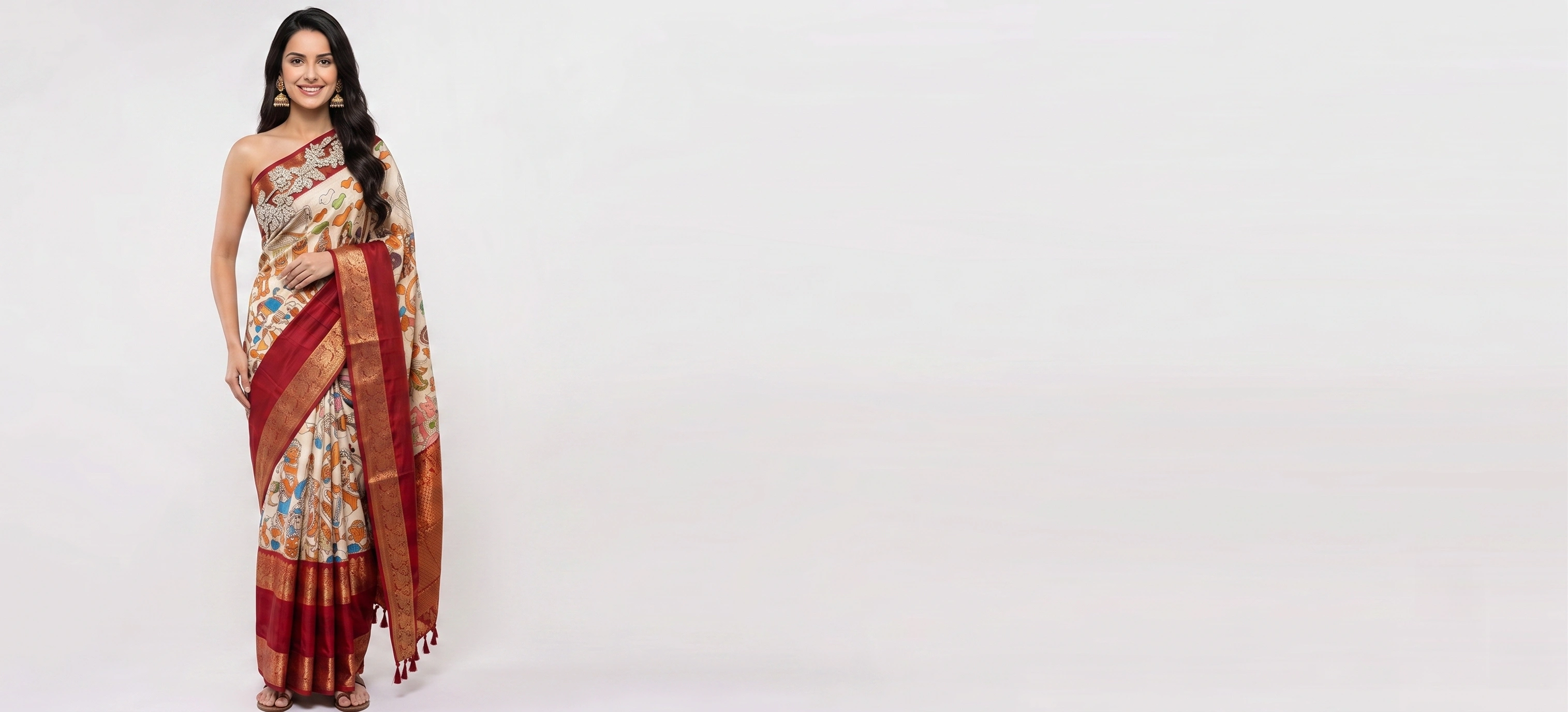
A boutique's problem is not that photography is expensive in the abstract. It is that a shoot has a minimum size — you cannot book a photographer for the eleven pieces that came in on Tuesday. So the eleven pieces go online as phone photos on a hanger, and they sell like phone photos on a hanger.
The weekend setup
You need a spot near a window, a plain wall or a sheet, a steamer or iron, and a phone. That is the whole kit. Set it up once and leave it set up — the value is in not rebuilding it each time stock arrives.
- Shoot in the same spot, at the same time of day, with the same phone settings. Consistency at the source is what makes the catalogue look coherent later.
- Garment flat or on a hanger, filling the frame, shot straight on, no shadow across it.
- Steam first. Always. Creases are the single most common reason a generated image looks wrong.
- Turn off any beautifying or auto-enhance filter. You want accurate colour, not flattering colour.
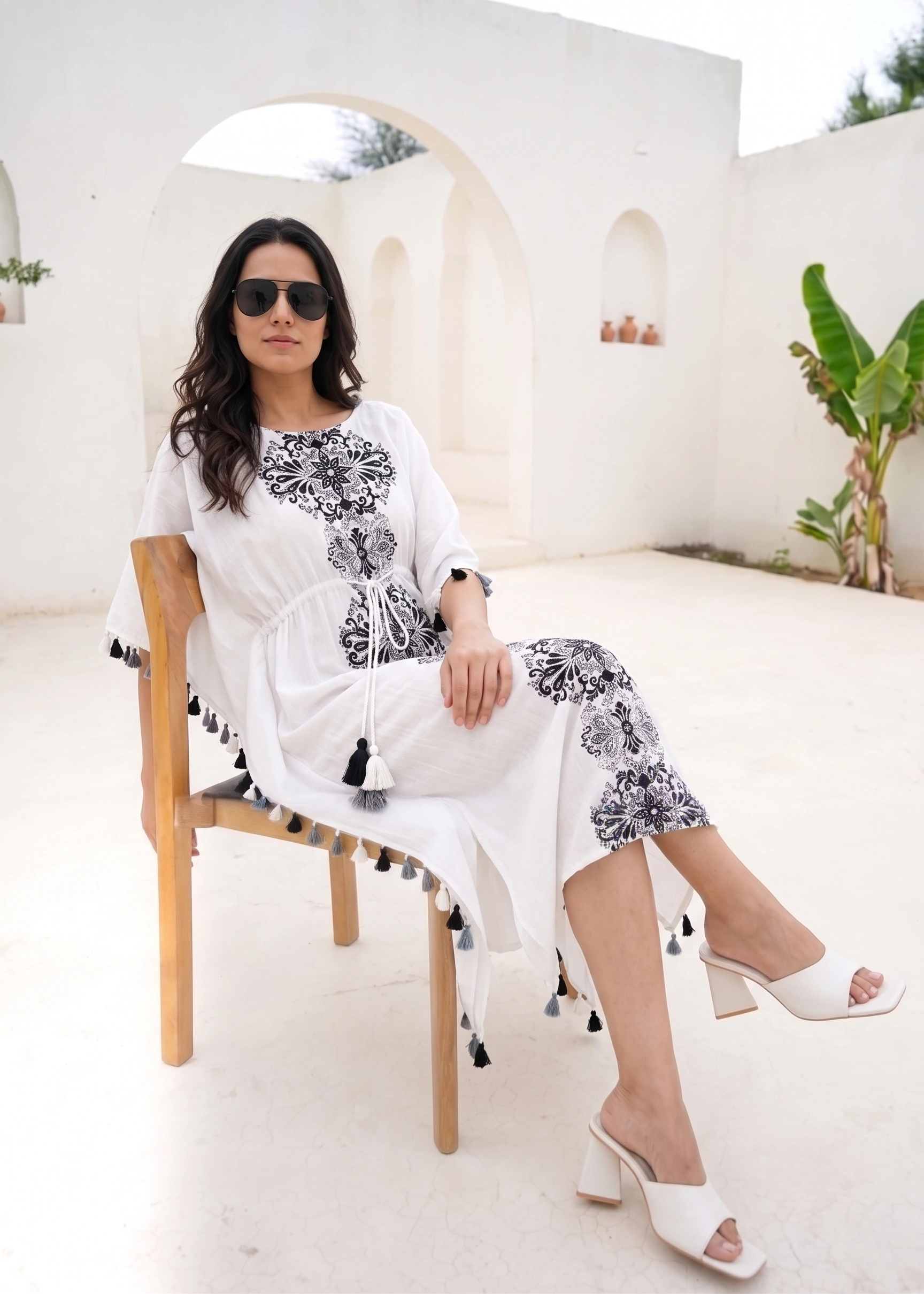
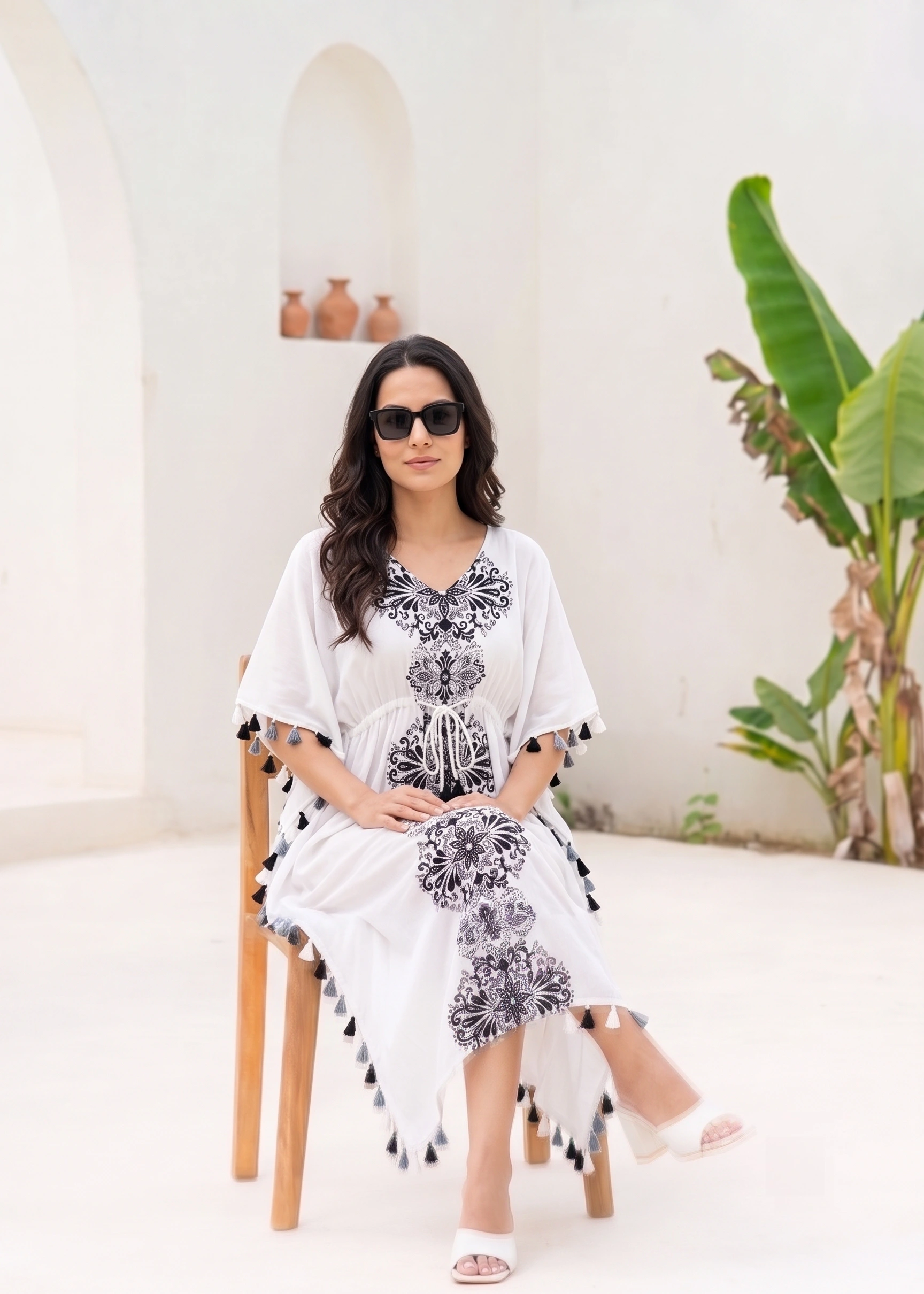
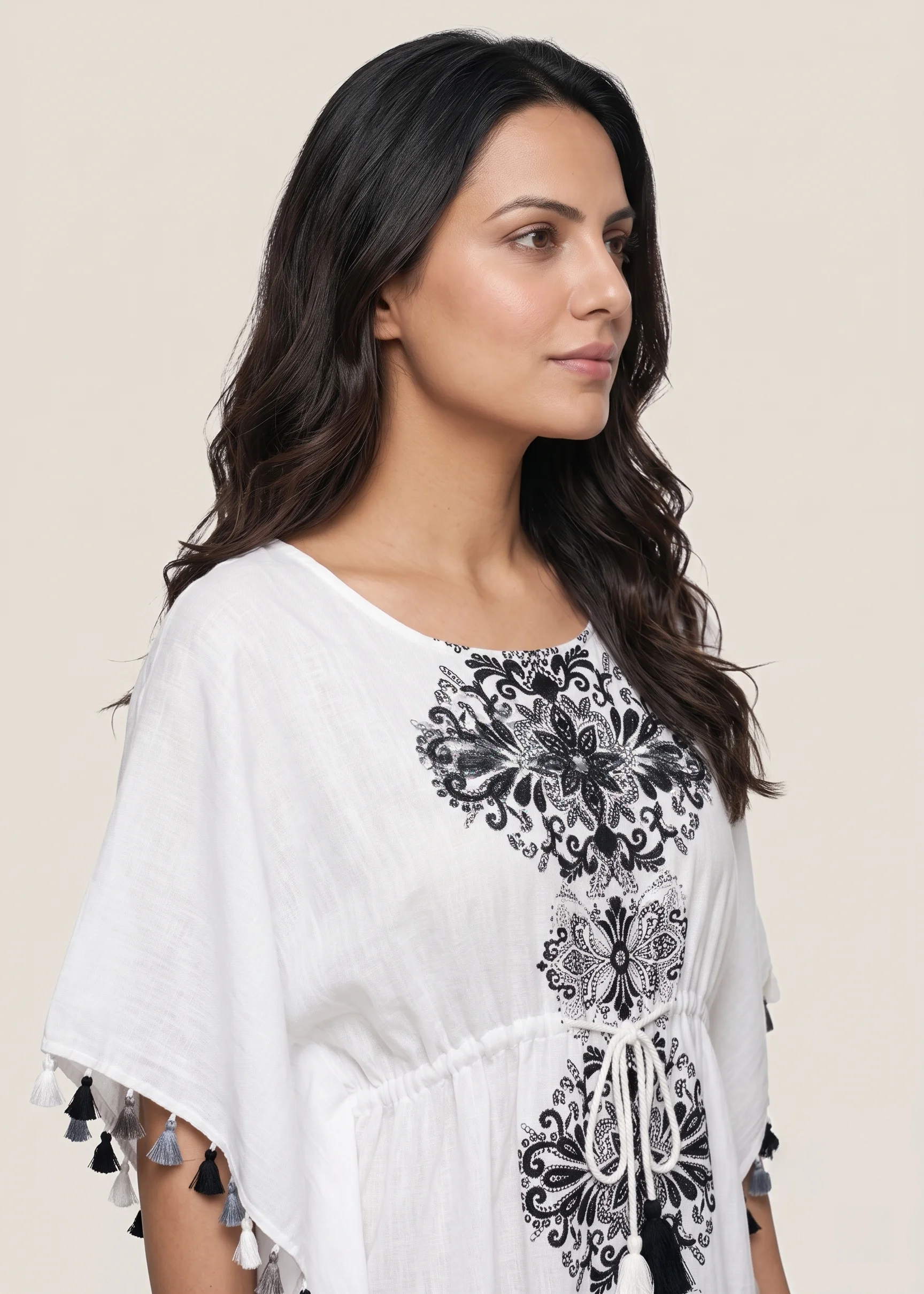
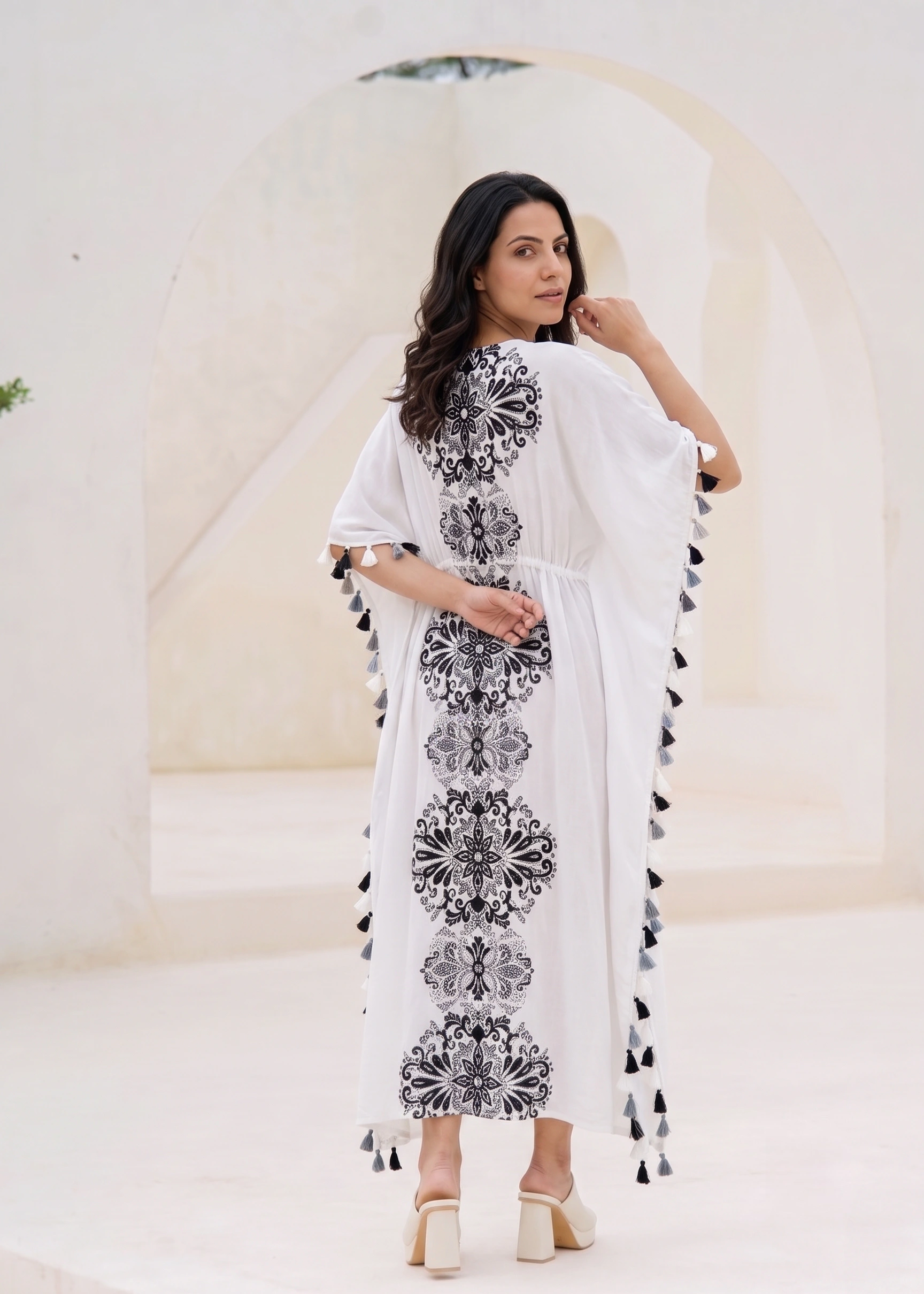
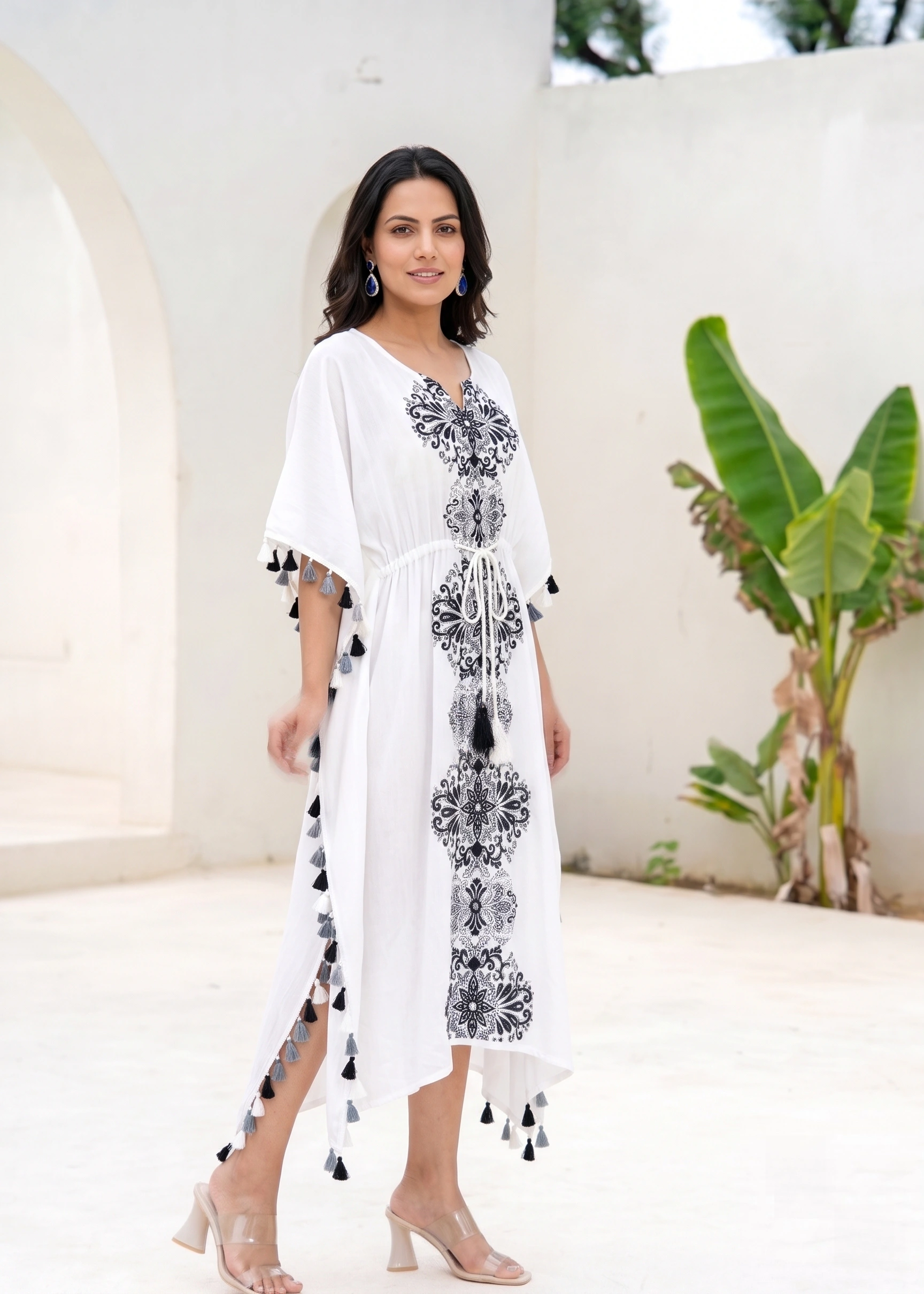
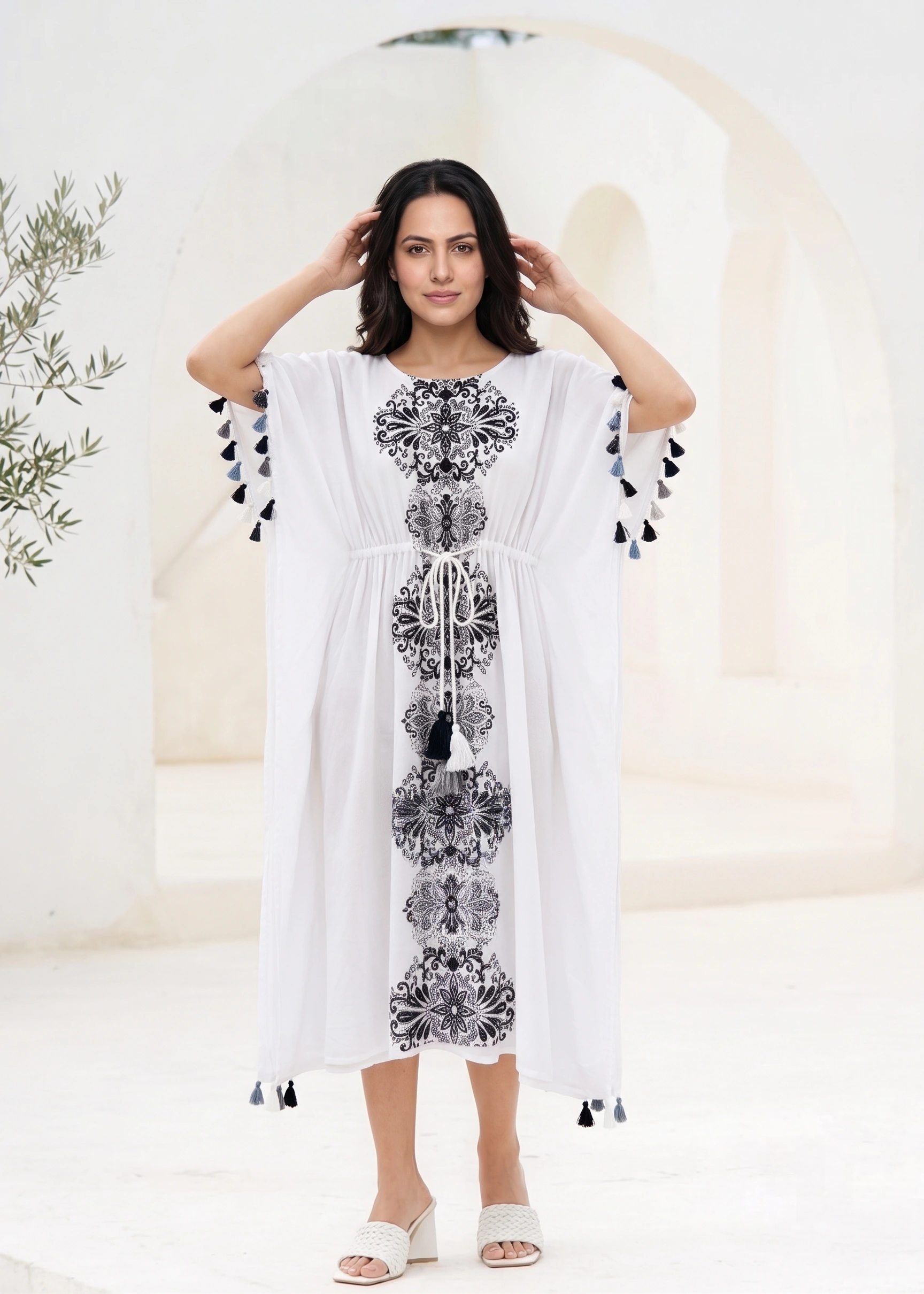
Six frames of one kaftan, all from a phone photo taken by a window. This is the whole point for a boutique: the eleven pieces that arrived on Tuesday get real imagery instead of waiting for a shoot that never gets booked.
The batch rhythm
Process new stock in batches rather than one piece at a time. Photograph everything that arrived, then generate everything in one sitting, then publish. Batching turns a fiddly per-item task into a routine you can do in an hour.
Use the same model and the same package across a batch, and ideally across a season. This is the difference between a shop and a listings page, and it costs nothing.
Consistency is the only part of a big brand's look that is genuinely free to copy.
What to spend credits on
Not everything deserves the same treatment. Give your best sellers and new arrivals the full set — on-model, detail crop, a lifestyle shot for social. Give the long tail one good on-model image. Draft at low quality, then re-run only the images you are actually publishing at full resolution.
Being straight with customers
Show the real garment photo alongside the generated one in your listing. Boutique customers are buying partly on trust, and a real flat photo next to a styled on-model shot builds more of it than either alone. It also protects you: the customer has seen the actual item, so the styled image is context rather than a claim.