Starting an apparel brand or clothing company is one of the most exciting entrepreneurial ventures in India today. With booming domestic ecommerce demand, accessible manufacturing hubs in Surat, Tirupur, Jaipur, and Ludhiana, and direct-to-consumer platforms like Shopify and Instagram, it has never been easier to take a fashion idea from sketch to customer delivery.
However, the apparel business is notoriously competitive. Nearly 80% of new clothing lines struggle within their first 18 months—not because of poor design, but due to cash-flow mismanagement, high minimum order quantities (MOQs), costly photoshoot logistics, and slow marketing execution.
This comprehensive guide provides an actionable, realistic roadmap for launching an apparel brand company from scratch, managing unit economics, sourcing fabrics, and creating catalogue imagery that sells.
In this guide:
- Finding your profitable fashion niche
- Legal setup and business registration in India
- Fabric sourcing hubs: Surat, Tirupur, Jaipur, Ahmedabad
- Sampling, tech packs, and production runs
- Catalogue imagery and visual branding on a budget
- Sales channels: Shopify vs Marketplaces (Amazon, Myntra, Meesho)
- Frequently asked questions (FAQ)
1. Finding Your Profitable Fashion Niche
The biggest mistake first-time clothing brand founders make is trying to be "everything for everyone"—selling t-shirts, sarees, denim, and formal shirts under one roof. Broad clothing brands struggle to gain traction against giants like Zara or Reliance Trends.
Instead, narrow your focus into a high-margin, underserved subcategory:
- Contemporary Daily Ethnic: Office-friendly cotton kurtis with deep pockets.
- Modern Festive Occasion Wear: Ready-to-wear pre-pleated lehenga sarees for destination weddings.
- Size-Inclusive Athleisure: Moisture-wicking loungewear tailored for diverse body shapes.
- Sustainable Everyday Basics: Heavyweight organic cotton streetwear t-shirts.
2. Key Textile Sourcing & Manufacturing Hubs in India
India possesses the world's most versatile textile ecosystem. Knowing where to source saves months of trial and error:
| Textile Hub | Specialty Fabric & Garments | Typical Production Model |
|---|---|---|
| Surat (Gujarat) | Synthetic silks, georgette, crepe, embroidered sarees, digital print yardage | Large volume, low cost-per-meter, rapid digital printing |
| Tirupur (Tamil Nadu) | Knitwear, circular knits, combed cotton t-shirts, hoodies, infant wear | Export-quality jersey manufacturing, customized dyeing |
| Jaipur (Rajasthan) | Block printed cottons, sanganeri prints, bohemian maxi dresses, anarkalis | Artisanal printing, breathable cambric cottons, ethnic boutique wear |
| Ahmedabad (Gujarat) | Denim, woven cottons, shirting fabrics, khadi, poplin | Fabric mills, large wholesale fabric brokers |
| Ludhiana (Punjab) | Woolens, winter wear, thermals, acrylic knitwear | Heavy sweaters, knit jackets, outerwear |
3. Tech Packs, Sampling, and Managing MOQs
Before approaching a contract manufacturer or boutique job-worker, create a detailed Tech Pack (Technical Package):
- Flat CAD Illustrations: Front, side, and back view sketches with seam details.
- Graded Measurement Chart: Exact dimensions for Chest, Waist, Hips, Inseam, and Sleeve Length across XS, S, M, L, XL, and XXL.
- Bill of Materials (BOM): Fabric GSM, thread count, button types, zippers, brand neck labels, and wash-care tags.
Managing Minimum Order Quantities (MOQs)
Never produce 500 units per style on your first drop. Negotiate with boutique sample units for a test run of 25 to 50 pieces per style across 3 core sizes. It is far better to sell out of 50 units and restock than sit on ₹3,00,000 of dead inventory.
4. Visual Branding & Professional Catalogue Creation
In online fashion, your photography *is* your product. Customers cannot touch the fabric, test the drape, or feel the softness; they rely entirely on your visual presentation.
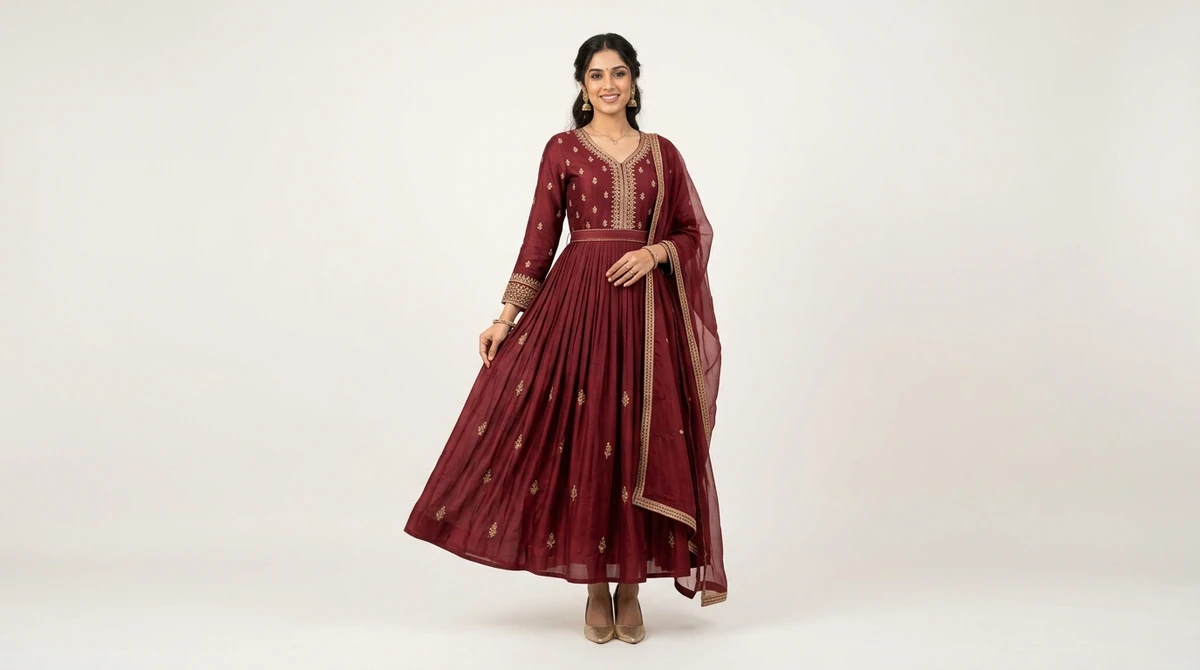
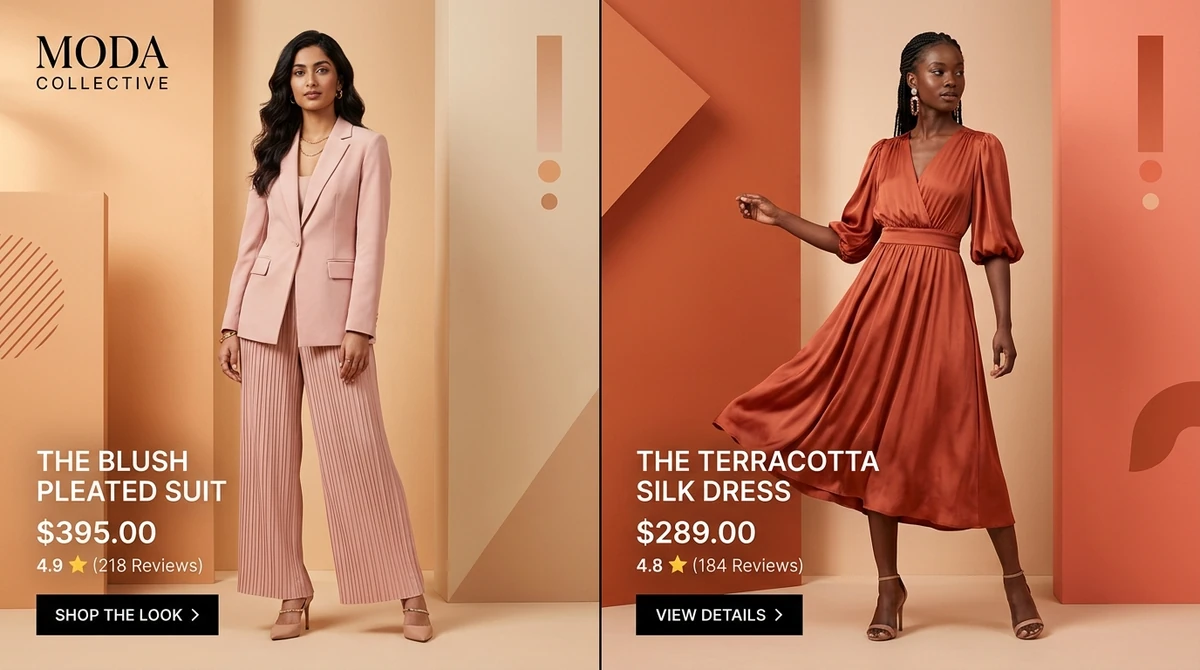
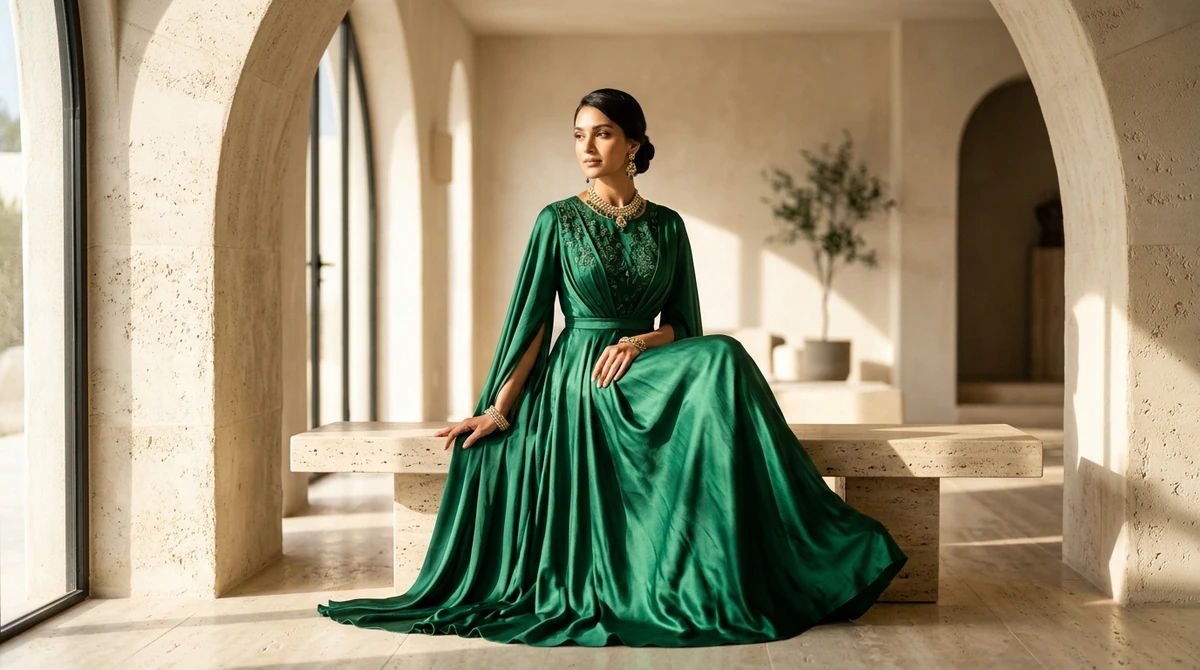
Traditionally, new brand founders had to allocate ₹1,00,000 to ₹2,50,000 for a single catalog photoshoot before selling a single garment. Today, smart founders use Vastralook AI Studio:
- Shoot your samples on a hanger or flat surface.
- Select your preferred model demographic: Represent your target customer with realistic Indian or international models.
- Choose on-brand backdrops: Architectural spaces, minimalist sets, or festive heritage courtyards.
- Export ready-to-list images: Perfectly framed for your Shopify store and marketplace listings.
This keeps your pre-launch capital focused on inventory and targeted advertising rather than studio overhead.
5. Sales Channel Strategy: Where to Sell First?
| Channel | Advantages | Considerations |
|---|---|---|
| Own Shopify Store | Total control over brand data, customer emails, and profit margins | Requires paid ad spend (Meta/Google) to drive traffic |
| Myntra & Nykaa Fashion | High fashion credibility, massive existing shopper base | Rigorous brand approval process, 25-35% commission fees |
| Amazon & Flipkart | Tremendous search volume, fast delivery network (FBA) | Price sensitivity, stringent packaging compliance |
| Meesho | Zero commission, rapid reach in Tier-2/3 cities | Low average order value (AOV), COD return rates |
Frequently Asked Questions
What is the minimum capital required to start a clothing brand in India?
A bootstrapped brand can launch with ₹75,000 to ₹1,50,000 by producing small sample batches (20-30 pieces per style across 3 designs), leveraging AI studio photography, and selling via a Shopify store.
Do I need a fashion design degree to launch an apparel brand?
No. Many successful clothing brand founders are curators, marketers, or business operators who partner with freelance pattern makers, technical designers, and experienced garment manufacturers.
How do I protect my brand name in India?
Register your trademark under Class 25 (Clothing, footwear, and headgear) with the Controller General of Patents, Designs and Trade Marks (IP India) before launching publicly.
How do clothing brands handle returns and exchanges?
Integrate a dedicated return portal like Returnly or Bluedart/Delhivery reverse-logistics integrations, and maintain strict size charts with clear model dimensions on every product page to keep return rates under 15%.