Artificial intelligence is transforming every phase of the fashion lifecycle. What began as experimental digital art has rapidly evolved into an indispensable suite of enterprise tools for trend forecasting, mood board generation, textile print design, 3D garment simulation, and virtual catalogue photography.
For independent fashion designers, boutique owners, and large apparel manufacturers alike, AI removes the slowest and most expensive bottleneck in fashion: physical sample iteration. Traditionally, bringing a single garment from concept sketch to a production sample required weeks of back-and-forth pattern drafting, fabric cutting, stitching, fitting, and revisions—generating massive textile waste and tie-up capital.
This guide explores the current state of AI in fashion design, practical workflows designers use right now, and how generative drape technologies like Vastralook allow brands to test market demand before cutting a single meter of fabric.
In this guide:
- The 4 layers of AI adoption in fashion design
- Generative print and pattern creation for textiles
- 3D virtual sampling vs physical sample waste
- From flat sketch to on-model render in minutes
- Predictive trend forecasting using machine learning
- Frequently asked questions (FAQ)
1. The Four Layers of AI in Modern Fashion Design
+---------------------------------------------------------------+ | LAYER 1: TREND INTELLIGENCE & MOOD BOARDING | | - Computer vision scans runways, social feeds & search trends | +---------------------------------------------------------------+ | +---------------------------------------------------------------+ | LAYER 2: GENERATIVE 2D DESIGN & PRINT CREATION | | - Midjourney, Stable Diffusion & custom textile models | +---------------------------------------------------------------+ | +---------------------------------------------------------------+ | LAYER 3: 3D CAD & DIGITAL DRAPING | | - CLO 3D, Browzwear, Marvelous Designer | +---------------------------------------------------------------+ | +---------------------------------------------------------------+ | LAYER 4: ON-MODEL PHOTOREALISTIC RENDERING (VASTRALOOK) | | - Virtual photo studio, catalogue generation, customer tests| +---------------------------------------------------------------+
2. Generative Textile Prints & Seamless Pattern Design
For textile designers in Surat, Jaipur, and international print houses, creating repeat seamless prints has always been time-intensive.
Using specialized generative diffusion models, textile artists can now:
- Generate Seamless Repeat Patterns: Prompt for complex motifs—such as *"Kalamkari hand-painted botanical vine on cream tussar silk"* or *"Geometric Art Deco monogram in navy and gold"*—that tile seamlessly across roll yardage.
- Explore Colorway Variations Instantly: Generate 15 colorway variations (Pastel, Jewel tones, Earthy, Monochrome) of a single print design in seconds.
- Direct-to-Fabric Export: Export vector-compatible, high-DPI files ready for digital textile printing machines.
3. Ending the "Sample Waste" Crisis with 3D Garment Simulation
The fashion industry produces an estimated 150 billion garments annually, with over 20% of samples discarded during the pre-production design approval phase.
By integrating 3D digital apparel software (like CLO3D or Browzwear) with generative AI platforms:
- True-to-Scale Pattern Drafting: Designers draft 2D digital pattern pieces that virtually stitch together around customized 3D avatars.
- Fabric Physics Simulation: Algorithms accurately calculate fabric weight, shear, stretch, and bending resistance—simulating how heavy brocade silk differs from airy chiffon.
- Internal Buy-In Without Physical Sampling: Retail buyers can review an entire 40-piece collection digitally, approving or rejecting styles before placing fabric mill orders.
4. Virtual Pre-Commerce: Testing Demand Before Manufacturing
The most revolutionary application of AI fashion design is Virtual Pre-Commerce:
- Design Digitally: Generate a stunning new dress or saree design using AI design tools.
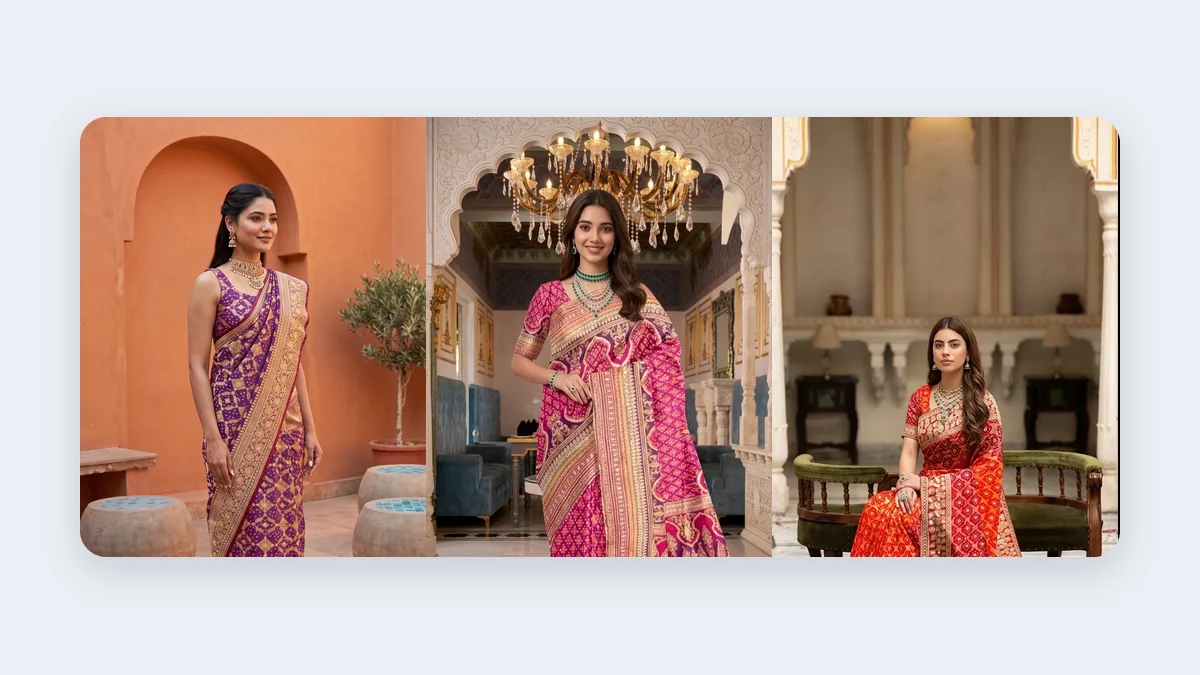
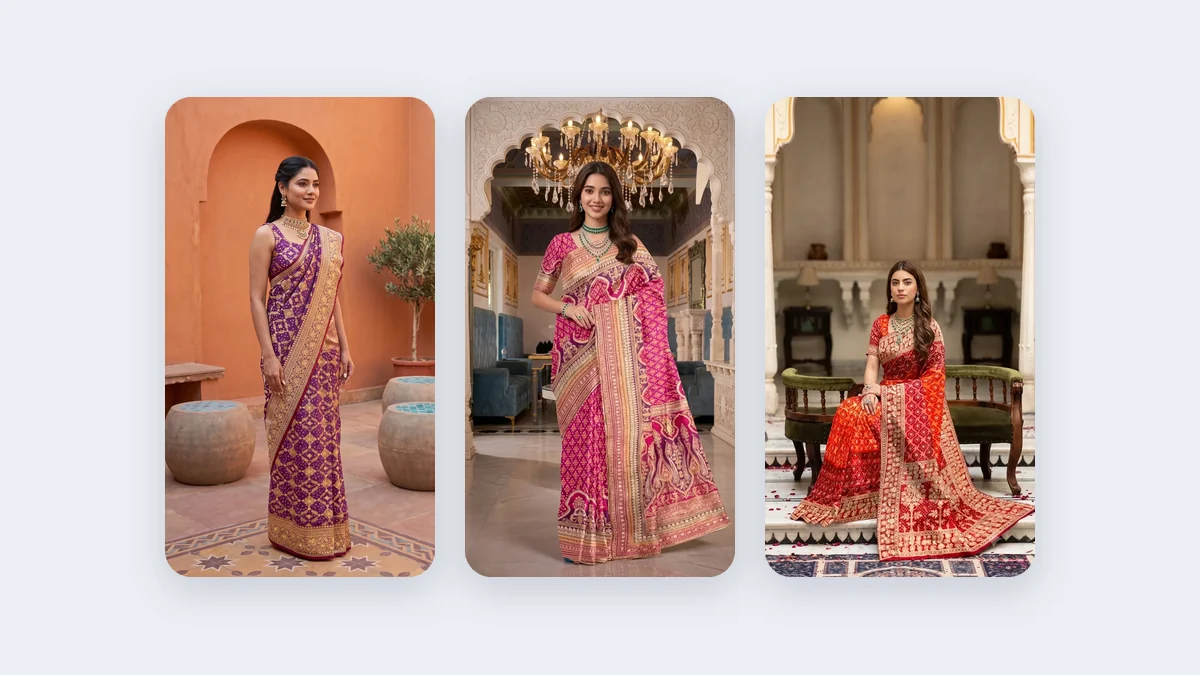
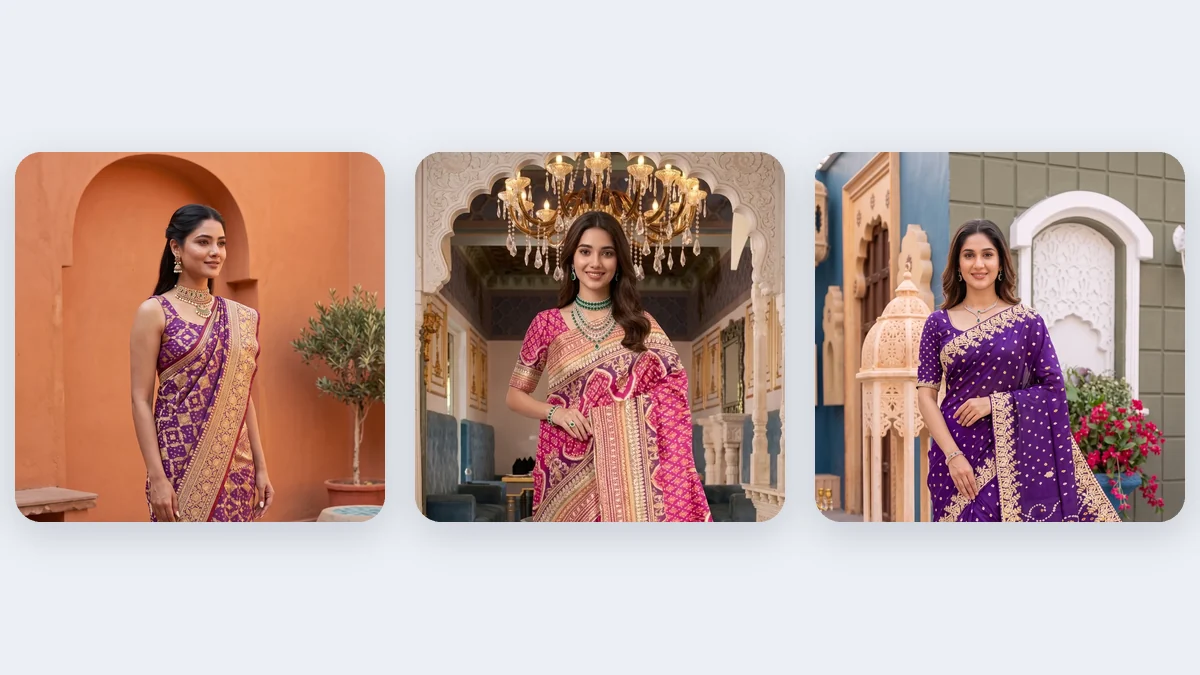
- Create Commercial Catalogue Imagery with Vastralook: Use Vastralook Catalogue Studio or Drape Studio to render the design on realistic models in high-end lifestyle settings.
- Launch a Pre-Order Campaign: Put the virtual imagery on your Shopify store or run a test Meta ad campaign.
- Manufacture What Sells: Produce inventory only for the designs that achieve verified customer pre-orders or high engagement, achieving a 0% dead-stock rate.
Frequently Asked Questions
Can AI replace human fashion designers?
No. AI functions as an ultra-fast design assistant and prototyping engine. Human designers remain essential for brand identity, aesthetic curation, fabric selection, garment ergonomics, and emotional storytelling.
What is the best AI tool for fashion designers right now?
For conceptual mood boards and print ideas, Midjourney and Stable Diffusion are widely used. For technical pattern making, CLO 3D is the industry standard. For on-model catalogue imagery and realistic saree draping, Vastralook is the leading dedicated platform.
Can an AI design be copyrighted?
In most jurisdictions (including India and the US), purely AI-generated outputs without human modification cannot be copyrighted. However, original textile prints, tech packs, and garments that combine human creative input with AI assistance can be registered as proprietary intellectual property.
How are Indian ethnic brands using AI dress design?
Saree and kurti brands in Surat and Jaipur use AI to generate new zari border motifs, preview digital block print combinations, and visualize how unstitched fabrics will look as finished, draped garments on models before weaving.