AI in fashion is no longer a futuristic idea. Designers use it to sketch ideas, brands use it to create product photos, and shoppers use it to try outfits virtually. Here is a clear look at how fashion and AI work together, where it helps and where human judgement still matters.
Where AI is used in fashion
| Area | What AI does |
|---|---|
| Design | Generates sketches, patterns and colour palettes |
| Trend forecasting | Analyses social and sales data to spot trends |
| Product imagery | Creates on-model photos and backgrounds |
| Virtual try-on | Lets shoppers preview garments on themselves |
| Personal styling | Recommends outfits from preferences and wardrobe |
| Inventory | Predicts demand to reduce overstock |
| Customer service | Chatbots for sizing and order questions |
AI fashion design
Fashion AI generators and AI dress design tools can turn a text prompt into design concepts. Designers use them for early inspiration, then refine ideas by hand. Good prompts include garment type, silhouette, fabric, colour and occasion, for example "A-line anarkali in rust-orange chanderi with gold block print".
AI outfit generators and styling
An AI outfit generator suggests combinations based on style, season, colour and occasion. Some apps analyse your wardrobe photos and propose new looks, helping you wear what you already own.
AI for product photos
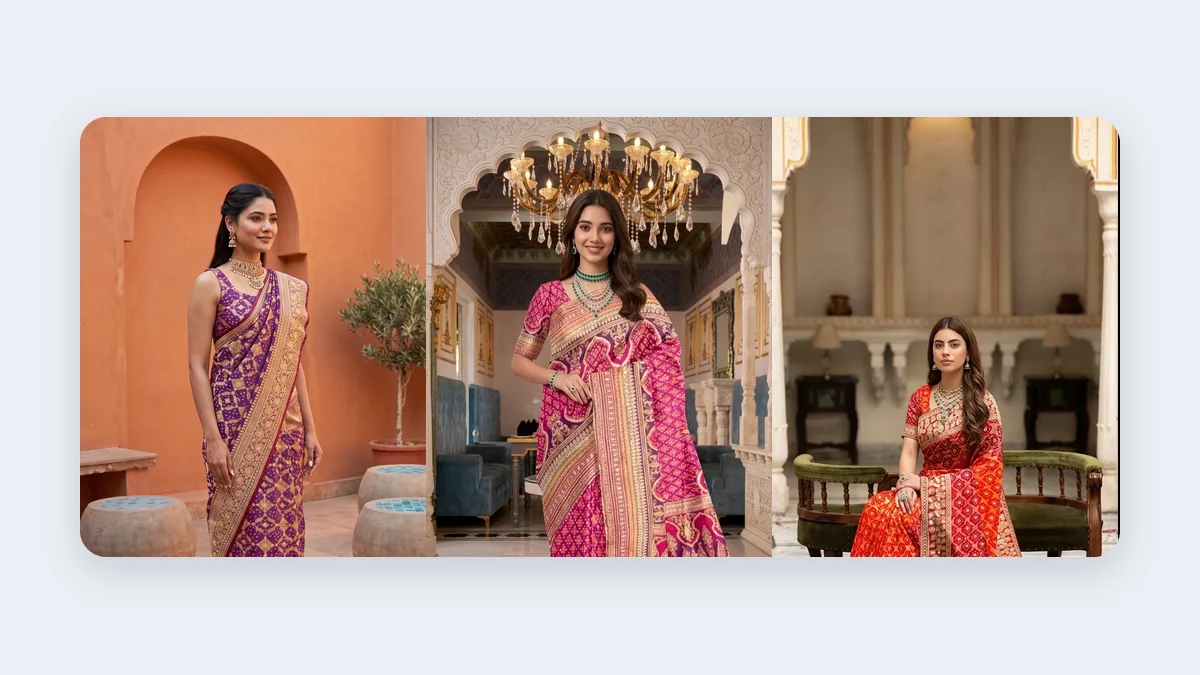
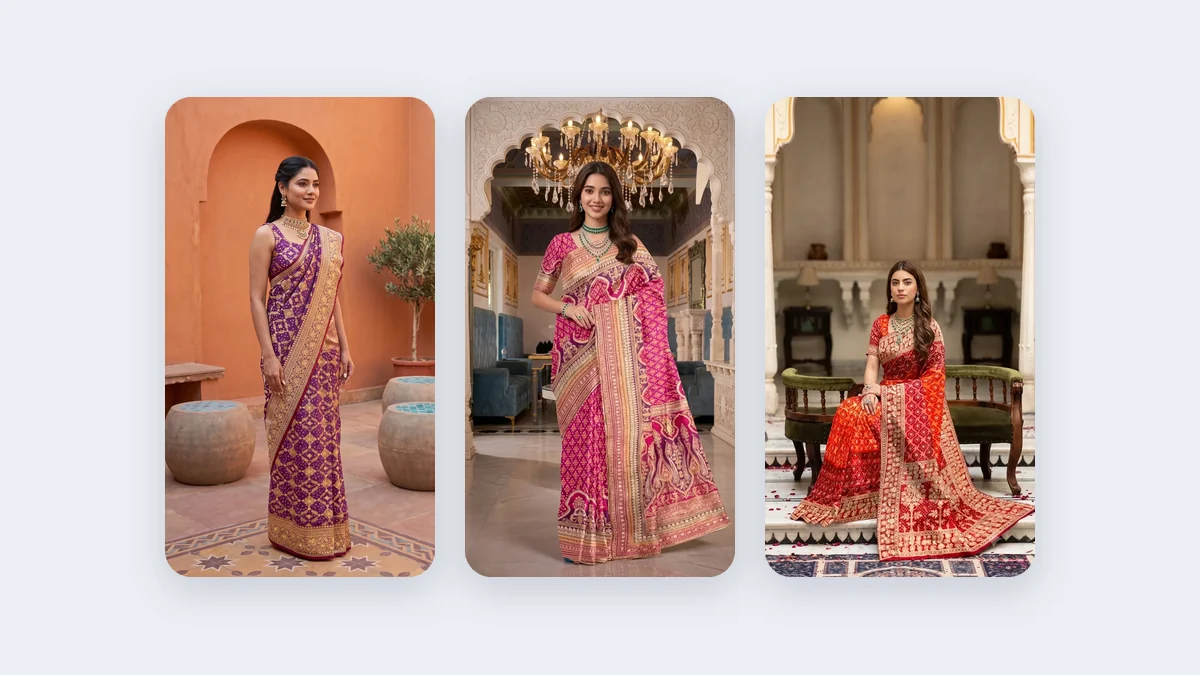
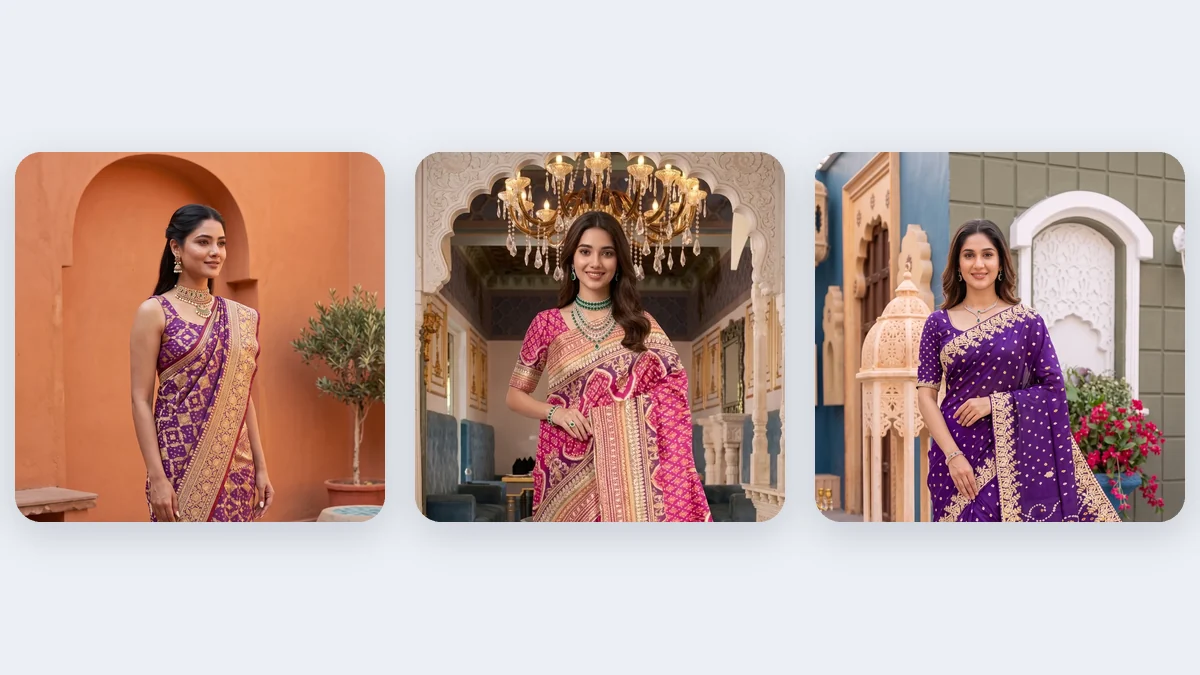
Apparel brands use AI to turn a garment photo into an on-model image. This lowers the cost of shooting every SKU and helps maintain a consistent catalogue. Vastralook is built for this workflow, especially for sarees, lehengas and other ethnic wear.
Virtual try-on and AI clothes changer
Shoppers see garments on a model or on their own photo, which can increase confidence and reduce returns when the tool is accurate.
Benefits
- Faster design and content creation
- Lower costs for catalogue imagery
- More personalised shopping
- Better demand planning and less waste
Limitations and risks
- AI can misrepresent fabric, fit or print.
- Training data can create bias in body types and styles.
- Originality and copyright concerns for AI-generated designs.
- Heavy use may reduce human creativity if not balanced.
Best practices for brands
- Keep a human review step before publishing.
- Use real garment photos as inputs for product visuals.
- Be transparent where regulations or platforms require it.
- Use AI to support, not replace, your designers and photographers.
- Test with a small collection before scaling.
AI in the fashion value chain: from fibre to shopper
AI touches almost every stage of fashion, not only design and marketing.
| Stage | How AI is used | Example benefit |
|---|---|---|
| Trend research | Analysing search data, social posts and sales | Spot rising styles earlier |
| Design | Concept generation, pattern ideas, colour palettes | Faster ideation |
| Sampling | 3D simulation of garments | Fewer physical samples |
| Production planning | Demand forecasting | Less overstock |
| Quality control | Image recognition for defects | Fewer faulty pieces |
| Merchandising | Predicting which items to feature | Better product placement |
| Photography and content | On-model image generation, backgrounds, video | Faster, cheaper visuals |
| Marketing | Personalised ads and email | Higher engagement |
| Customer experience | Size recommendations, virtual try-on, chatbots | Fewer returns |
| Resale and circularity | Identifying and valuing second-hand items | Extends garment life |
AI design tools in practice
Prompt-to-design workflow
- Define the garment, audience and occasion.
- Write a prompt covering silhouette, fabric, colour, detail and mood.
- Generate multiple concepts.
- Select and refine the best ideas manually.
- Convert selected concepts into technical drawings with measurements.
- Make a physical sample and test fit.
Prompt examples
| Goal | Example prompt |
|---|---|
| Ethnic wear | "Hand block printed cotton kurta set, indigo with white motifs, straight cut, mandarin collar" |
| Western wear | "Oversized linen blazer in sand colour, notch lapel, relaxed fit" |
| Festive | "Red and gold lehenga with mirror work, flared skirt, cropped blouse" |
| Resort | "Floral midi dress with ruffled sleeves in pastel tones" |
AI-generated designs are a start, not a finish. Designers refine proportions, construction and fabric choices.
AI for personal styling
AI stylists work by learning your preferences and comparing them with fashion data.
- Wardrobe apps scan your clothes and suggest outfit combinations.
- Shopping assistants recommend items based on past purchases.
- Colour analysis tools suggest palettes that suit your skin tone, though results should be treated as suggestions.
- Occasion planners build outfits for events, weather and dress codes.
Tips for getting better recommendations
- Provide clear, well-lit photos of your clothes.
- Be specific about your style, budget and occasions.
- Review suggestions critically and mix them with your own taste.
Virtual try-on and size recommendation
Virtual try-on helps shoppers see how a garment looks on a model or on themselves. Size recommendation tools use body measurements or past purchases to suggest the best fit. These tools can reduce returns, which are a major cost for online fashion.
| Tool | Benefit | Limitation |
|---|---|---|
| Virtual try-on | Visual preview | Not exact fit |
| Size advisor | Fit confidence | Needs accurate input |
| AR mirror | Interactive experience | Needs device support |
| AI model photos | Shows garment on diverse bodies | Needs accuracy checks |
AI and sustainability
AI can support a more sustainable industry when used well.
- Better demand forecasting reduces unsold stock.
- Digital sampling cuts physical waste.
- Image-based sorting helps resale and recycling.
- Virtual photoshoots reduce travel and studio use.
However, AI also consumes energy. Responsible brands balance efficiency gains against computing costs and focus on long-lasting products.
Ethics, bias and copyright
| Issue | Concern | Good practice |
|---|---|---|
| Bias | Models trained on narrow data may favour certain body types or skin tones | Test outputs across diverse profiles |
| Copyright | AI designs may resemble existing works | Review for originality; follow local law |
| Transparency | Customers may not know images are AI-generated | Disclose where required |
| Jobs | Roles shift as tasks are automated | Upskill teams and create new roles |
| Privacy | Try-on tools process personal photos | Use secure tools and delete data |
How small brands can start with AI
- Pick one problem. For example, slow product photography.
- Choose a tool built for that problem. For apparel photos, a platform like Vastralook.
- Run a small pilot. Test with 5 to 10 products.
- Measure results. Conversion, time saved, return rate.
- Document what works. Build your own process and checklist.
- Scale gradually.
Example 30-day pilot
| Week | Task |
|---|---|
| 1 | Select products and set success metrics |
| 2 | Generate AI images and review quality |
| 3 | Publish on selected product pages |
| 4 | Compare performance and decide next steps |
Skills fashion teams need in the AI era
- Prompt writing and visual direction
- Quality review and brand consistency
- Data literacy for trends and sales
- Understanding of copyright and ethics
- Collaboration between designers, marketers and tech teams
Myths about AI in fashion
| Myth | Reality |
|---|---|
| AI will replace designers | It supports designers; creative judgement remains human |
| AI images are always perfect | They need review for accuracy |
| AI is only for big brands | Many tools are affordable for small sellers |
| AI removes the need for photoshoots | It complements them, particularly for catalogues |
Quick checklist
- Defined the business problem
- Chosen a suitable tool
- Set a human review step
- Checked licensing and disclosure rules
- Measured results before scaling
The future of AI in fashion
Expect more integrated tools that connect design, sampling, photography and marketing in one workflow. Brands that document their style guides, build clean product data and train teams to review AI outputs will benefit most. Customers will likely expect better personalisation and clearer information about how products look and fit. The winners will pair technology with strong craft, honest communication and thoughtful design.
Conclusion
AI works best as a creative partner. Use it for speed and variety, and let human taste make final decisions.
Frequently asked questions
Can AI design clothes?
It can create concepts, but production still needs patterns, fabrics and skilled makers.
Will AI replace fashion photographers?
It will change the work. Many brands use both.
Is AI good for sustainability?
It can reduce sampling and overproduction when used for design previews and demand forecasting.