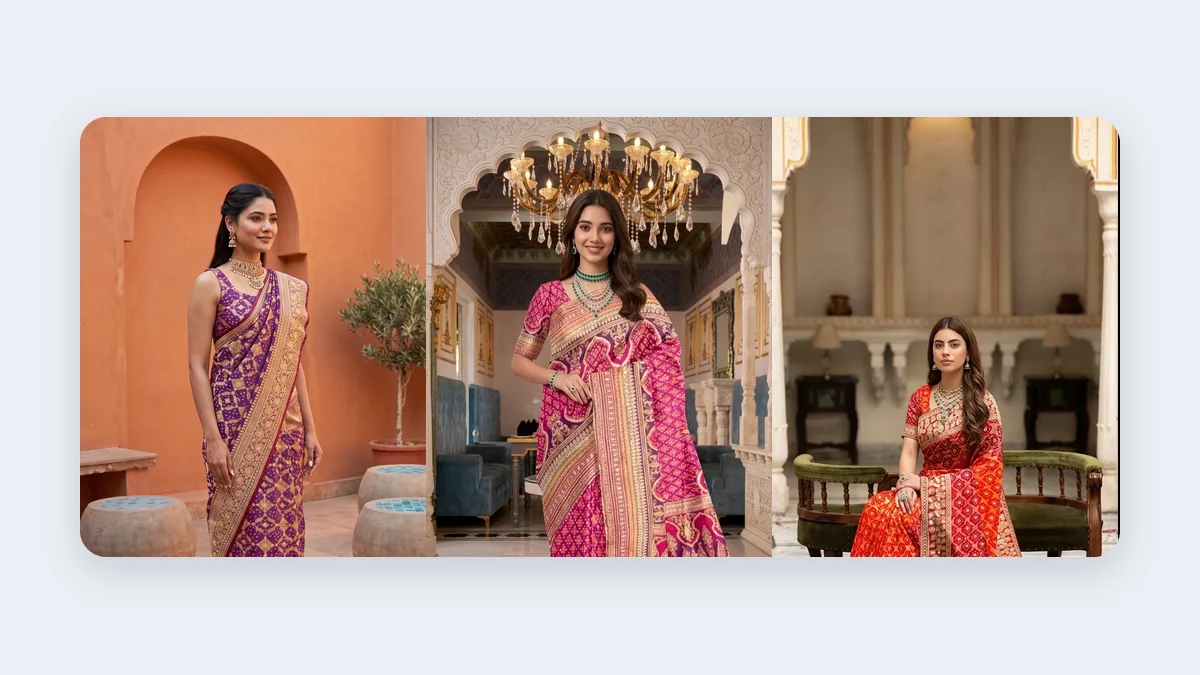
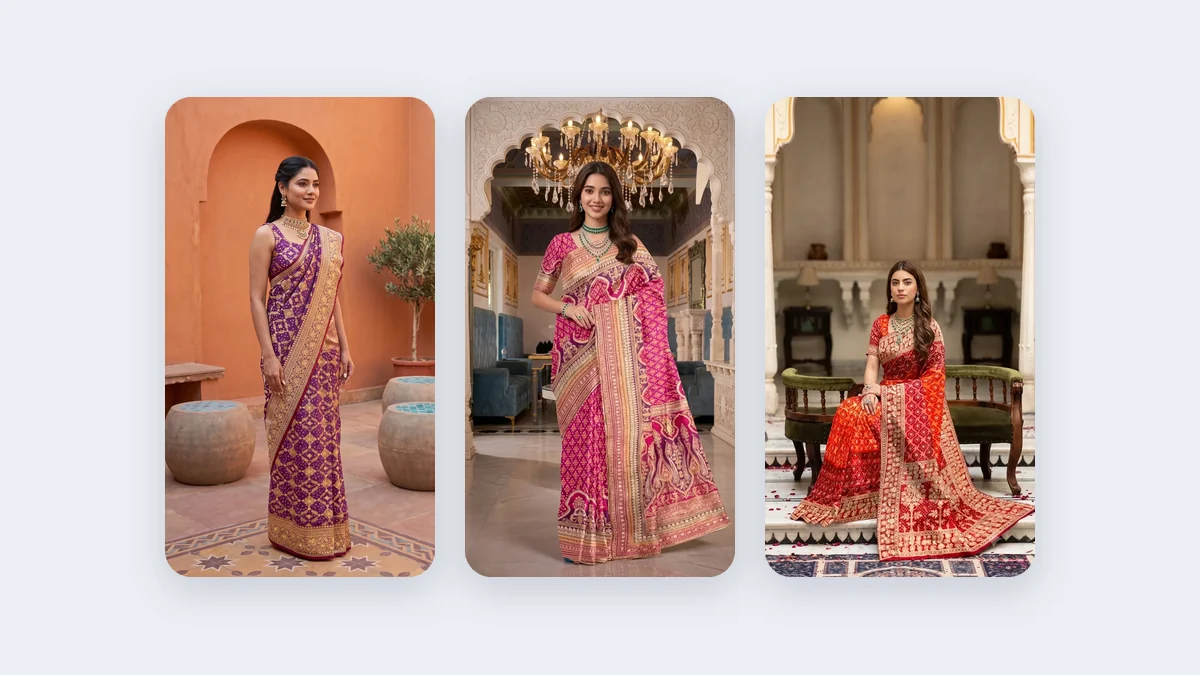
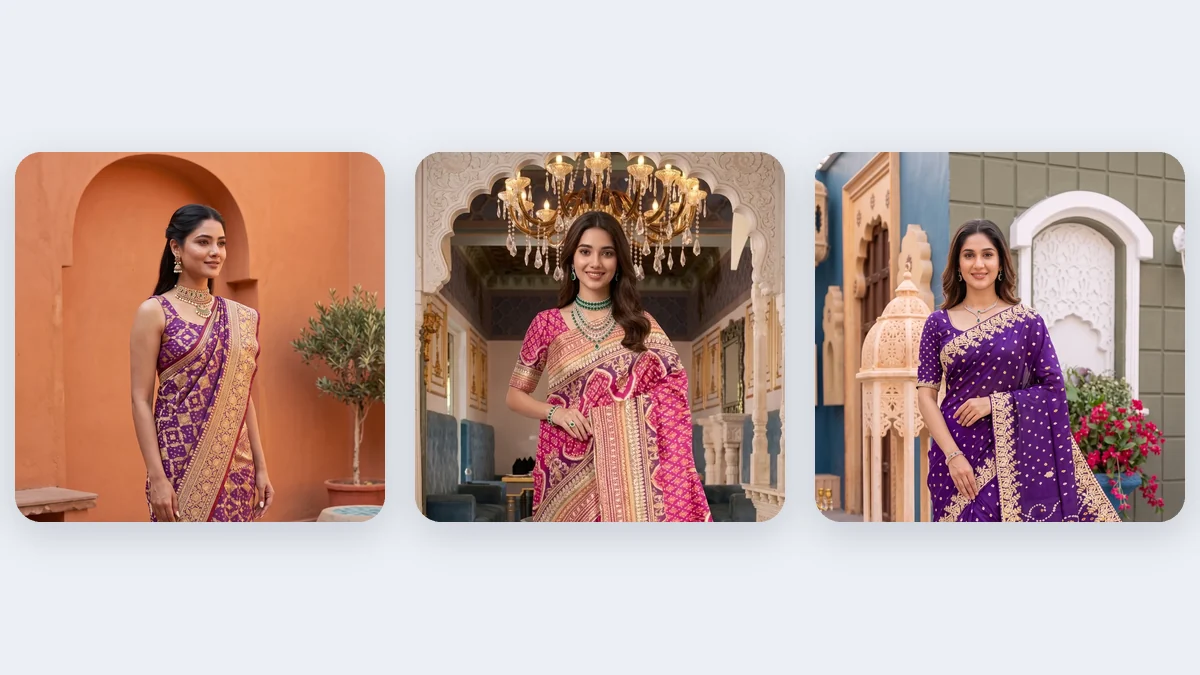
If you sell clothes online, you already know the problem. Shoppers want to see a garment on a real-looking person, but a traditional model shoot means booking a studio, a photographer, a model, a makeup artist and then waiting a week for edits. For a small brand launching dozens of designs a month, that does not scale.
An AI fashion model generator solves this by taking a photo of your garment and placing it on a realistic, AI-generated model. This guide explains how it works, how to get results that look professional, where it fits next to a traditional shoot, and how to avoid the mistakes that make AI photos look fake.
What is an AI fashion model generator?
An AI fashion model generator is software that creates a photorealistic person wearing your product. You upload a flat-lay, a hanger photo, a mannequin photo, or even a clean phone photo of the garment. You choose a model look, a pose and a background, and the tool produces a finished image.
You will see the same idea described as an AI model generator, AI-generated model, AI fashion models, or AI image model. They all mean software that produces model photos without a live shoot.
| You provide | The AI produces |
|---|---|
| Flat-lay or hanger photo of the garment | Model wearing the garment in a front pose |
| Model preferences (skin tone, body type, age range) | A matching AI-generated model |
| Background or setting choice | Studio, outdoor, festive or minimal scene |
| Optional style references | Consistent look across a collection |
Why brands are switching to AI-generated models
- Speed. Images that once took days can be produced the same afternoon a sample arrives.
- Lower cost per image. There is no studio rental, travel or model fee for each new SKU.
- Consistency. Every product page can share the same lighting, framing and background.
- Diversity. You can show the same garment on different body types and skin tones, helping shoppers imagine themselves in it.
- Easy testing. Try different backgrounds and poses and see which version earns more clicks.
- Fewer logistics. No rescheduling because of weather, illness or model availability.
What kinds of brands benefit most?
| Brand type | Why AI helps |
|---|---|
| New D2C labels | Professional visuals on a small budget |
| Boutiques with frequent drops | Quick content for each arrival |
| Marketplace sellers | Consistent main images for many SKUs |
| Ethnic wear brands | Show drapes and colourways without arranging many shoots |
| Wholesalers and exporters | Catalogues for buyers in less time |
How to run an AI model photoshoot, step by step
Step 1: Capture a clean source photo
The AI can only be as good as your garment photo. Follow these rules:
- Steam or iron the garment.
- Lay it flat on a plain, contrasting surface or hang it on a plain background.
- Shoot straight on, in soft daylight, with no harsh shadows.
- Fill the frame without cutting off edges.
- For sarees and lehengas, photograph the pleats, border and pallu separately so the AI can see the design.
Step 2: Pick the right model profile
Match the model to your customer. A kurta brand for working women in their 30s should not use a teenage-looking model. Keep this choice consistent across your catalogue so the store feels cohesive. If you serve a wide audience, create sets with different body types.
Step 3: Choose pose and background
Use simple standing poses for catalogue pages and more expressive poses for ads and social posts. A neutral studio background works best for marketplaces, while lifestyle or festive scenes suit your own website and Instagram.
Step 4: Generate, then review at full size
Zoom in to 100%. Check hands, fabric edges, prints and neckline. Reject any image where a pattern is distorted, a border is missing, or the garment seems to float.
Step 5: Refine and regenerate
If something is off, adjust the pose, change the source photo, or regenerate. Small changes to the input often fix recurring issues.
Step 6: Export for each channel
Save separate sizes for your website, marketplace listings and Instagram, for example 1:1 for grids, 4:5 for feeds and 9:16 for stories.
Quality checklist before you publish
- Does the print or embroidery match the real product exactly?
- Is the colour accurate to the physical fabric?
- Do hands, fingers and hair look natural?
- Does the garment fit believably (no floating hems or odd folds)?
- Are the proportions of sleeves, neckline and length correct?
- Would a customer feel misled when the real product arrives?
The last question matters most. If the answer is "maybe", fix the image or do not use it.
AI models vs. traditional shoots
| Factor | Traditional shoot | AI model shoot |
|---|---|---|
| Time per batch | Days to weeks | Hours |
| Cost structure | High fixed cost per shoot | Lower, per-image |
| Best for | Hero campaigns, brand films | Catalogues, new drops, A/B tests |
| Flexibility | Limited by schedules | Regenerate any time |
| Risk | Scheduling, weather, model availability | Needs careful quality review |
| Authenticity | Real people, real movement | Needs honest representation |
Most growing brands use both: a traditional shoot for the flagship campaign, AI for the long tail of product pages and colour variants.
Special notes for sarees, lehengas and ethnic wear
Indian ethnic wear is harder than basic tees. Pleats, pallus, zari borders and layered dupattas need accurate reproduction. Tips:
- Provide close-ups of borders and motifs.
- Review the drape on the side and back views, not just the front.
- Check that pallu length and pleat count look believable.
- Compare colours under daylight against the real fabric.
Vastralook is built around apparel, so draping and fabric detail are a priority when you generate on-model visuals.
Common mistakes to avoid
- Uploading a blurry or dark source photo. Fix the input first.
- Using a different model look on every product. It makes the store feel inconsistent.
- Skipping the zoomed-in review. Small distortions show up in product zoom.
- Ignoring the fabric. Sheer, heavily embroidered or sequinned garments need extra checking.
- Over-editing. Heavy filters make images look artificial.
- Publishing without disclosure where required. Some platforms ask you to label AI imagery.
Responsible use and disclosure
- Keep garments faithful to what you ship.
- Follow marketplace rules on AI-generated images.
- Do not create images of real people without consent.
- Keep a record of which images are AI-generated.
A simple 7-day plan to test AI models in your store
| Day | Task |
|---|---|
| 1 | Pick five bestsellers and photograph them cleanly |
| 2 | Generate on-model images for each |
| 3 | Review and select the best two per product |
| 4 | Update product pages with new images |
| 5 | Run the same ad creative with old vs new images |
| 6 | Compare click-through and add-to-cart rates |
| 7 | Decide which categories to scale |
Real-world use cases: how brands apply AI models
Launching a festive collection. A boutique receives 40 new kurtas two weeks before Diwali. Booking a shoot for all 40 is not realistic. With AI models, each piece gets an on-model image in a day, so listings go live while demand peaks.
Showing colour variants. One embroidered kurta comes in six colours. Shoot the hero colour live if you like, then generate the other five on the same model and pose for a perfectly consistent grid.
Testing before you manufacture. Pre-launch, create on-model visuals of sample designs and run them as ads or Instagram polls. Produce only the styles that get clicks.
Wholesale and export catalogues. Buyers want a clean, consistent catalogue. AI-generated model images with matching backgrounds make a PDF look professional without a multi-day shoot.
Metrics to watch after switching
| Metric | What it tells you |
|---|---|
| Product page conversion rate | Whether new images persuade shoppers |
| Add-to-cart rate | Interest generated by the main image |
| Return rate | Whether images set accurate expectations |
| Ad click-through rate | Strength of the creative |
| Time to publish a new SKU | Operational gain from AI |
If return rates rise after switching, audit your images for colour and fit accuracy first. That is usually the cause.
Ready to try it?
Upload one garment photo to Vastralook and generate your first AI model shot. Compare it with your current product image and see the difference for yourself.
Frequently asked questions
Are AI-generated model photos good enough for ecommerce?
Yes, when the source photo is clean and you review each output carefully. Many sellers use them for catalogue pages and keep traditional shoots for hero banners.
Do I need photography skills?
No. A clear phone photo in good light is enough to start.
Can I show the same product on different body types?
Yes. That is one of the main advantages and it helps shoppers judge fit.
Is it allowed on Amazon, Flipkart and Myntra?
Marketplace policies change. Check each platform's current image and disclosure guidelines before uploading.
How much does it cost compared with a studio?
Cost depends on the tool and volume. Compare cost per final image, not just the headline price.
Will AI models replace human models?
For routine catalogue content, AI covers a lot. For campaigns and storytelling, human models and photographers remain valuable.