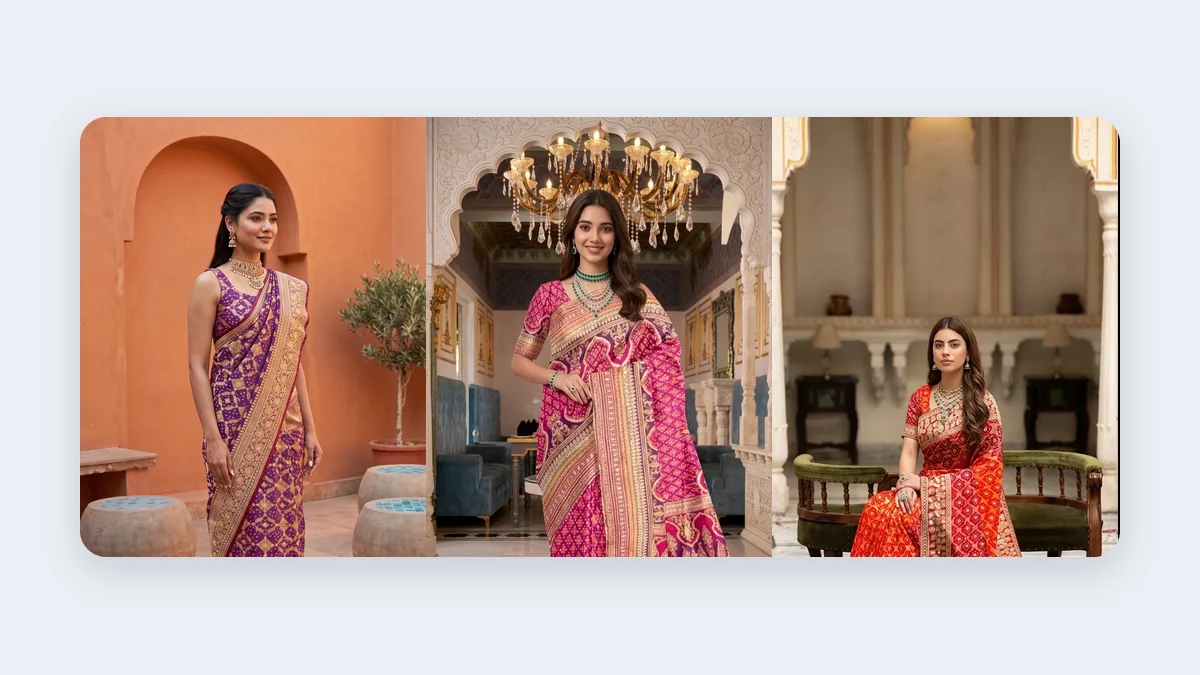
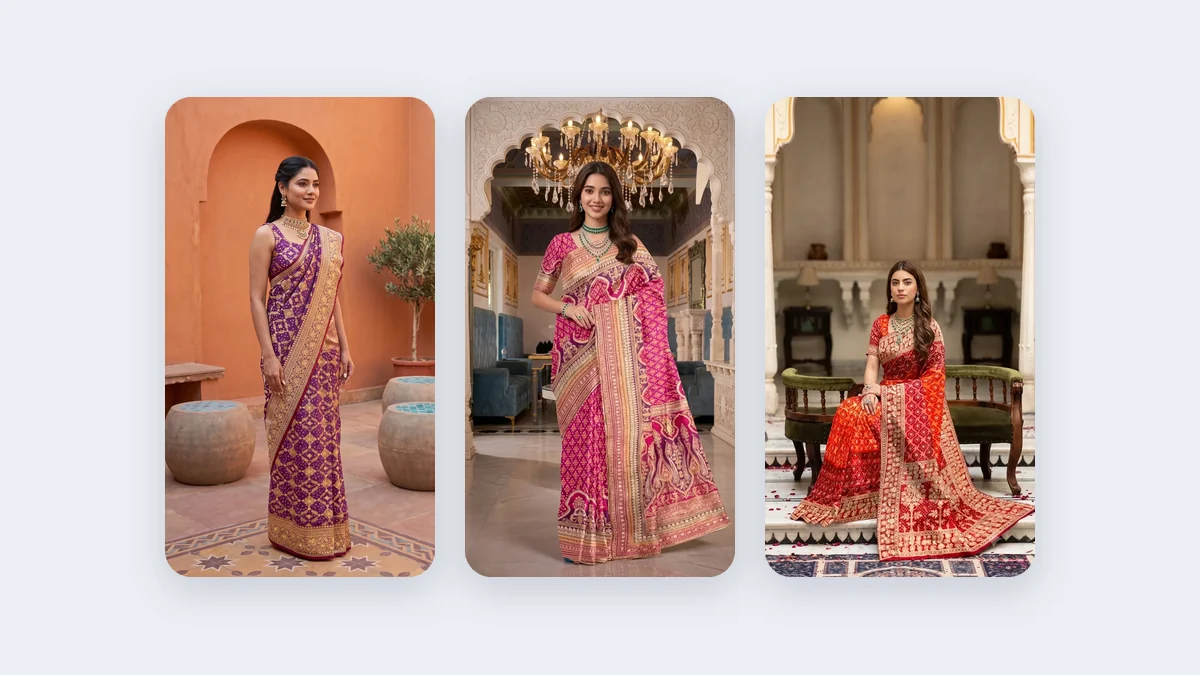
An anarkali dress sells on its flare, so your photos must show the skirt opening out from the bodice to the hem. This guide covers how to prepare the source photo, which poses show the flare, and how to set up the on-model set in Catalogue Studio.
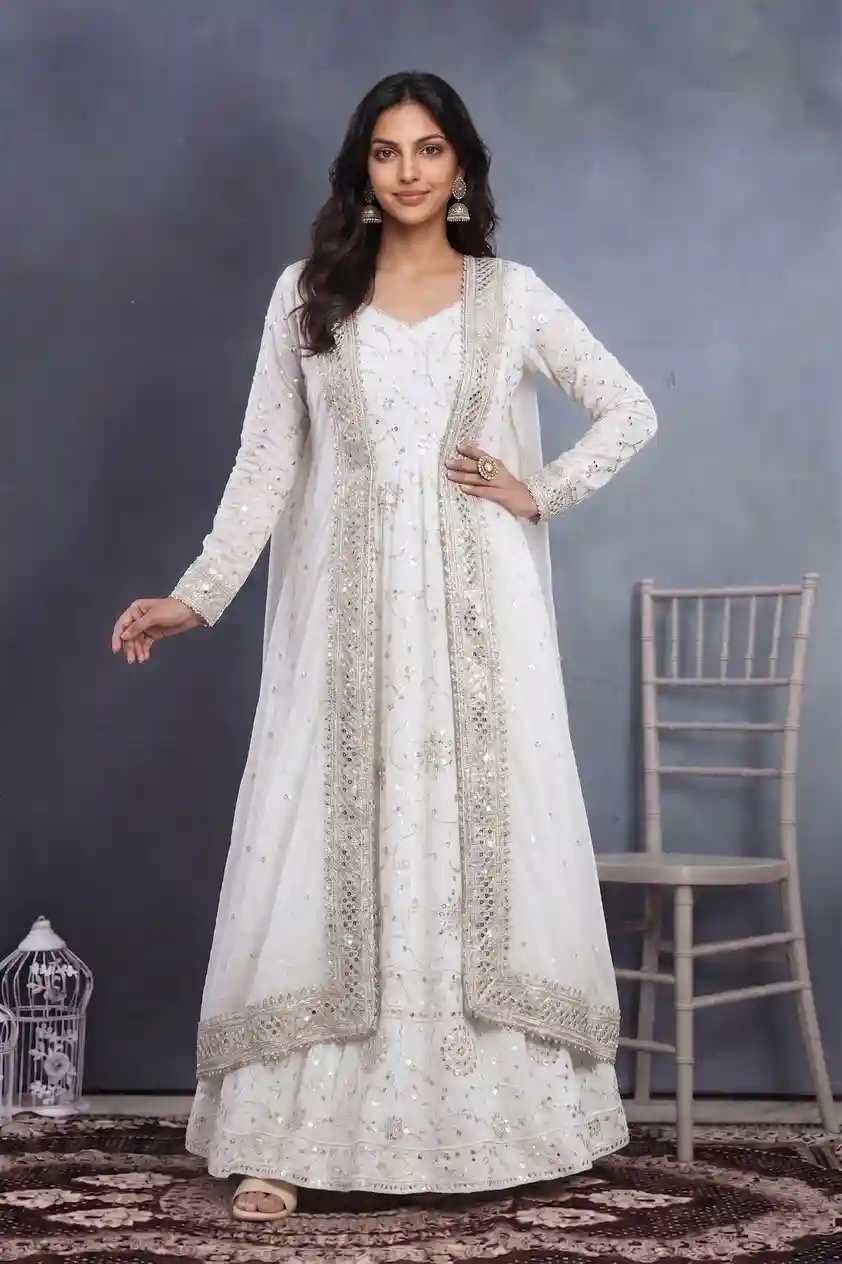
An anarkali is cut from several panels, called kalis, joined at the waist or under the bust, which is why the skirt fans out instead of hanging straight. Georgette, chanderi, silk and cotton all hold that shape differently, so the source photo has to show how your fabric really falls.
How do you photograph the flare for the source photo?
Hang it on a wide hanger and let the skirt drop, or lay it on the floor with the hem spread into a half circle. Steam it first, because creases across the flare come back as seams. Keep the whole length in frame, from neckline to hem, with a little floor visible below.
- Steam from the yoke down
Let the skirt hang while you steam, so the panels settle the way they sit on a body.
- Hang or spread the skirt
On a hanger, pull the hem out gently on both sides. On the floor, spread it into a smooth half circle with no folds at the edge.
- Shoot square-on in soft daylight
Stand level with the waist, keep the camera straight and use window light from the side. Flash flattens embroidery and turns zari into white patches.
- Add a close-up of the yoke
A tight photo of the neckline and yoke shows the embroidery, buttons and lining that a full-length frame cannot.
- Add the back
Show the zip, tie-backs and back neckline, because buyers check them.
- Photograph the set together
If the dupatta and bottoms are sold with the dress, lay them beside it in one frame. A dress uploaded alone comes back as a dress alone.
Which poses show the flare best?
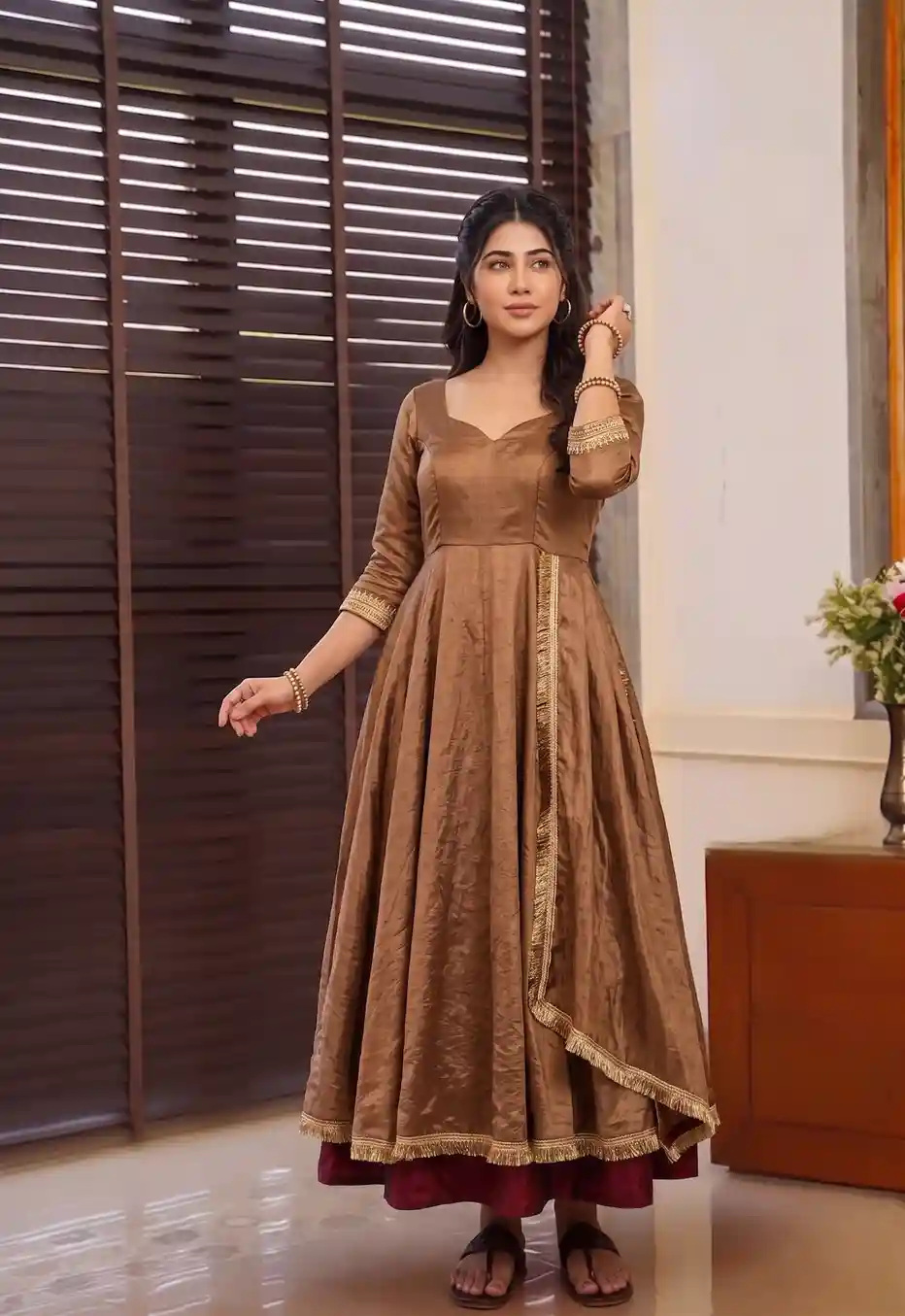
A three-quarter turn and a side view show the flare best, because a straight front pose hides how far the skirt opens. Use the front standing pose as your first listing image, then add the turn, the side view, a back view and a close crop of the yoke.
A twirl or movement pose suits festive banners more than the product page, since it can hide the hem line that buyers want to see.
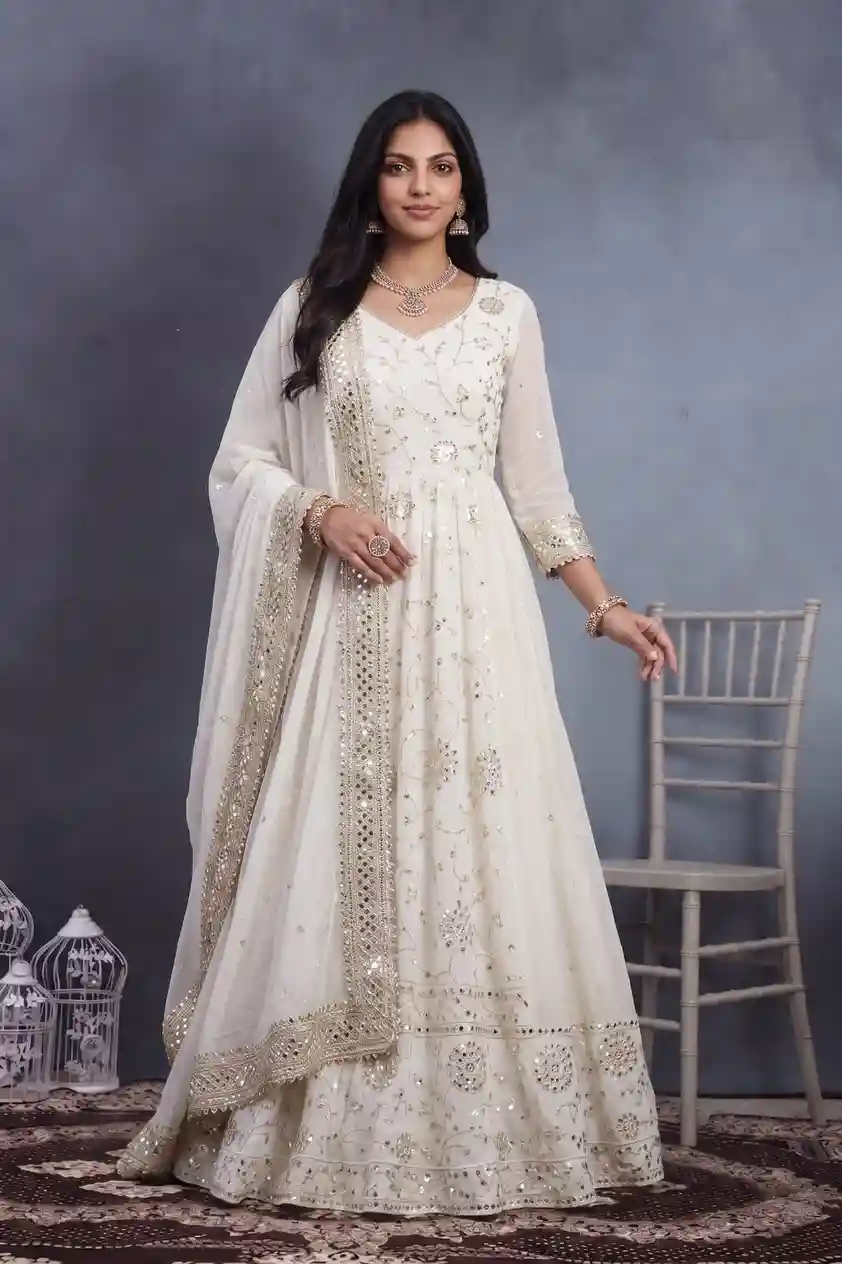
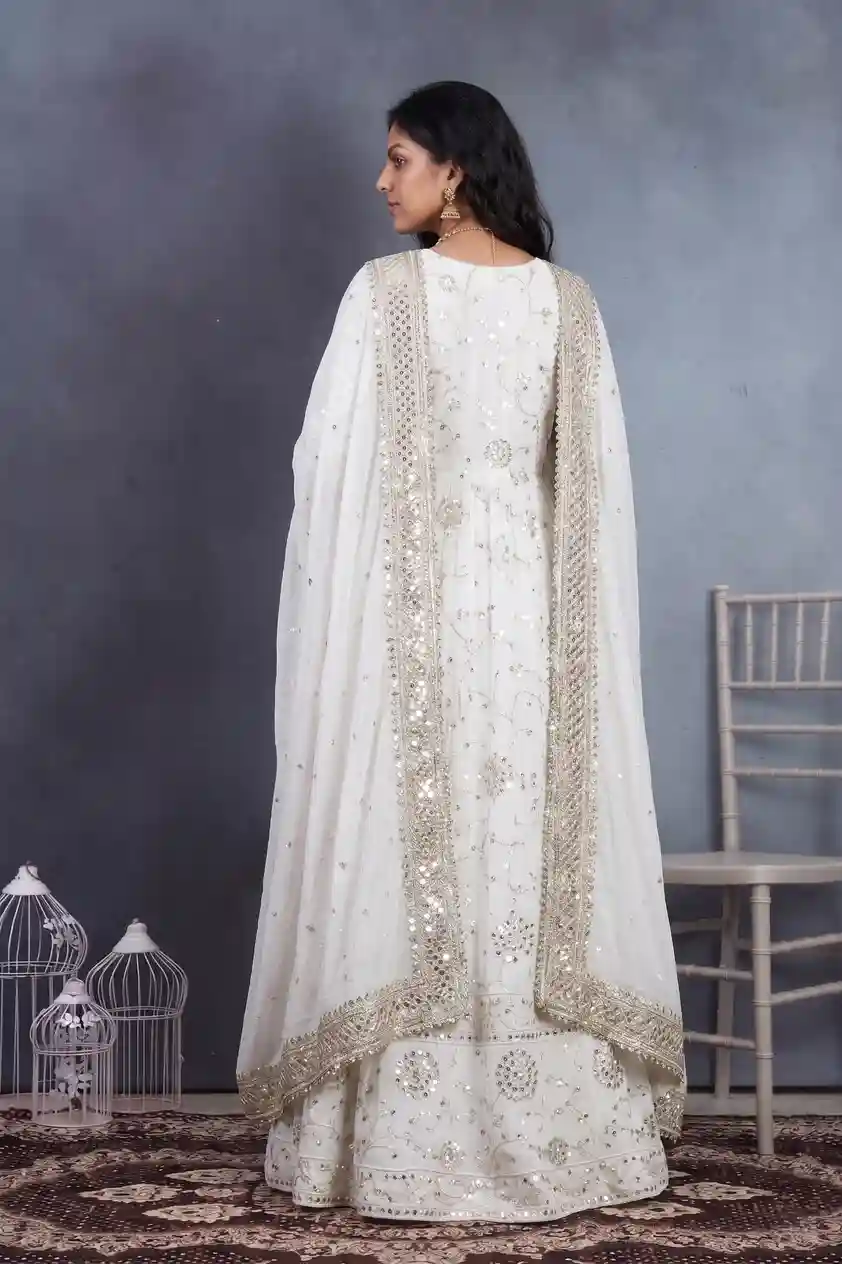
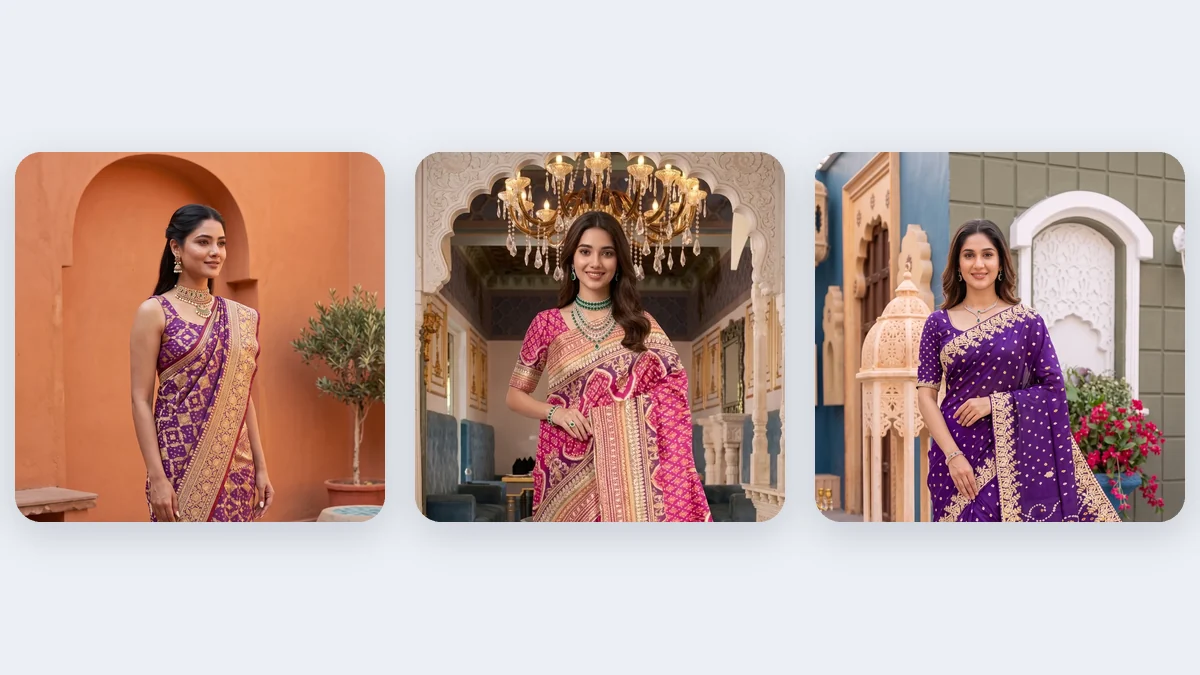
Compare the three frames: the front pose gives the length, the three-quarter angle shows the panels, and the last frame shows the full flare.
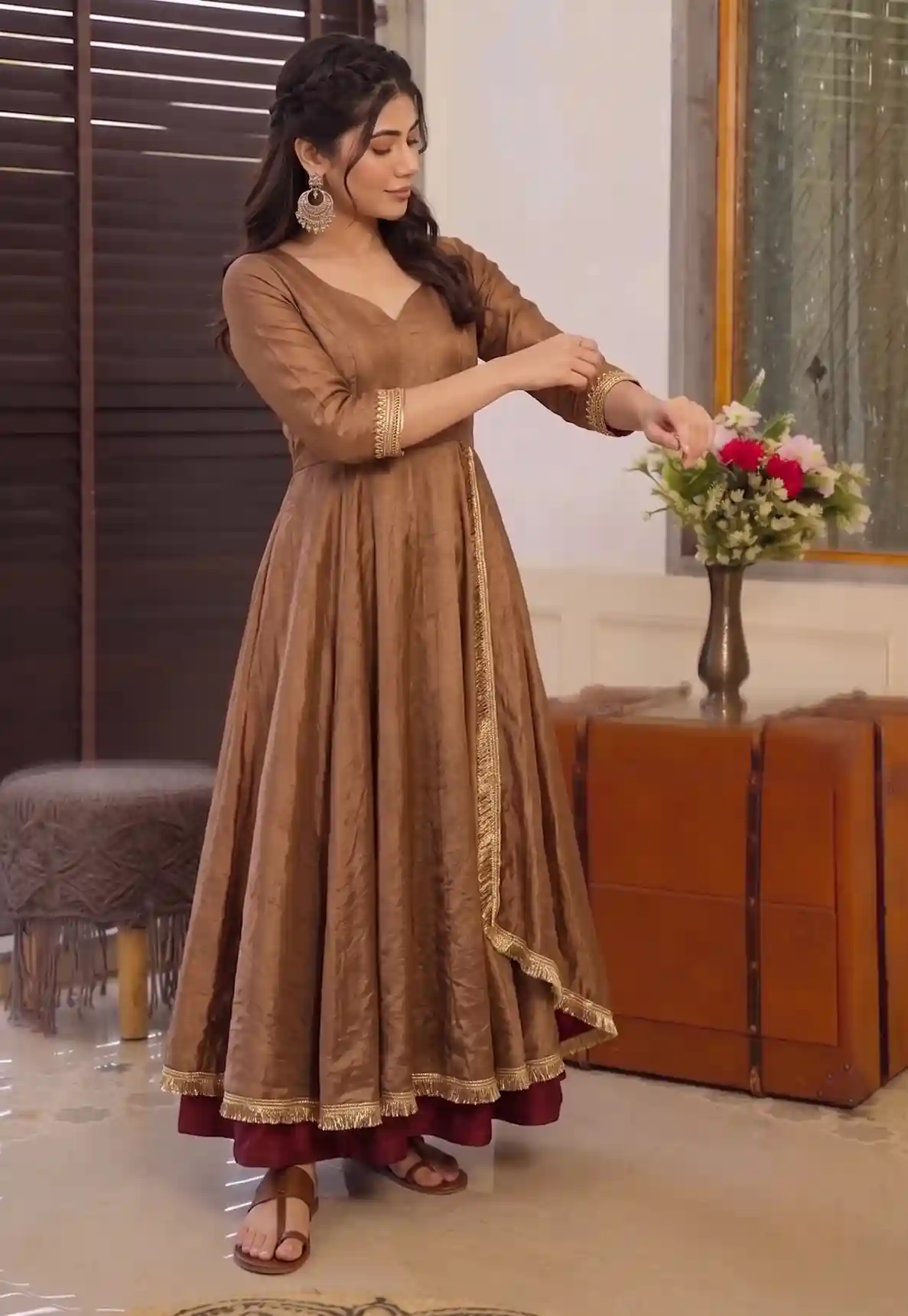
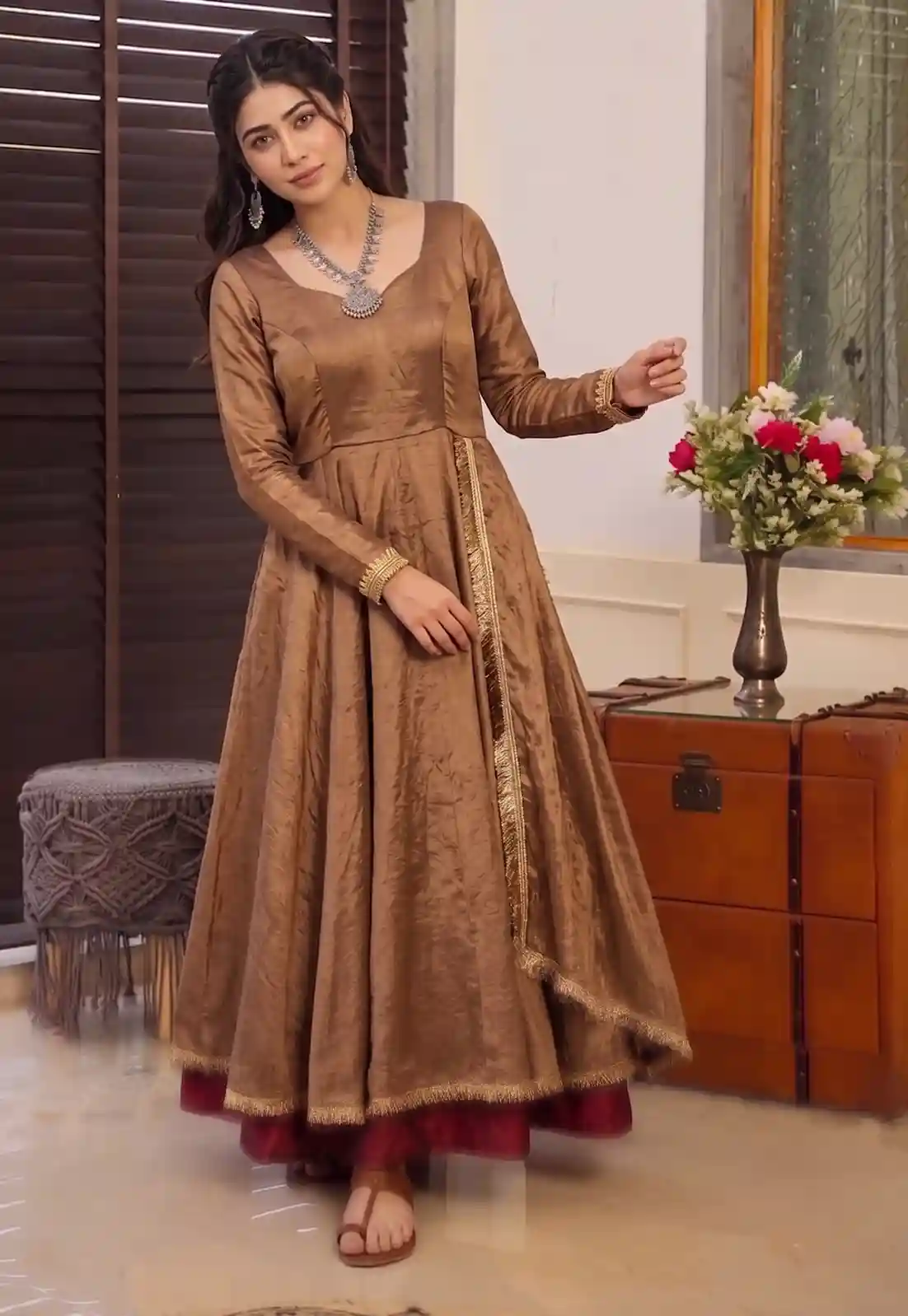
The same idea in a printed silk: the side view shows the print repeating down the skirt, and the three-quarter view shows where the bodice meets the skirt.
Which backdrop keeps the hem visible?
A plain warm-ivory or soft grey studio backdrop suits marketplace listings, and a heritage-style setting suits festive lookbooks. Pick a backdrop that separates from the dress colour, because ivory on ivory loses the hem.
| Backdrop | Where it works | What to watch |
|---|---|---|
| Warm ivory or soft grey studio | Marketplace and product pages | Choose a tone that differs from the dress so the hem stays visible |
| Heritage archway or corridor | Festive lookbooks and banners | Keep it plain enough that the embroidery stays the focus |
| Soft interior in muted tones | Your own website collections | Avoid busy patterns that fight a printed anarkali |
| Courtyard in warm light | Wedding-season and festival campaigns | Check the light does not tint pastel fabrics |
Mistakes that hide the hem and the embroidery
- Flash on zari or sequin work, which turns the embroidery into bright patches.
- A skirt folded over a hanger bar, which hides the panels.
- A light dupatta draped over the yoke, which covers the neckwork.
- Warm bulbs that shift the colour; shoot by a window and compare the photo with the real fabric.
Anarkali source photo checklist
- The dress is steamed and the skirt hangs or spreads without folds.
- The full length is in frame, neckline to hem, with floor visible below.
- The camera is level with the waist and square to the dress.
- The light is soft and from the side, with no flash.
- The background differs in tone from the dress.
- A separate close-up shows the yoke embroidery.
- Every piece sold with the dress is in the frame.
How many photos does one anarkali need?
Plan a front, a three-quarter turn, a side view for the flare, a back and a yoke close-up. Each marketplace has its own image rules, so check them before you finalise the set.
Do I photograph the dupatta separately?
Put it in the same frame if you sell it with the dress. If it is sold on its own, shoot it as a separate garment.
Will the embroidery stay sharp?
Upload a clear close-up of the yoke along with the full-length photo. Then check the result at full zoom before you publish, because fine zari and thread work is the part most worth checking.
Can I make the same anarkali in other colours?
Upload each colourway as its own garment and run them with the same model and style. You choose the model, pose and background before you order, so the set keeps one look.
What if a shot comes out wrong?
Each shot is yours to check. You can Recreate it, or ask for half the credits back if it missed.
Does the hem have to touch the floor in my photo?
No. Hang the dress so the full length is visible with a little space below the hem, and make sure the hem is not folded under.
Start with one best-selling anarkali and compare the on-model photos with your source photo before you move on to the rest of the range.