A contemporary dress is bought for its cut: an asymmetric hem, a sculpted seam, a cut-out, or a pattern that has to line up across the body. This guide explains how to photograph one for a catalogue, which angles prove the design, and how to keep a range of very different cuts looking consistent.
Why is a sculpted cut harder to photograph than a plain one?
The design is in the geometry, so any distortion in the source photo changes the product. Stripes and blocks have to meet at the seams. Asymmetric hems need the whole outline in frame. Crepe, organza and structured poplin hold their shape differently, so the same dress can look different from one fabric to the next.
How should you set up the hanger, the light and the camera?
Hang it on a shaped hanger or a dress form so the seams sit where they would on a body. Use soft light from the front and slightly above, which keeps shadows out of cut-outs. A stiff organza or poplin should stand on its own, while a drapey crepe needs the skirt to fall straight rather than bunch. Keep the camera level with the middle of the dress, because a low or high angle bends vertical stripes.
Source photo checklist for stripes, seams and cut-outs
- Camera level with the middle of the dress and pointing straight at it, so stripes stay parallel.
- The full outline in frame, including the lowest point of an asymmetric hem.
- Seams and panel joins smooth and untwisted.
- Cut-outs and open backs clear of the hanger and any straps.
- A plain background that contrasts with the main colour of the dress.
- A second photo of the back when the back carries the design.
Which angles show a modern cut honestly?
Front, three-quarter, back and profile each prove a different part of the design.
| Angle | What it proves | Look for |
|---|---|---|
| Front standing | Neckline, waist and the overall line | The hem fully inside the frame |
| Three-quarter walking | How the skirt moves and where the asymmetry falls | Stripes or blocks staying in line |
| Back | Cut-outs, closures and back seams | Clean edges on every cut-out |
| Profile | Structure, depth of the cut and fabric stiffness | A silhouette that reads cleanly |
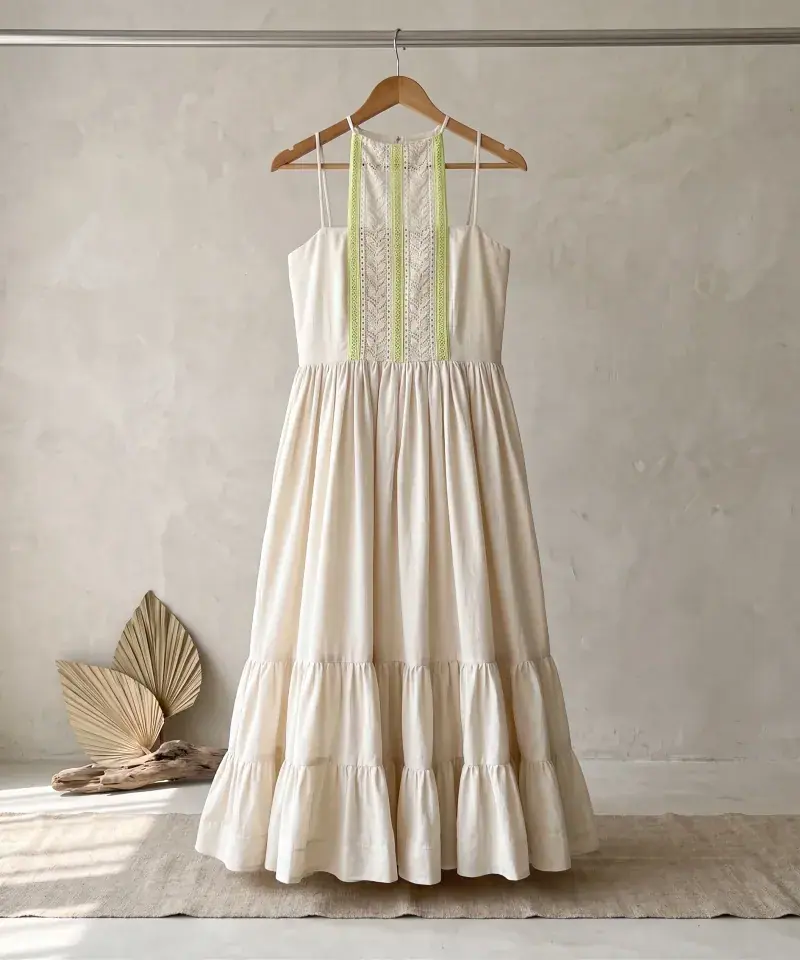
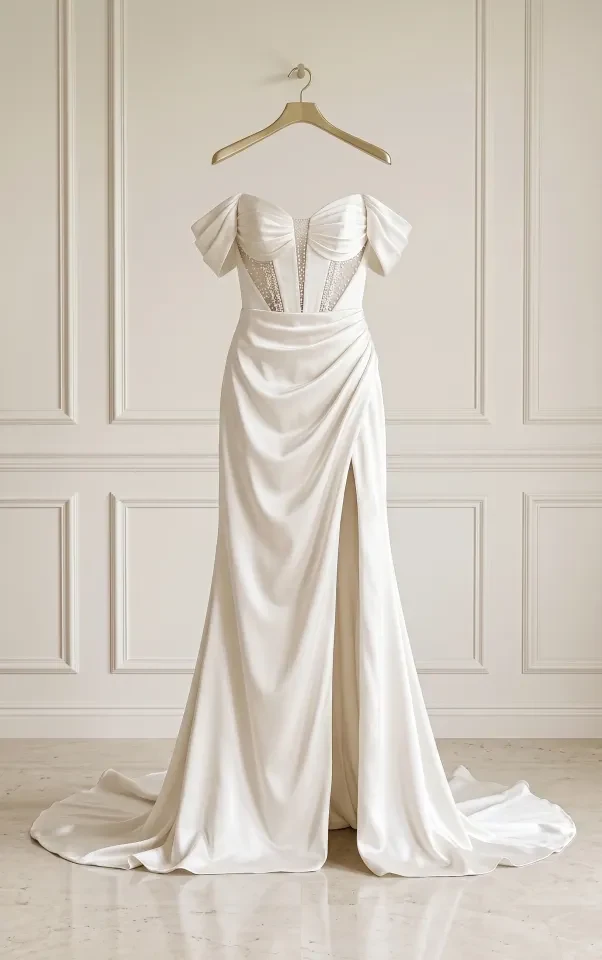
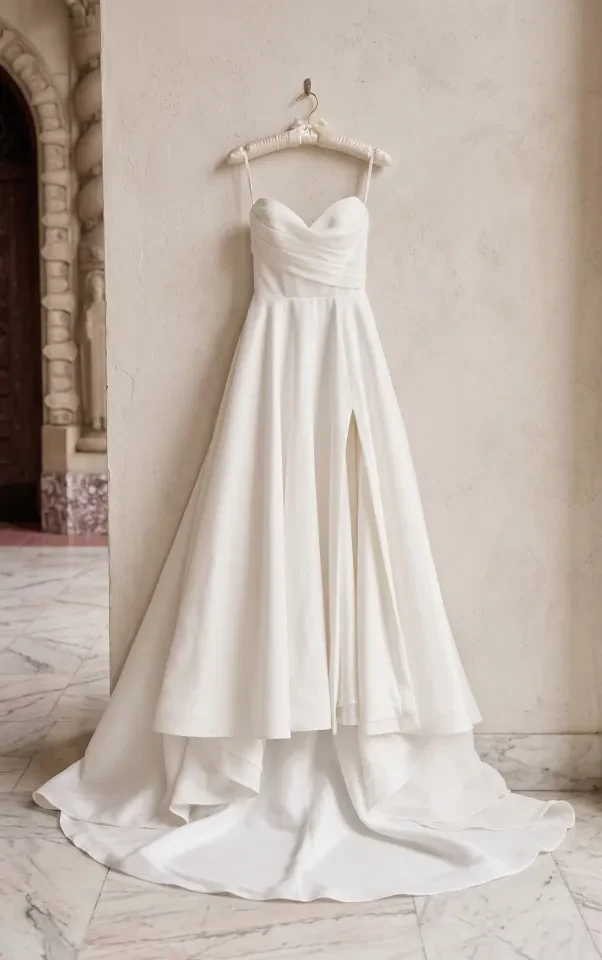
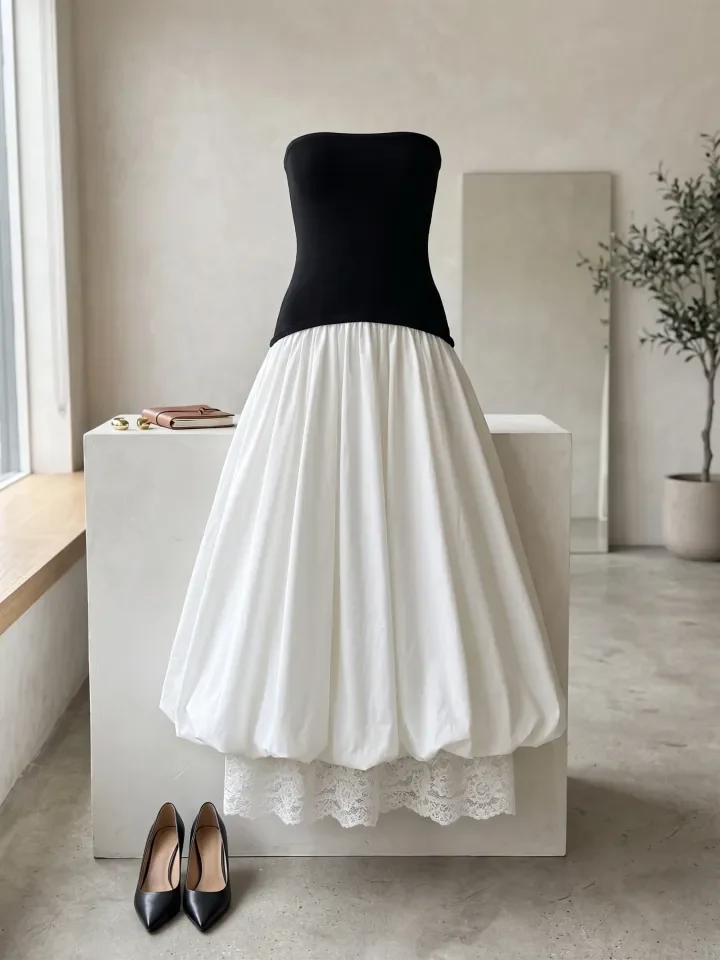
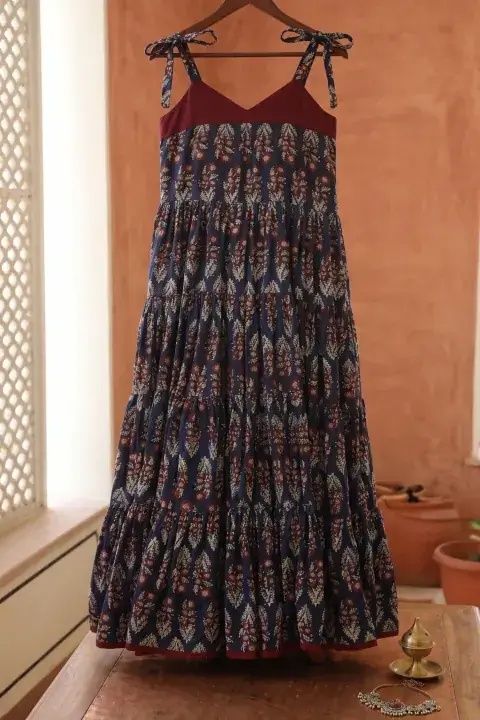
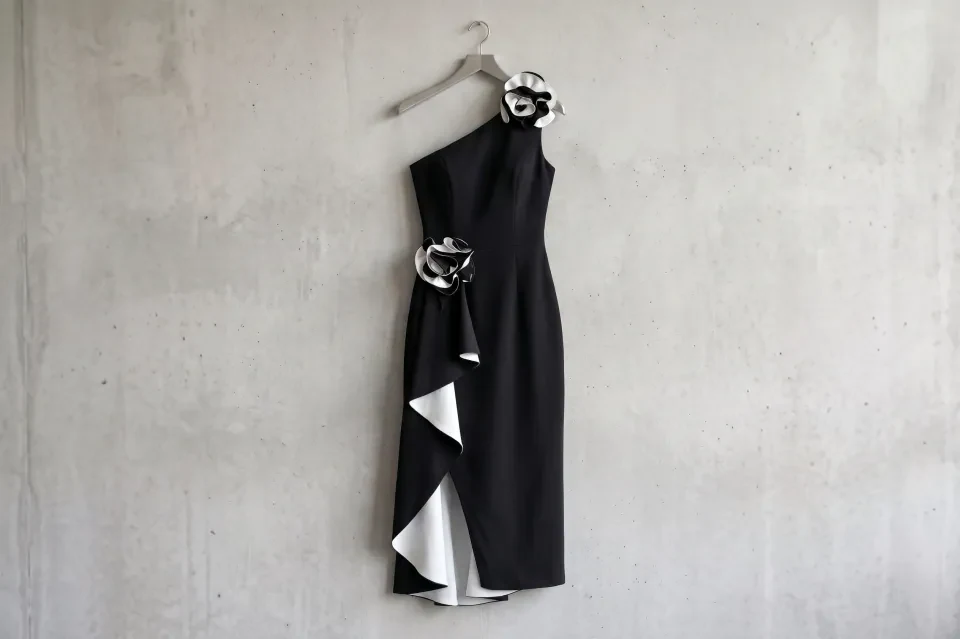
Plain, square-on source photos with the whole outline in frame. The library holds 9 reference photos for this garment type.
How do stripes and metallic fabric come out in a package?
Package #576 shows a brown and beige striped dress from the back, the front, a walking three-quarter and a profile. Follow one stripe through the frames: it should keep its line, and the back cut-out should stay visible. Package #456 shows a metallic wrap dress from the front and the side, so compare how the waist wraps and how the fabric folds.
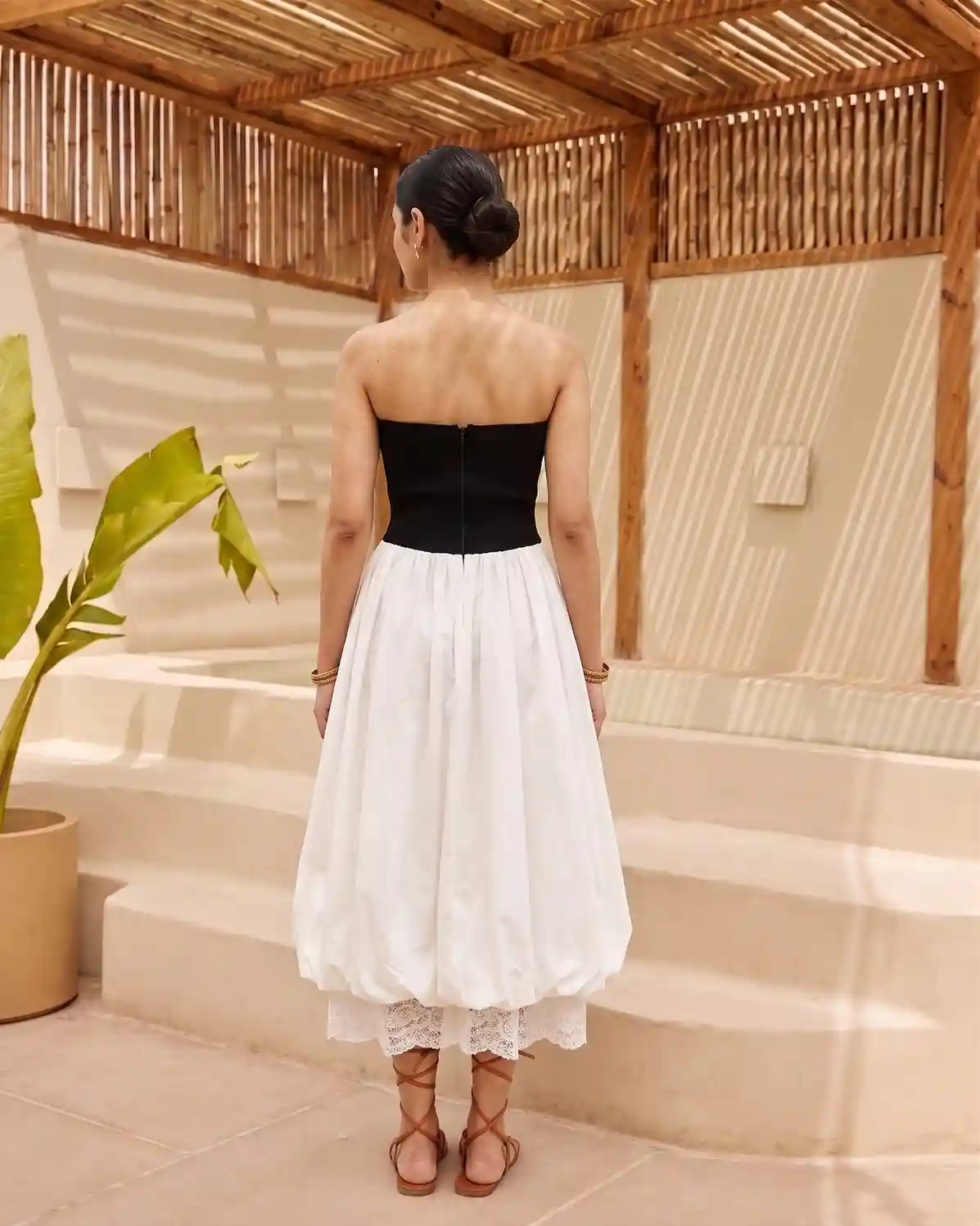
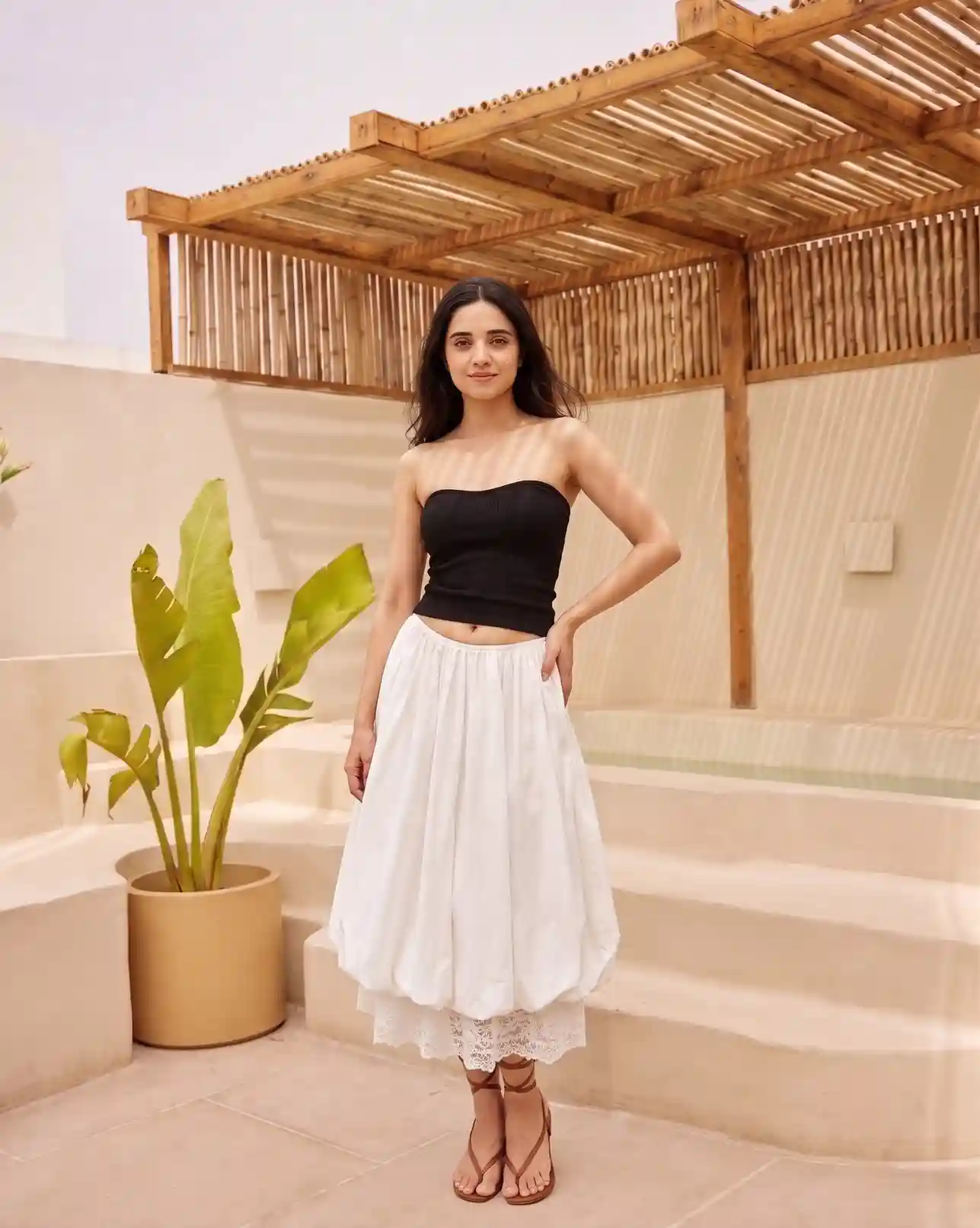
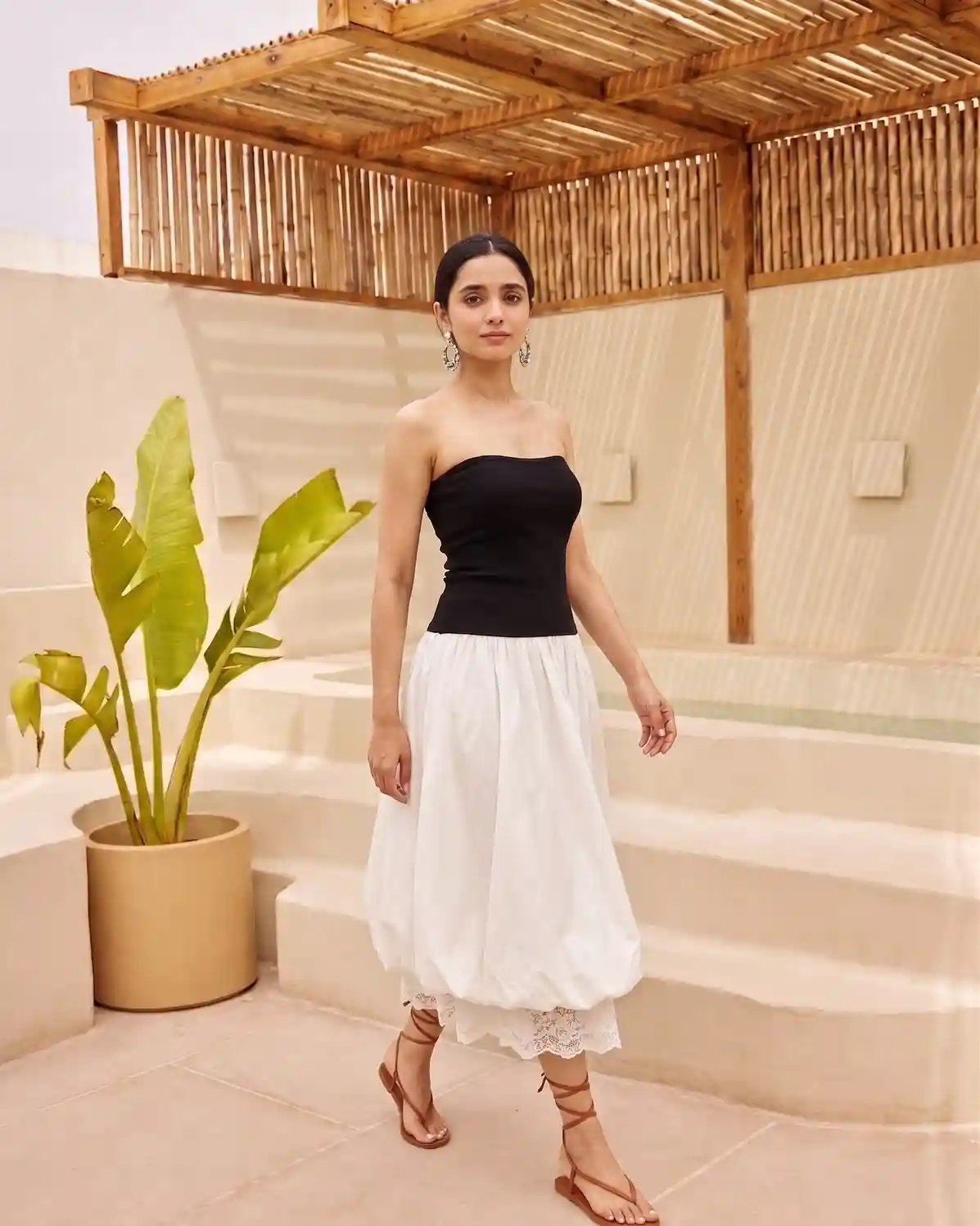
Follow one stripe from the front view to the profile. It should not bend or break at a seam, and the back cut-out edge should stay clean.
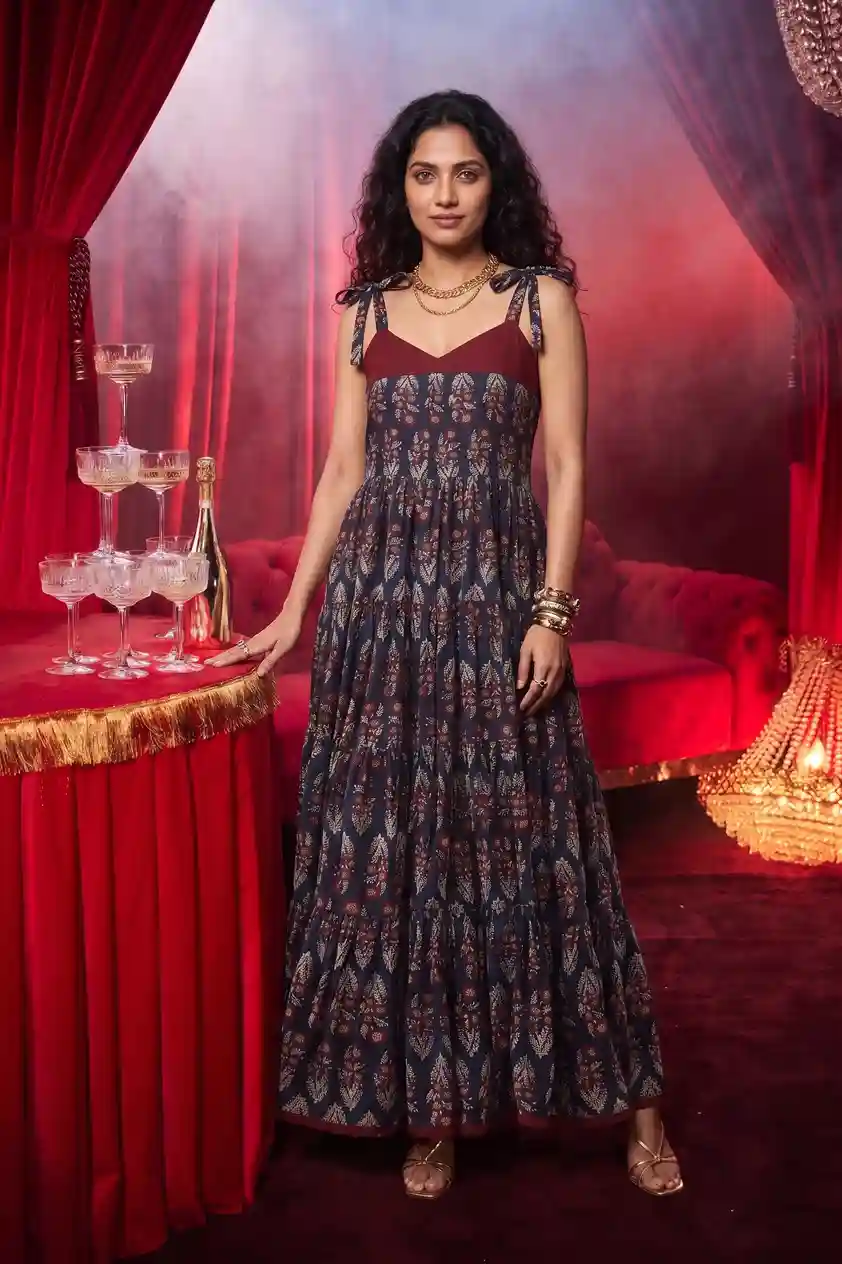
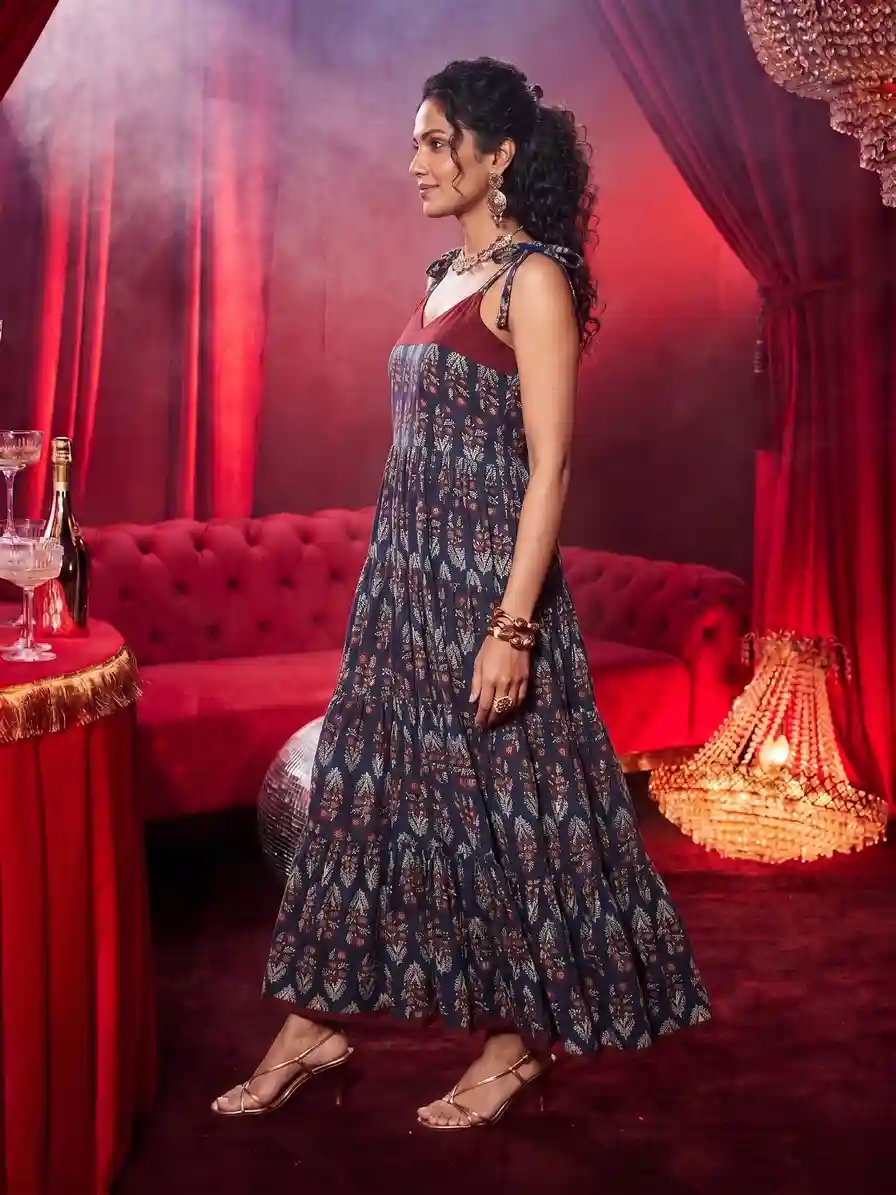
Look at where the wrap closes at the waist and how the metallic fabric catches light along the fold.
How do you build the set in Catalogue Studio?
- Set up the dress
Hang it on a shaped hanger or a dress form and straighten the stripes and seams.
- Shoot level and square
Put the camera at the middle height of the dress, light it softly from the front, and keep the whole outline in frame.
- Upload and choose the category
Open Catalogue Studio, pick Contemporary Dress and upload the front photo, plus the back photo if the back matters.
- Choose model, pose and backdrop
A walking pose shows the hem and a standing pose shows the neckline and waist. Choose before you order.
- Check the summary
Every combination you are about to order is listed there. Read it, then place the order.
- Zoom in on seams and patterns
Check that stripes meet, cut-outs are clean and the hem outline matches your dress. Use Recreate on any shot that missed.
Which backdrop shows a modern cut best?
A plain warm neutral wall suits listings, and a concrete, stone or terrace setting suits lookbooks.
| Backdrop | Best for | Effect |
|---|---|---|
| Plain warm neutral wall | Store listings | Calm and true to colour |
| Concrete or stone exterior | Designer lookbooks | Architectural and editorial |
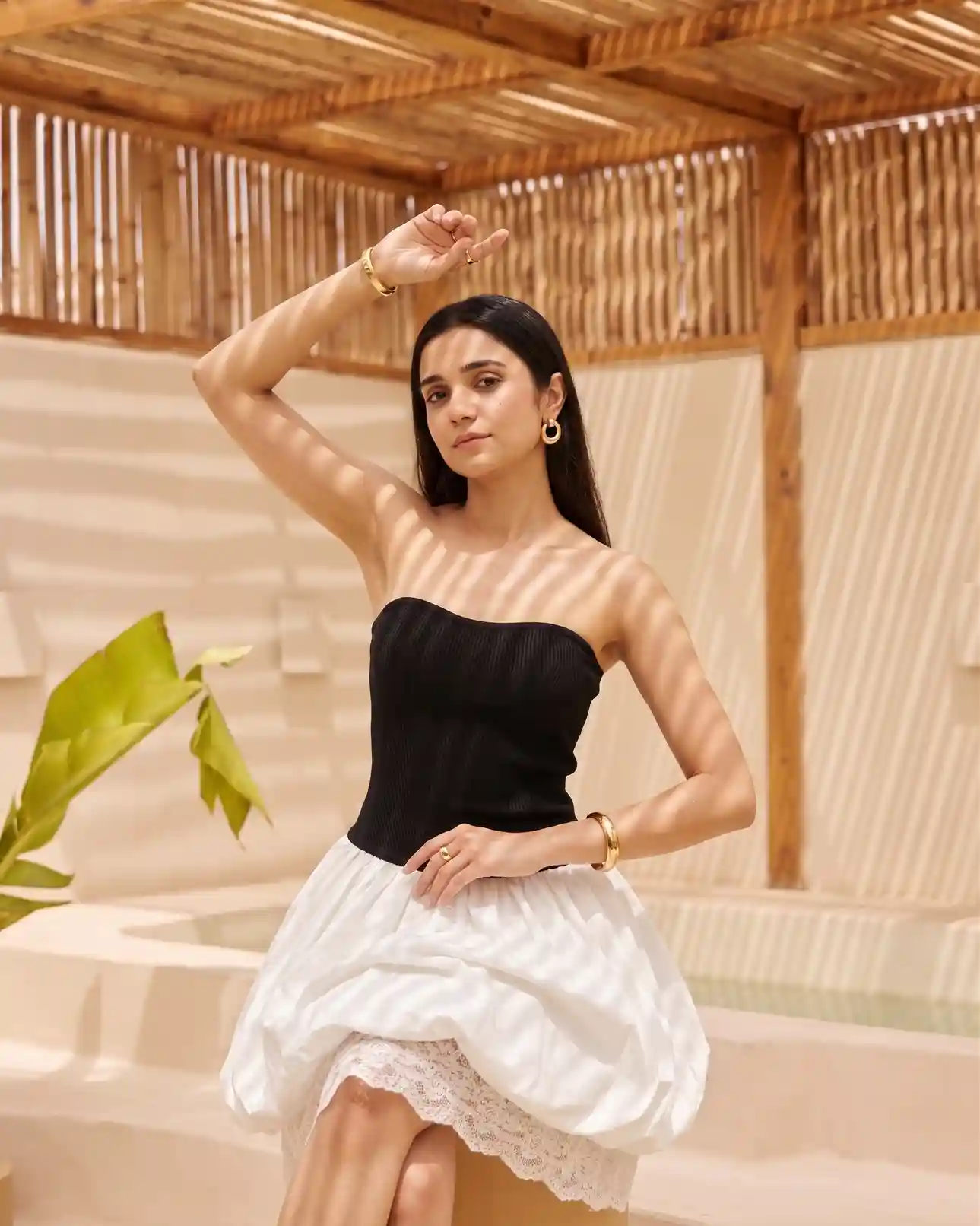
| Sandstone terrace | Summer and resort edits | Warm, with strong shadows |
| Soft grey studio | Comparing cuts side by side | Neutral and even |
Why do stripes bend in the photo?
Usually because the camera was not level with the garment. Shoot straight on at the middle height of the dress and keep the hanger or form upright. If a stripe still bends, look at the seam: a twisted panel in the source photo carries into the result.
What works well, and what to watch
- A range of very different cuts shares one light, model and backdrop
- You can check the back and the profile as well as the front
- Another colourway means another source photo rather than another shoot day
- A tilted source photo bends stripes, and the result follows
- Fine metallic or sheer fabric needs a close check at full size
- A cut-out design needs the back shown clearly in its own photo
How many angles should the listing show?
Plan on a front, a back, a profile and one close frame as a base set, then check the marketplace's own rules before you export. Image requirements differ by marketplace, so we keep them in a separate guide.
Questions sellers ask about photographing contemporary dresses
Can I photograph an asymmetric dress flat on a table?
A table hides the hem line that makes the design. Hang the dress or use a dress form so the lowest point of the hem is visible.
Do I need to upload the back as well?
If the back has a cut-out, a seam or a closure that sells the dress, yes. Add a second photo of the back so it is not left to chance.
Which poses show a structured dress best?
A standing pose proves the neckline and waist, and a walking pose shows how the skirt moves. Choose one of each if the dress has a sculpted skirt.
Will stripes stay straight on the model?
They follow the source photo, so a level, straight-on photo helps most. Check the stripes at the seams in every shot and use Recreate if a line breaks.
Can I use the images on my store and on marketplaces?
You can use them commercially, since you own the images. Pick a marketplace preset and it sets the background and size for Myntra, Amazon, Flipkart or Meesho.
Start with a single piece
Photograph a single dress as described above, choose your model and backdrop, and check the summary before you order.