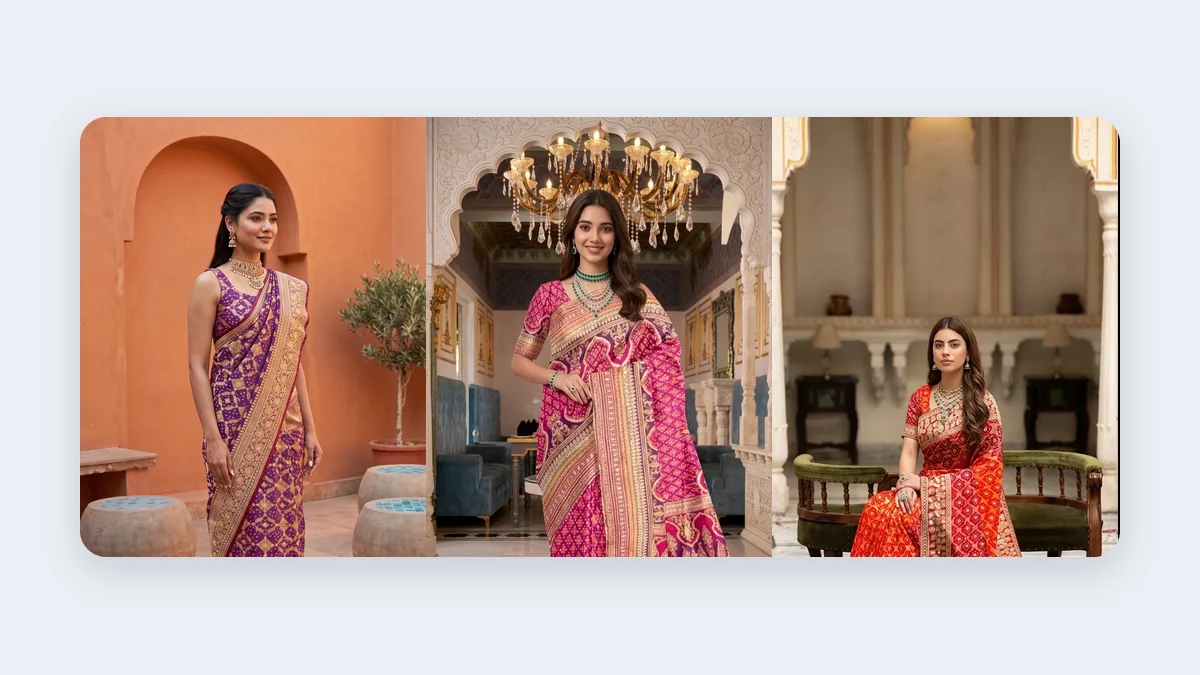
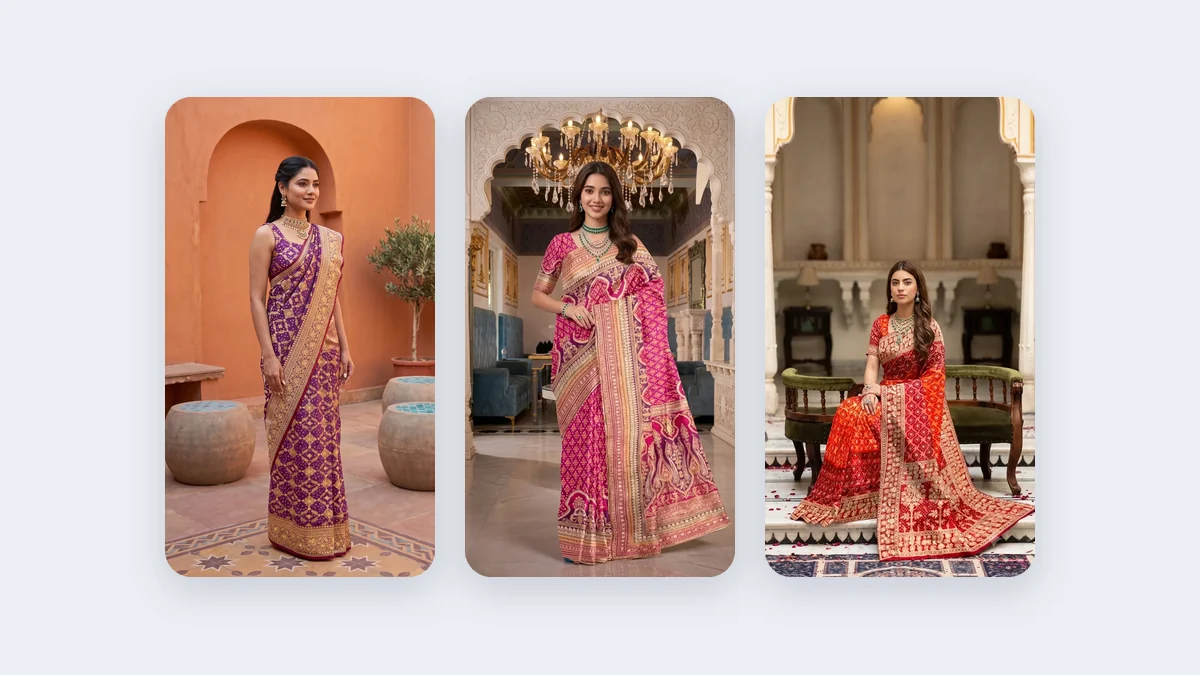
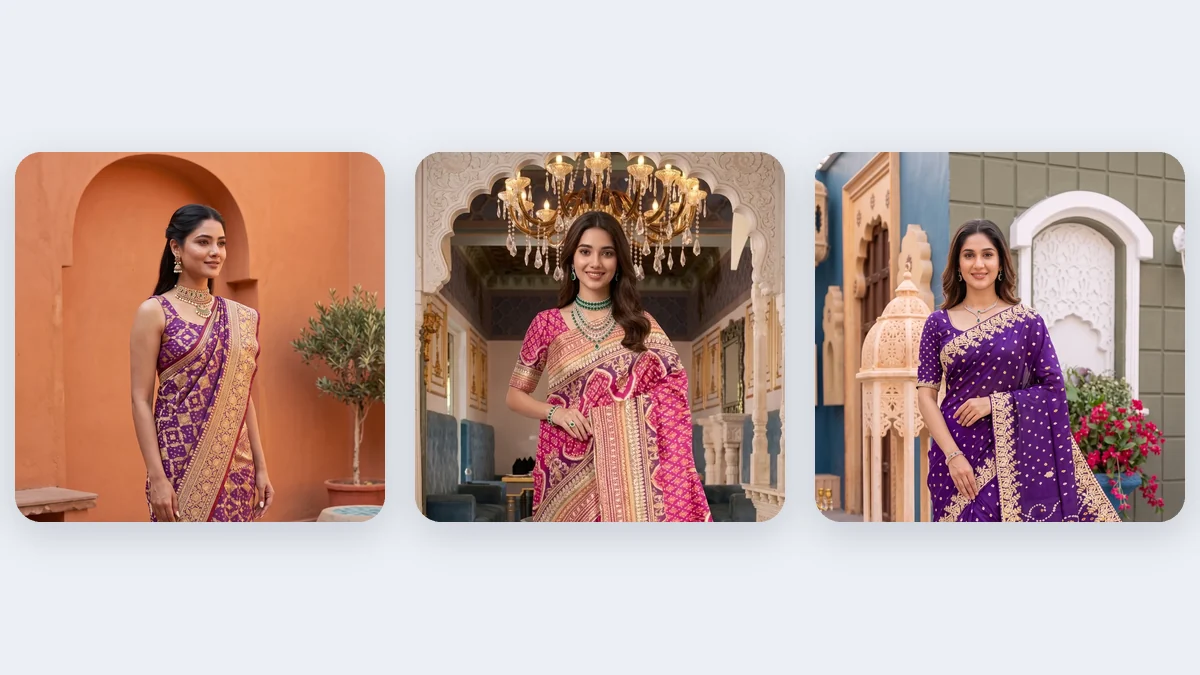
To photograph an evening gown for an online catalogue, show the whole gown from neckline to hem in one frame and light the embellishment softly. A shopper who cannot see the silhouette or the train cannot judge the dress.
Gowns are the hardest garments to photograph at home: long, heavy, creased by the smallest fold and covered in surfaces that reflect light. The notes below deal with each of those in turn.
What do buyers need to see?
They need five things in view, and the source photo should keep all of them.
- The neckline and bodice shape
- The waist seam, where the silhouette changes
- The volume of the skirt
- The hem, and the train if there is one
- The back and the closure
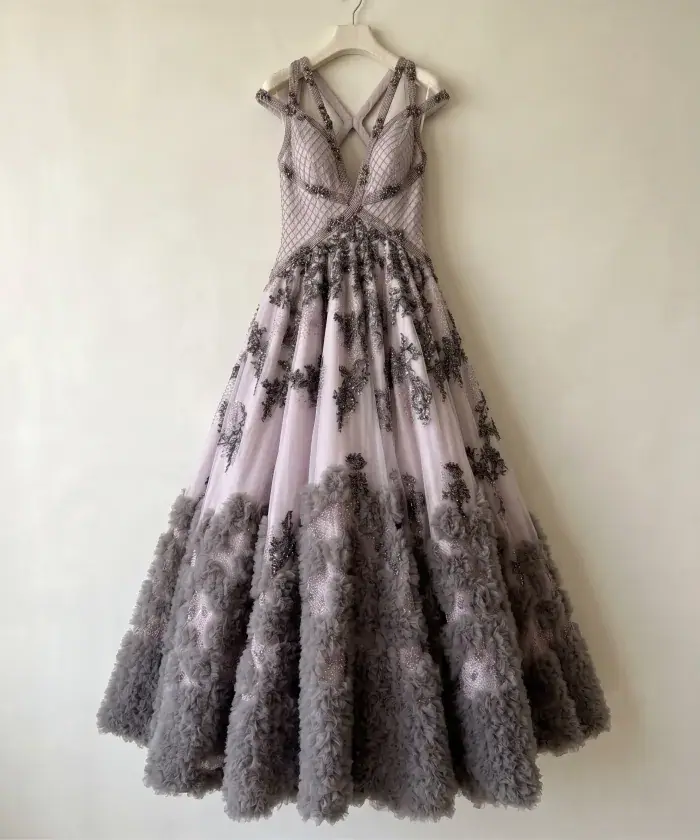
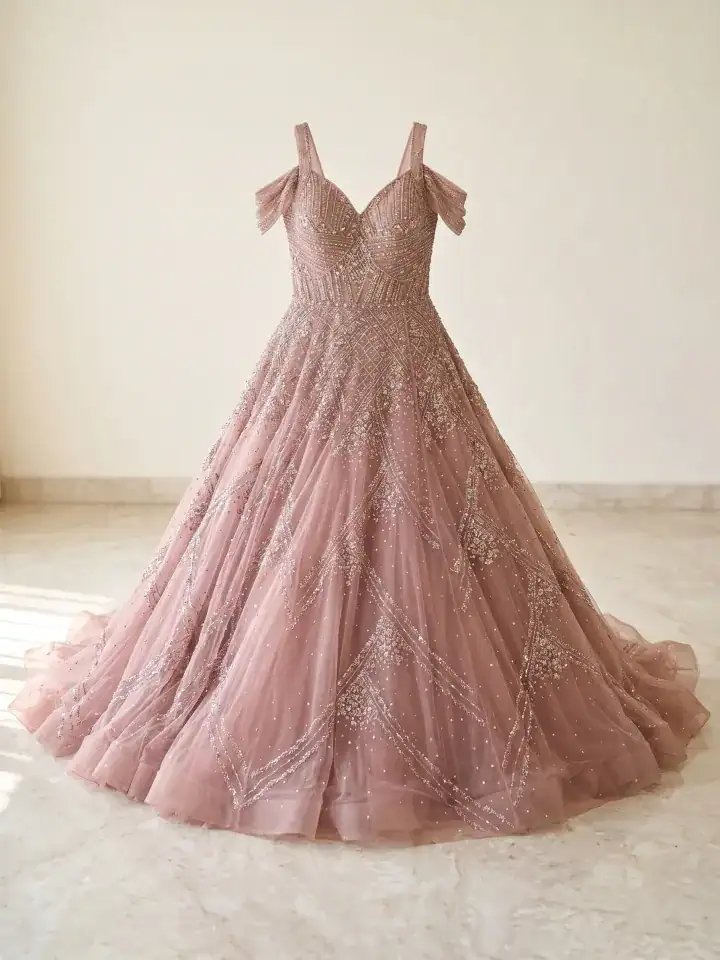
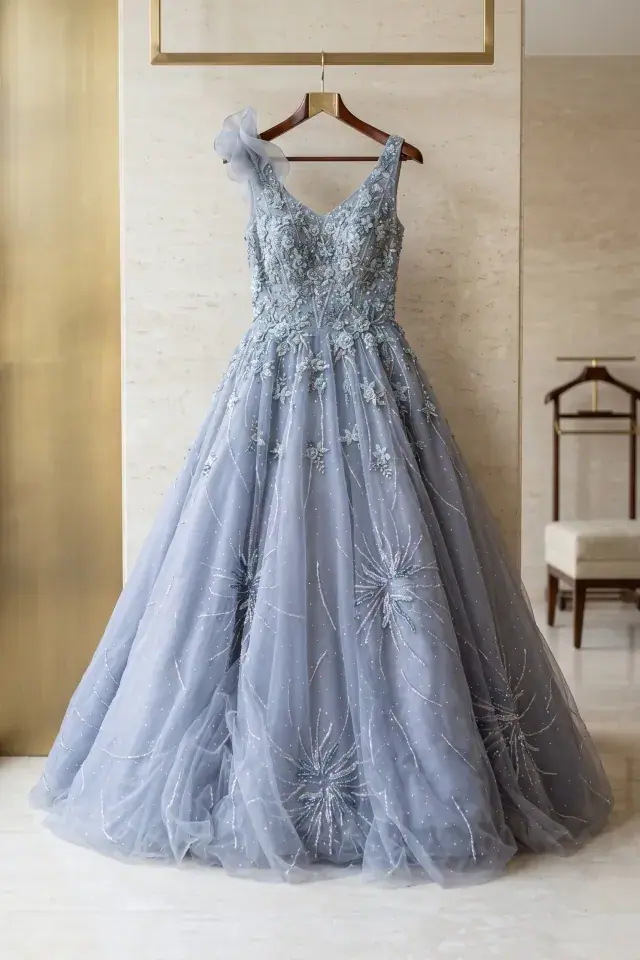
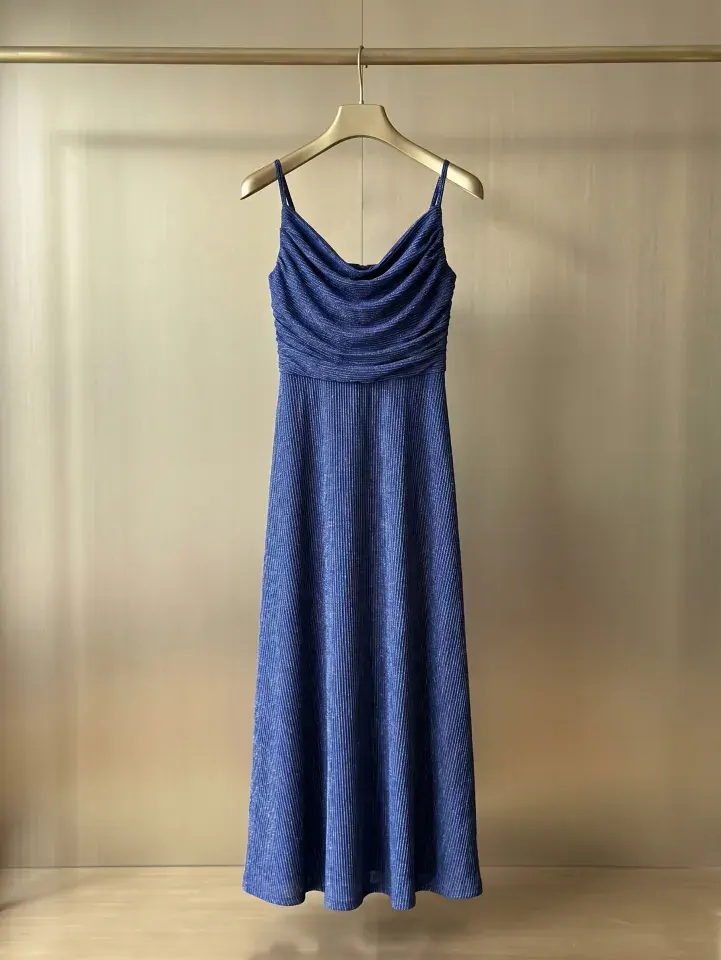
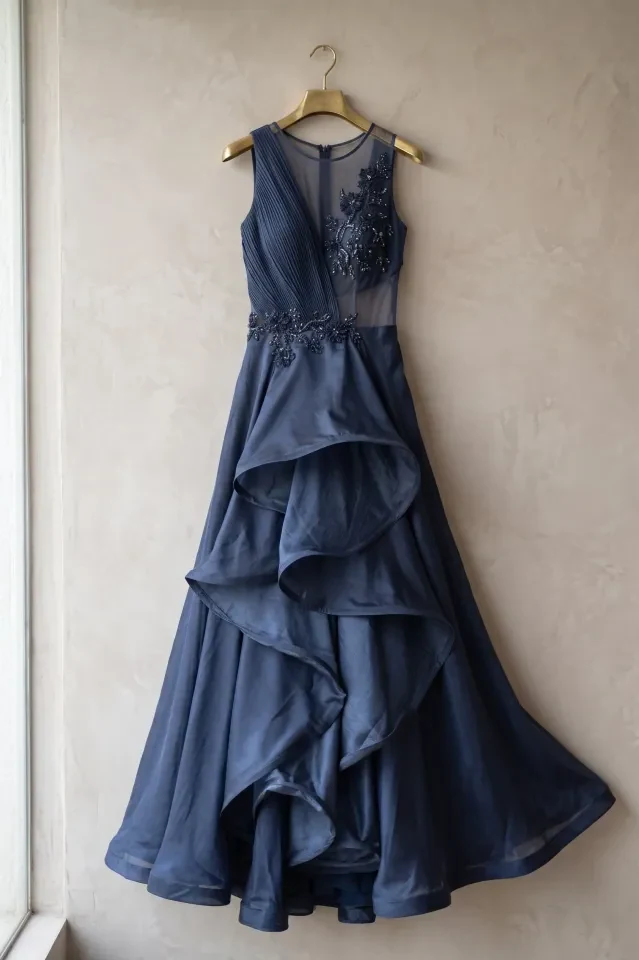
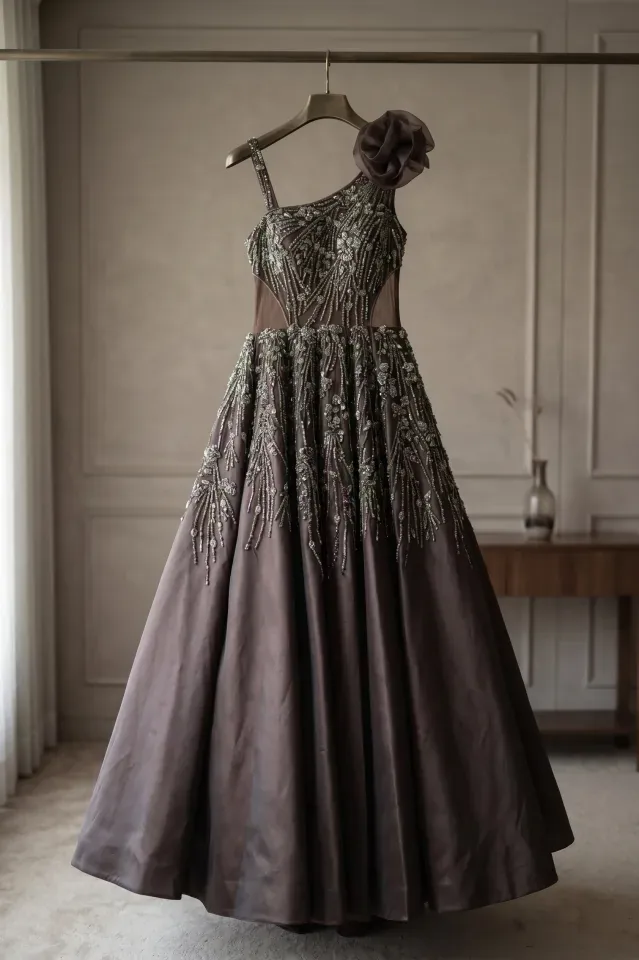
Real evening gown uploads. Notice how much of the hem each photo keeps in frame, and where the waist seam sits.
How do you light sequins and crystals without glare?
Use one large, soft light placed to the side. A small or direct light makes each stone flash back at the lens, while a wide source lets them catch light along their edges.
Fabric changes the setup. Satin shows every crease, so steam it twice. Velvet absorbs light and often needs more of it, and a pale gown on a dark wall keeps its outline better than on a pale one.
How do you prepare and photograph the piece?
- Steam from the inside
Start at the bodice and work down. Pay attention to the seam at the waist and the lining.
- Hang it full length
Use a high rail or a door frame, with the hem clear of the floor so it does not gather dust or kink.
- Stand back and zoom in
A longer lens from further away keeps the proportions true. Frame from the neckline to the hem or train.
- Set the light to one side
Place a large soft source at about forty-five degrees. Keep the gown away from shiny walls.
- Add a bodice close-up and a back view
Neckwork and closures are what buyers check after the silhouette.
- Upload and review
Choose Evening Gown in Catalogue Studio, add the photos, pick models and styles, and read the Summary tab before you generate.
- Gown steamed and hung, with no folds
- Neckline to hem, or train, fully inside the frame
- Skirt fanned or hanging straight, not twisted
- Large soft light from one side, no on-camera flash
- Beadwork and embroidery in focus at full size
- A back view and a bodice close-up taken as well
Which angles and poses work best?
| Angle | What it shows | Watch for |
|---|---|---|
| Front, standing | Silhouette, neckline, waist | Cropped hem |
| Three-quarter | How the skirt volume turns | Arms hiding the bodice |
| Side profile | Train and the depth of the skirt | Train bunched at the feet |
| Back | Closure, back neckline, any cut-outs | Leaving it out for a backless design |
| Close on embellishment | Beadwork, lace, fringe | Glare on the stones |
What does a couture set look like in Catalogue Studio?
Package #19 is a silver grey embroidered gown with fringe sleeves. It shows how one model and one light carry a heavily embellished dress across three angles.
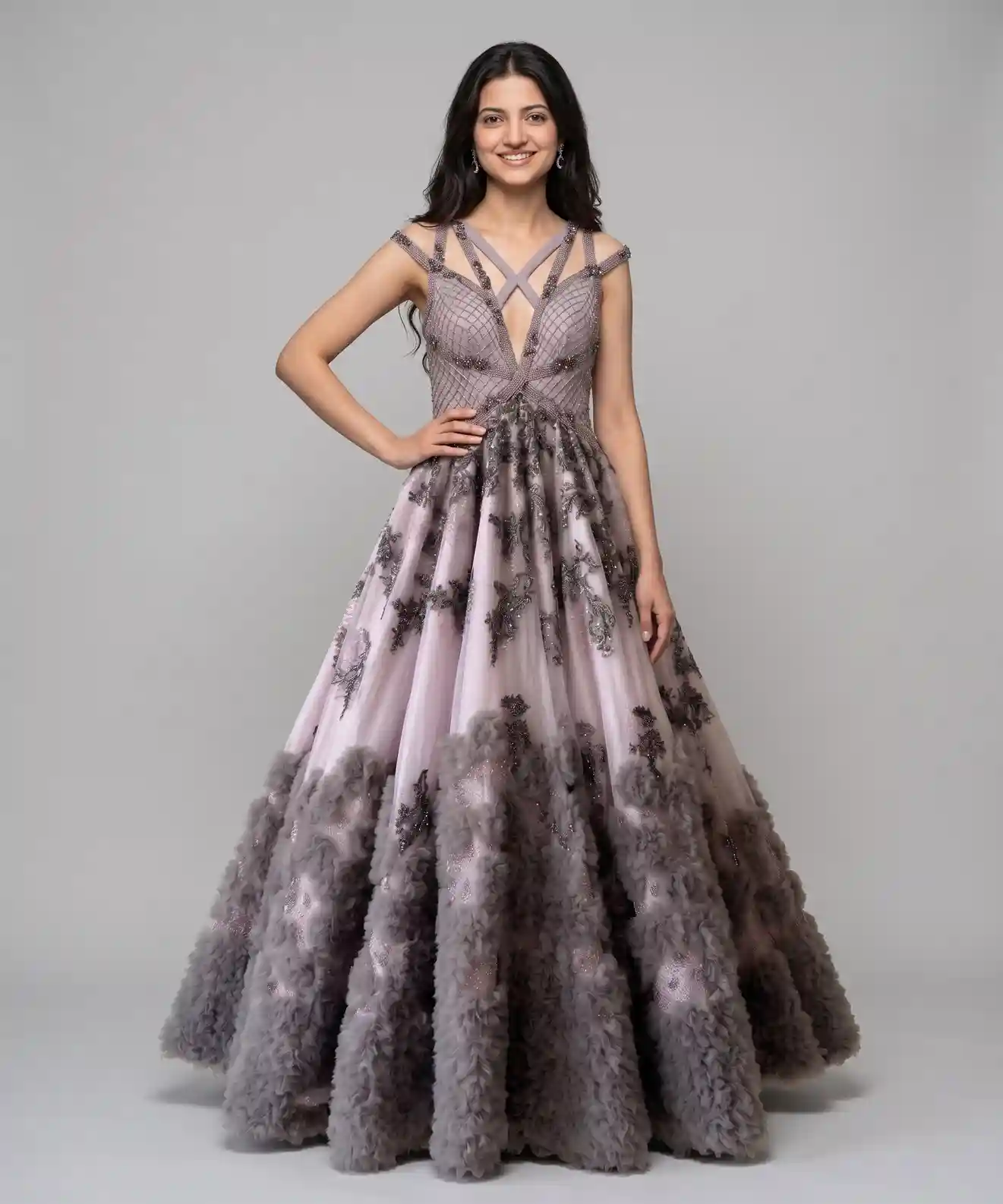
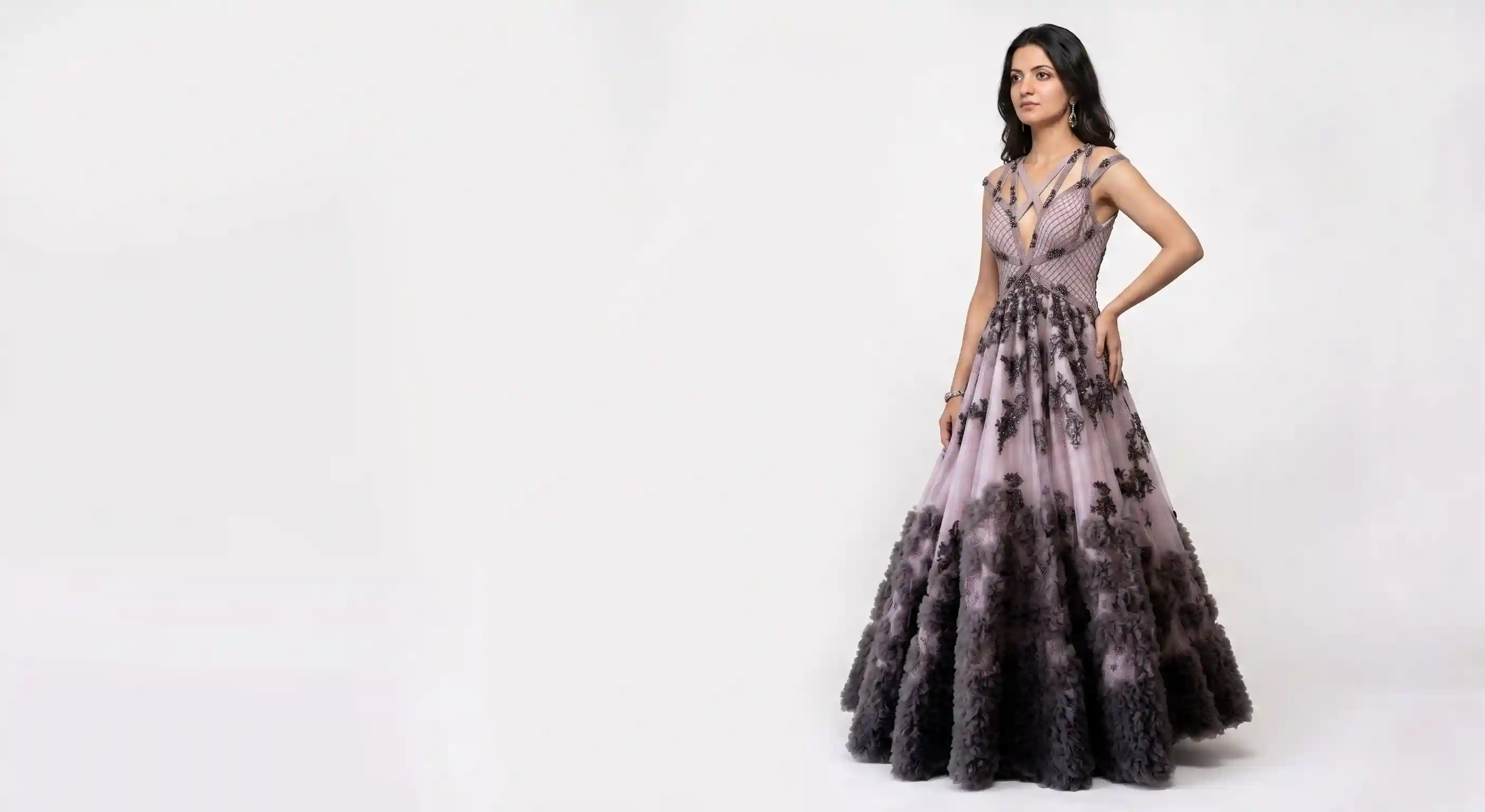
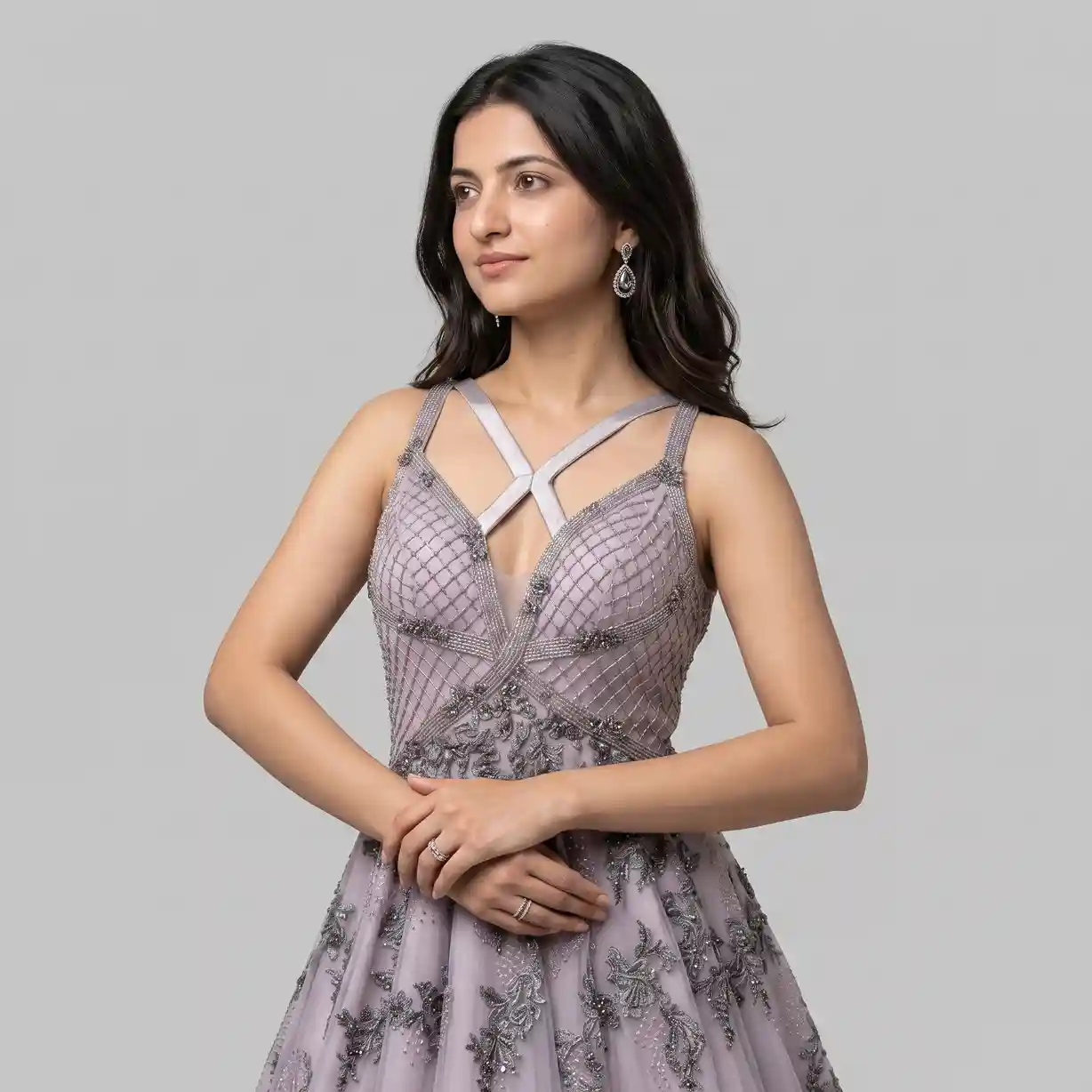
Three frames of one gown. Watch the beadwork reflect in the front view, the fringe in the three-quarter view and the train in the side profile.
Which setting suits formal eveningwear?
| Setting | Best for | What it adds |
|---|---|---|
| Charcoal studio wall with soft rim light | Pale and metallic gowns | A strong outline and clear embellishment |
| Hotel ballroom with marble floors | Couture lookbooks and gala campaigns | A sense of occasion |
| Palace staircase | Trains and long skirts | Gives the skirt somewhere to fall |
| Limestone terrace by the sea | Resort and destination collections | Soft daylight on lighter fabrics |
- The same model, light and framing across every colourway of a gown
- A new pose or setting without booking a model and a location again
- A shot you can inspect and recreate, or ask for part of the credits back if it missed
- Images you own and can use commercially
- A flat, well-lit source photo is needed to start
- Fine beadwork, lace and any lettering must be checked at full zoom before you publish
- Fringe and train movement depends on the pose or motion style you choose
Questions sellers ask about gown photos
How do I photograph a gown with a long train?
Hang it full length, or fan the train on a clean floor, and shoot from far enough back to keep the whole length. Add a side view, since that is where the train shows.
How do I avoid glare on sequins and crystals?
Use a large soft light from one side and keep the flash off. A small direct light makes each stone flash at the lens.
Do I need a back view of a gown?
Yes, for most gowns. The closure, back neckline and any cut-outs are things buyers check, and the output cannot show a back it has never seen.
How do I photograph several colourways of one gown?
Hang each colourway full length and light it from the same side. Darker colours may need a little more light on the folds, so check the shadow detail on each before you move on.
Can I redo a shot if the embroidery looks wrong?
Yes. Check each shot at full size, and recreate it, or ask for part of the credits back, if the detail has missed.
Start with your best seller
Choose the gown that sells best, photograph it with the steps above and compare the result with your source photo. Then run the rest of the collection the same way.