Fashion photography blends clothing, people, light and storytelling. It sells garments, builds brands and shapes trends. Whether you want to shoot fashion yourself, hire a photographer, or understand what goes into the images you see online, this guide covers the essentials.
Main styles of fashion photography
| Style | Purpose | Look |
|---|---|---|
| Editorial | Magazines and brand stories | Creative, conceptual |
| Commercial / catalogue | Direct sales | Clean, product-focused |
| Lookbook | Seasonal collection showcase | Styled, cohesive |
| Street style | Real-world feel | Candid, urban |
| High fashion / runway | Luxury and shows | Dramatic, artistic |
Gear basics
- Camera: a mirrorless or DSLR camera, or a high-end phone for starters.
- Lens: 50 mm or 85 mm for flattering portraits; wider for full-length.
- Lights: continuous or strobe with softboxes; reflectors for fill.
- Backdrops: seamless paper, fabric or natural locations.
- Tripod and tethering for repeatable shots.
Lighting for fashion
- Soft light flatters skin and fabric.
- Hard light creates drama and strong shadows for editorial looks.
- Natural window light is the easiest way to start.
- Rim or hair light separates the subject from the background.
Posing and direction
Good direction is clear, kind and specific. Give one instruction at a time, for example "turn your chin slightly left" instead of vague comments. Use movement such as walking, spinning or adjusting the garment.
The team behind a fashion shoot
Photographer, model, stylist, makeup artist, hair stylist, assistant and retoucher. Each role improves the final image. For small brands, a photographer who can also style may be enough.
Editing and retouching
- Fix colour so garments match reality.
- Clean skin lightly, keep texture natural.
- Avoid heavy reshaping that misrepresents fit.
Building a career as a fashion photographer
- Practise with friends and local models.
- Build a portfolio of 15 to 20 strong images.
- Assist an established photographer.
- Network with stylists, designers and brands.
- Learn business basics such as pricing and contracts.
For brands: how to get fashion images faster
If you need imagery for many products, not every item needs a full editorial. Reserve high-end shoots for campaigns and use AI-assisted tools like Vastralook for catalogue and variant images.
Composition rules every fashion photographer uses
Strong composition separates professional fashion photography from snapshots.
| Rule | How to use it in fashion |
|---|---|
| Rule of thirds | Place the model's eyes or the garment's focal point along thirds lines |
| Leading lines | Use corridors, steps or fabric folds to draw the eye |
| Negative space | Leave empty space for headlines in ads |
| Framing | Use arches, doors and windows to frame the model |
| Symmetry | Great for formal, regal or architectural looks |
| Diagonals | Add energy and movement |
| Layers | Foreground, subject and background create depth |
Choosing the angle
- Eye level: natural and relatable.
- Low angle: makes the model look taller and powerful. Great for dresses and gowns.
- High angle: soft and playful, but can shrink the garment.
- Dutch tilt: use sparingly for edgy editorial moods.
Lenses and focal lengths
| Lens | Effect | Best for |
|---|---|---|
| 24 to 35 mm | Wide, environmental | Street style and location shoots |
| 50 mm | Natural perspective | Catalogue and lifestyle |
| 85 mm | Flattering compression | Portraits and half-length shots |
| 105 to 135 mm | Strong compression and blur | Beauty and details |
| 70 to 200 mm zoom | Flexible range | Runway and outdoor work |
For full-length catalogue images, step back and use 50 to 85 mm to avoid distortion of the legs and garment hem.
Lighting setups in detail
Natural light
Use open shade or a large window. Position the model so light falls softly across the face and garment. Add a white reflector below to lift shadows.
One-light setup
A single softbox at 45 degrees gives dimension and is easy to control. Add a reflector for fill.
Two-light setup
A key light plus a rim or background light separates the subject from the backdrop and adds polish.
Dramatic editorial lighting
Use harder light sources, grids and flags for defined shadows. Colour gels add mood but must not distort the garment colours for commercial work.
| Lighting style | Mood | Typical use |
|---|---|---|
| High key | Bright, clean, optimistic | Catalogues and beauty |
| Low key | Dark, moody, dramatic | Editorials and luxury |
| Backlit | Glow around hair and fabric | Lifestyle and bridal |
| Mixed natural and flash | Balanced and punchy | Outdoor campaigns |
Planning a fashion shoot: pre-production
Great fashion photos are mostly decided before the shoot.
- Concept and moodboard. Collect references for colours, poses, light and locations.
- Casting. Choose models whose look suits the garment and brand.
- Wardrobe and styling. Prepare garments, accessories and backups.
- Hair and makeup plan. Match the mood and avoid overpowering the clothes.
- Location or studio. Confirm permits, power and weather plans.
- Schedule. Allow time for each look, breaks and setup changes.
- Shot list. Define must-have frames.
On-set workflow
| Stage | Action |
|---|---|
| Arrival | Test light and exposure with a stand-in |
| First look | Warm-up frames to relax the model |
| Mid-shoot | Review images, adjust light and styling |
| Final look | Capture bold, creative frames |
| Wrap | Back up cards, return samples, thank the team |
Retouching ethics in fashion
Retouching should enhance, not mislead. Keep skin natural, avoid reshaping bodies, and do not alter the garment's colour, fit or details beyond reasonable correction. In many regions, brands are expected to be honest about retouching, and customers notice when images look unrealistic.
Fashion photography for Indian ethnic wear
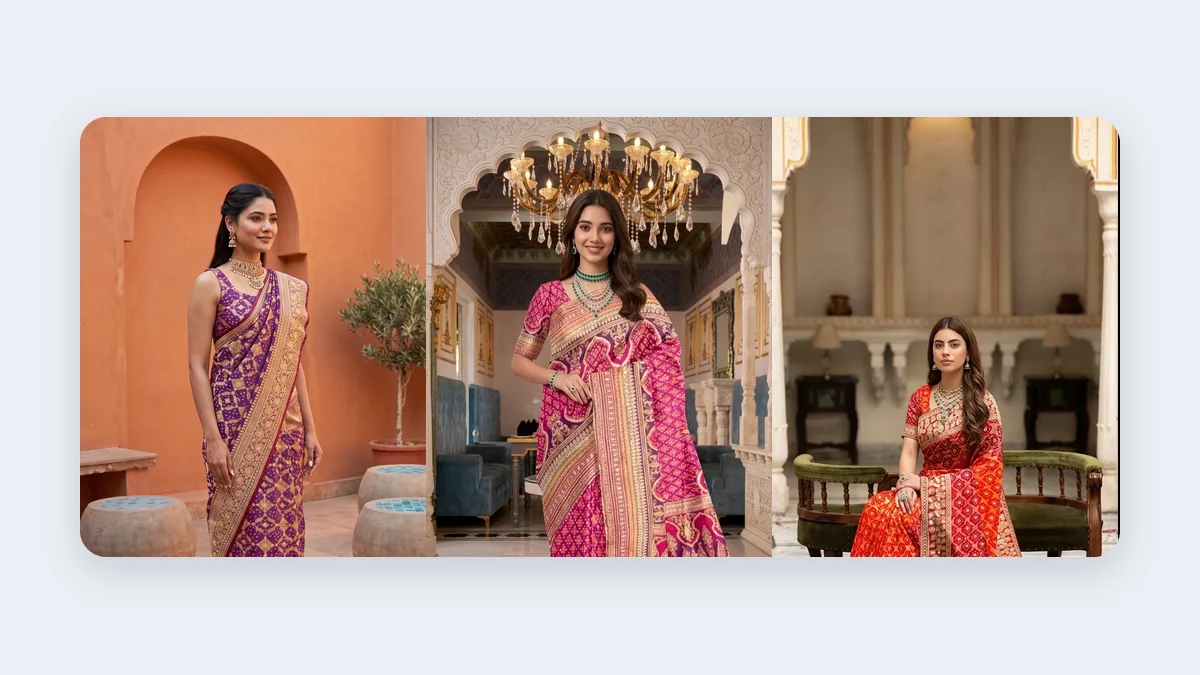
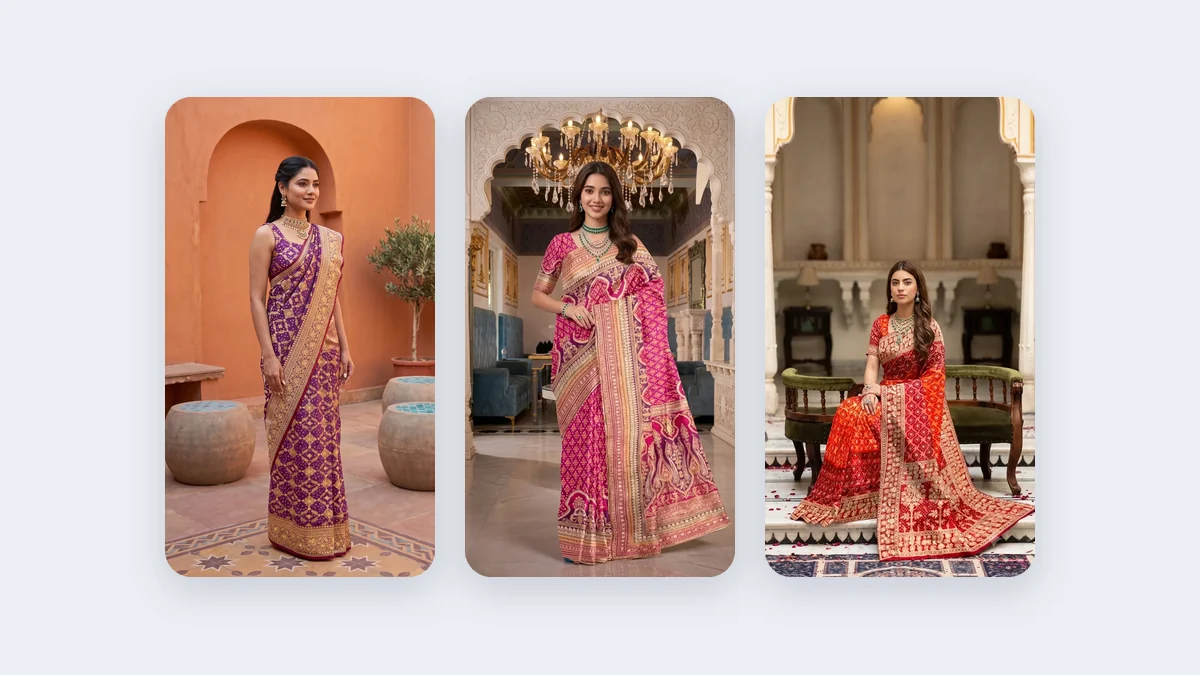
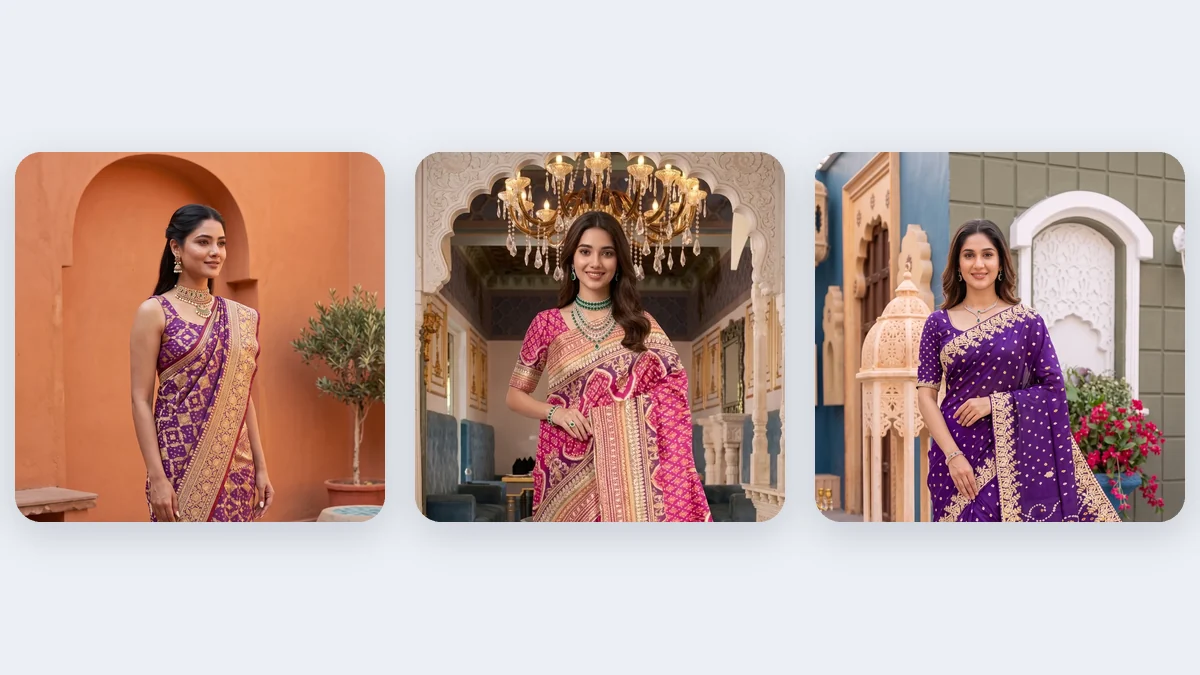
Ethnic garments often involve layers, heavy embroidery and drapes that need careful handling.
- Highlight borders, zari and embroidery with side light.
- Arrange the dupatta and pallu so the design shows clearly.
- Include movement shots for sarees and lehengas.
- Photograph jewellery combinations that traditional buyers expect.
- Plan colour palettes that reflect regional styles and festive seasons.
Business side: working with photographers
| Topic | What to agree on |
|---|---|
| Scope | Number of looks, images and locations |
| Rights | Where and how long you can use the images |
| Credits | Whether the photographer must be credited |
| Timeline | Shoot date, preview and final delivery |
| Payment | Deposit, milestones and balance |
| Revisions | Number of included revision rounds |
Put everything in a written agreement, even for small projects.
Building a fashion portfolio
- Pick your strongest 15 to 20 images, not your 50 favourites.
- Show variety: studio, outdoor, close-up, full-length.
- Include a consistent style so clients know what to expect.
- Update regularly with recent work.
- Create a simple website and a social media presence.
Using AI alongside traditional fashion photography
Vastralook helps brands and photographers extend their work by generating on-model images of additional colours or garments from a single garment photo. Use live fashion photography for brand campaigns and story-led content, and use AI for catalogue scale. This saves time while keeping the premium look where it matters most.
Quick checklist
- Concept, moodboard and shot list ready
- Model, stylist and team booked
- Garments steamed and fitted
- Lighting tested before the model arrives
- Backup gear and memory cards
- Contracts and usage rights confirmed
Conclusion
Great fashion photography relies on light, direction and consistent styling. Start simple, practise often and build a recognisable look.
Frequently asked questions
How do I choose between natural light and strobes?
Natural light is simple and flattering for beginners. Strobes give control and consistency, particularly for catalogues and indoor work.
How long does a fashion shoot take?
A simple catalogue shoot may take a few hours, while an editorial with several looks and locations can take a full day or more.
Do I need to credit the team?
Crediting photographers, stylists and models is good practice and may be required by your agreement.
What camera is best for fashion photography?
Any camera with good low-light performance and lens options. Lighting and direction matter more than the body.
Can I shoot fashion with a phone?
Yes, for social and basic catalogue work.
What is the difference between editorial and commercial fashion photography?
Editorial tells a story; commercial sells a product.