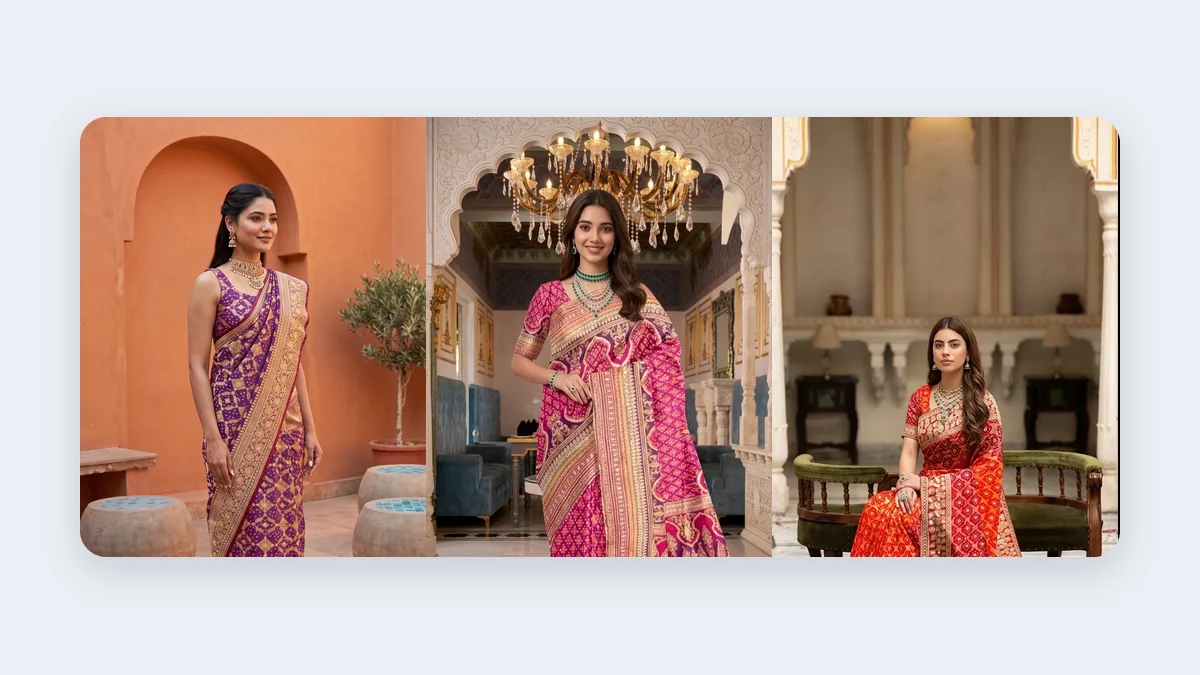
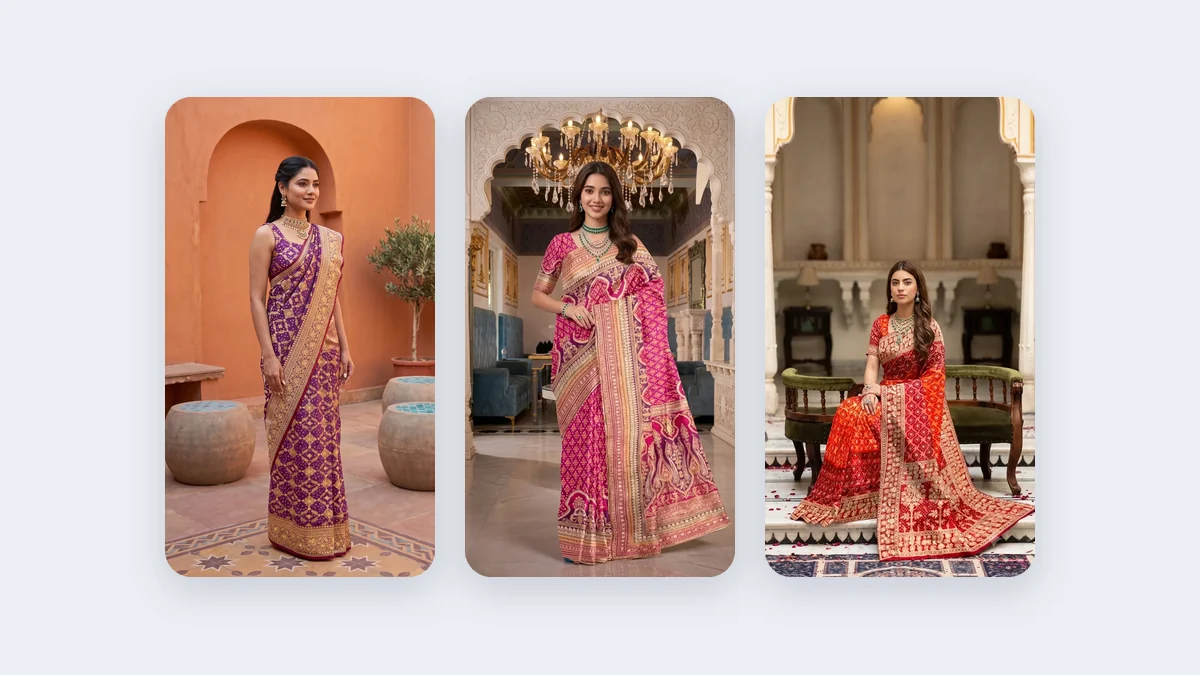
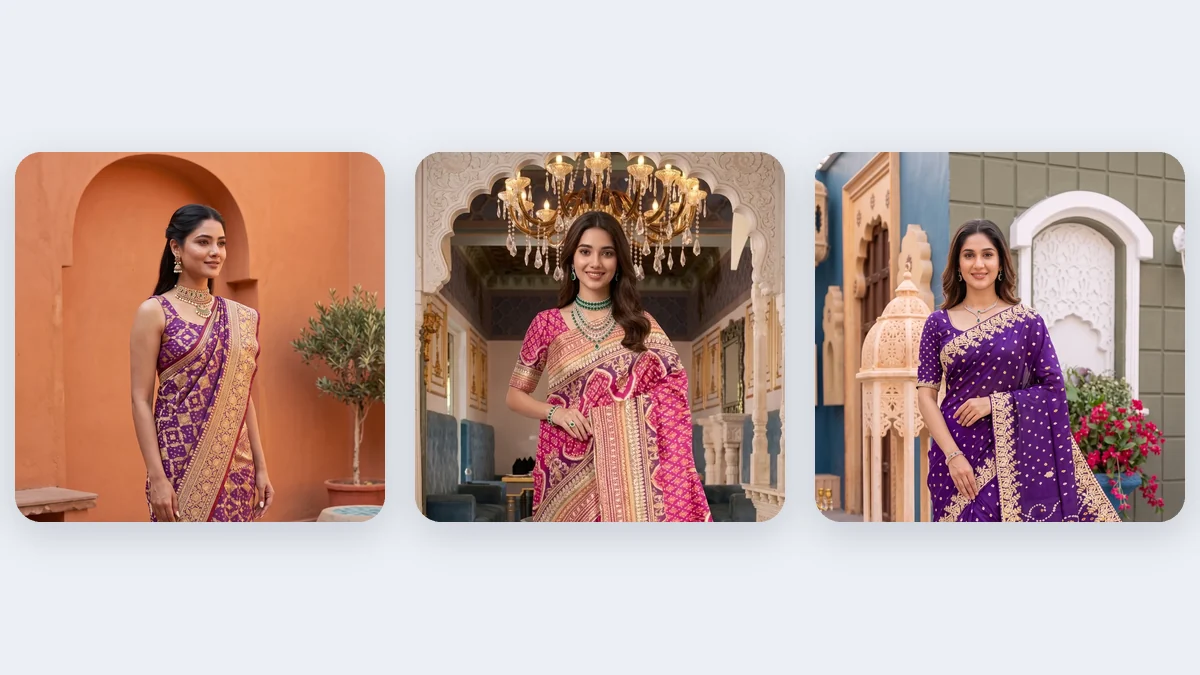
A kaftan is bought for how it moves: wide sleeves, a loose body, a drawstring or tassels at the waist, and a fabric light enough to fall softly. This guide explains how to photograph a kaftan for a catalogue, how to show the sleeve and the waist, and which backdrops suit resort and everyday styles.
What do buyers want to see in a kaftan photo?
They want to see the sleeve sweep, the neckline, the length and how the fabric falls. Because a kaftan is cut loose, the same piece can look shapeless or flattering depending on how it is shown. A tie or drawstring at the waist changes the whole line, so decide how you want the waist to look and photograph it that way, since the result follows the source photo.
How should the fabric hang for the source photo?
Hang it so the fall is visible, rather than laying it flat on a table. Spread the sleeves slightly so their width and any embroidered cuff can be seen. Pull the waist tie into the position you want to sell. Steam silk, modal or viscose, and for linen remove sharp packing folds while leaving the soft crease the fabric naturally has. Use soft daylight from the front so a light or sheer fabric does not turn transparent against a dark wall.
Source photo checklist for sleeves, waist and fall
- Neckline to hem and both sleeve tips inside the frame.
- Sleeves lifted slightly away from the body so their width is clear.
- Waist tie, drawstring or tassels arranged as you want them to appear.
- Side slits visible if they are part of the design.
- A background that contrasts with the fabric, especially for white or pastel kaftans.
- A close photo of the embroidery or the print repeat if it is the main selling point.
Which four details make it look right on a model?
Sleeves, waist, neckline and hem are the four details to show.
| Detail | How to show it | Common problem |
|---|---|---|
| Sleeves | A front or three-quarter pose with the arms slightly away from the body | Arms pinned to the sides hide the sweep |
| Waist | Tie or drawstring set before the photo | A tangled tie reads as a mistake |
| Neckline | A front frame with the neckline centred | A collar twisted to one side |
| Hem and slit | A walking pose or a full-length front frame | A cropped hem removes the length |
| Fabric | Soft, even light | Hard light flattens a sheer fabric |
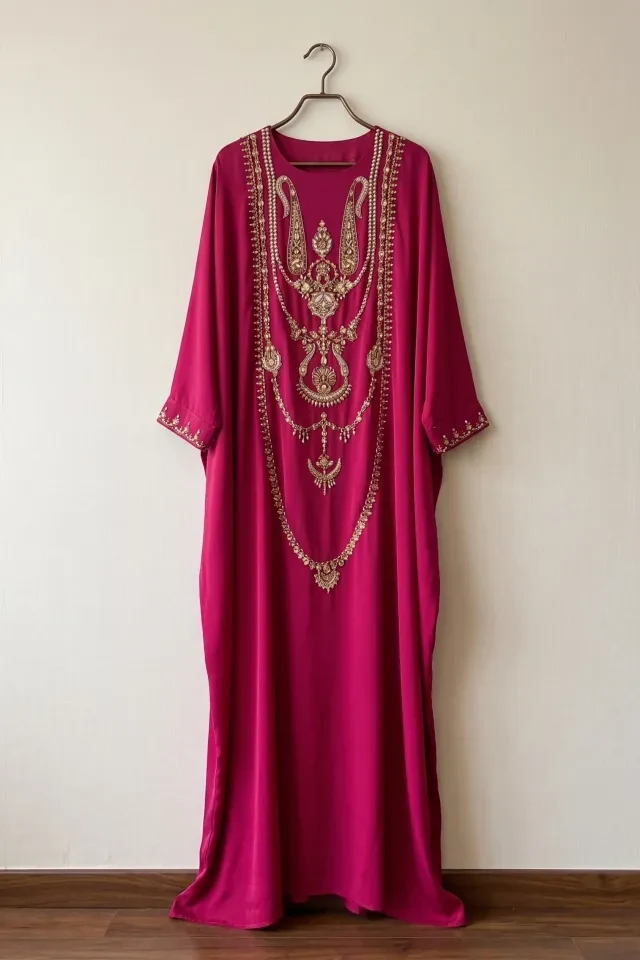
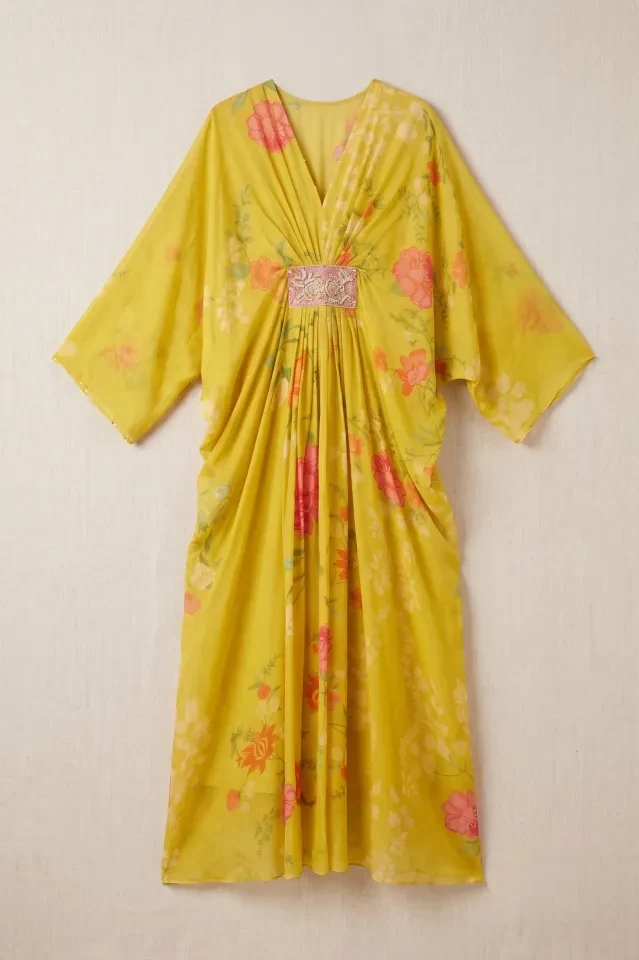
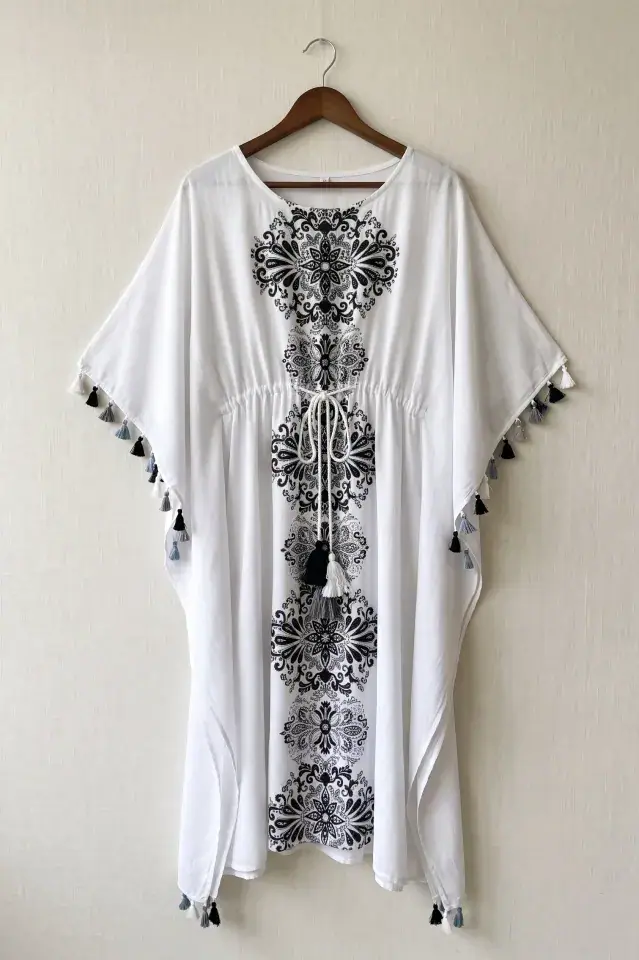
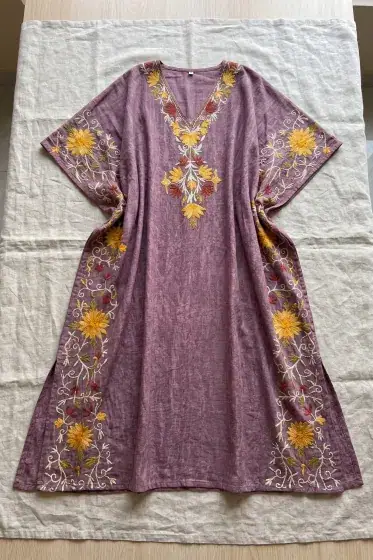
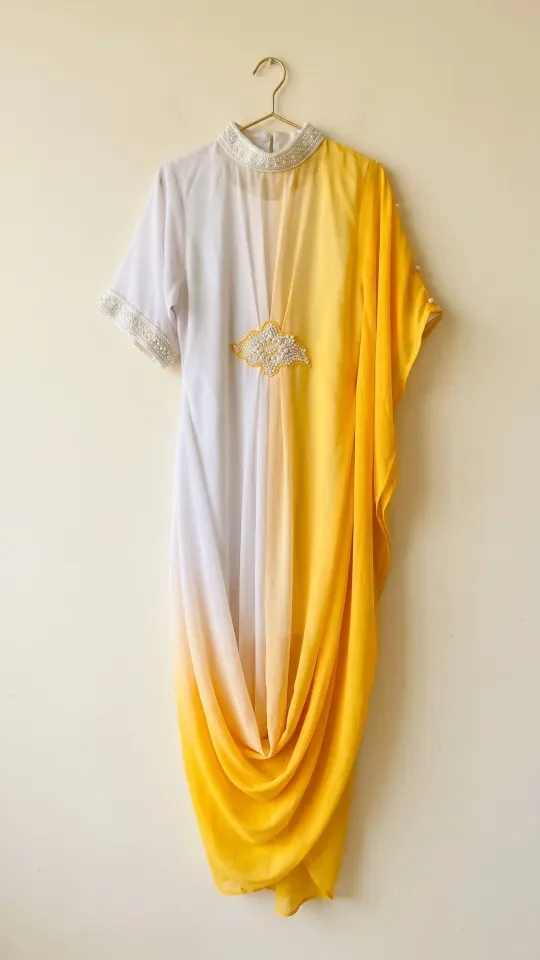
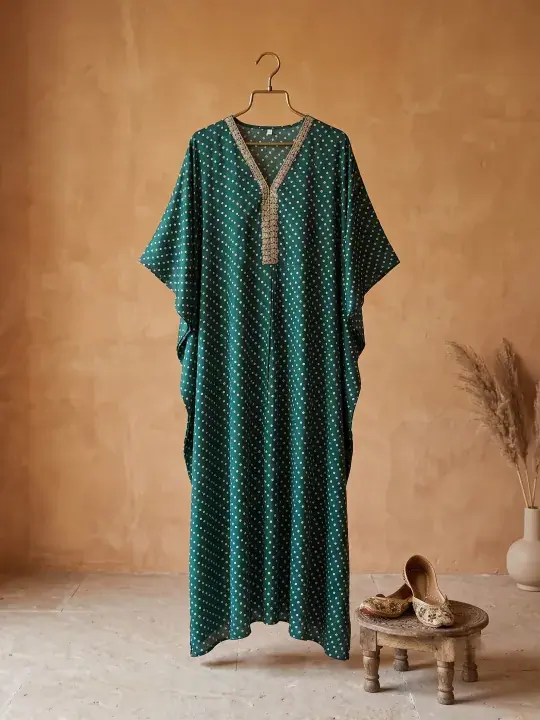
Source photos with the whole kaftan in frame and the sleeves visible. The library holds 13 reference photos for this garment type.
How do printed and linen fabrics differ in a package?
Package #472 shows a muted lavender floral kaftan from the front and in a three-quarter posture, so watch the sleeve sweep and how the torso drapes. Package #334 shows a white linen resort kaftan with botanical embroidery in front and three-quarter views, so look at the linen weave and the relaxed sleeve opening.
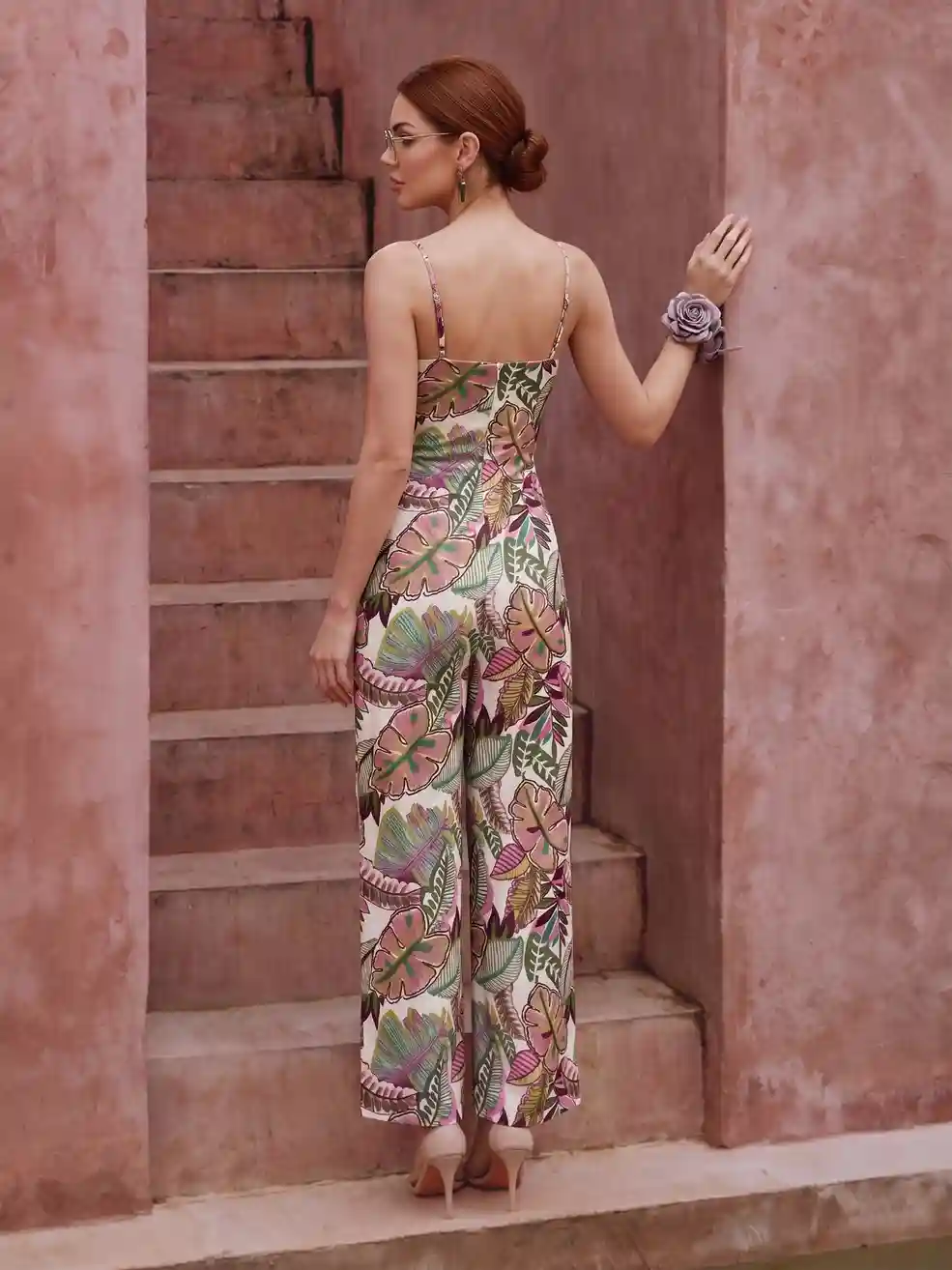
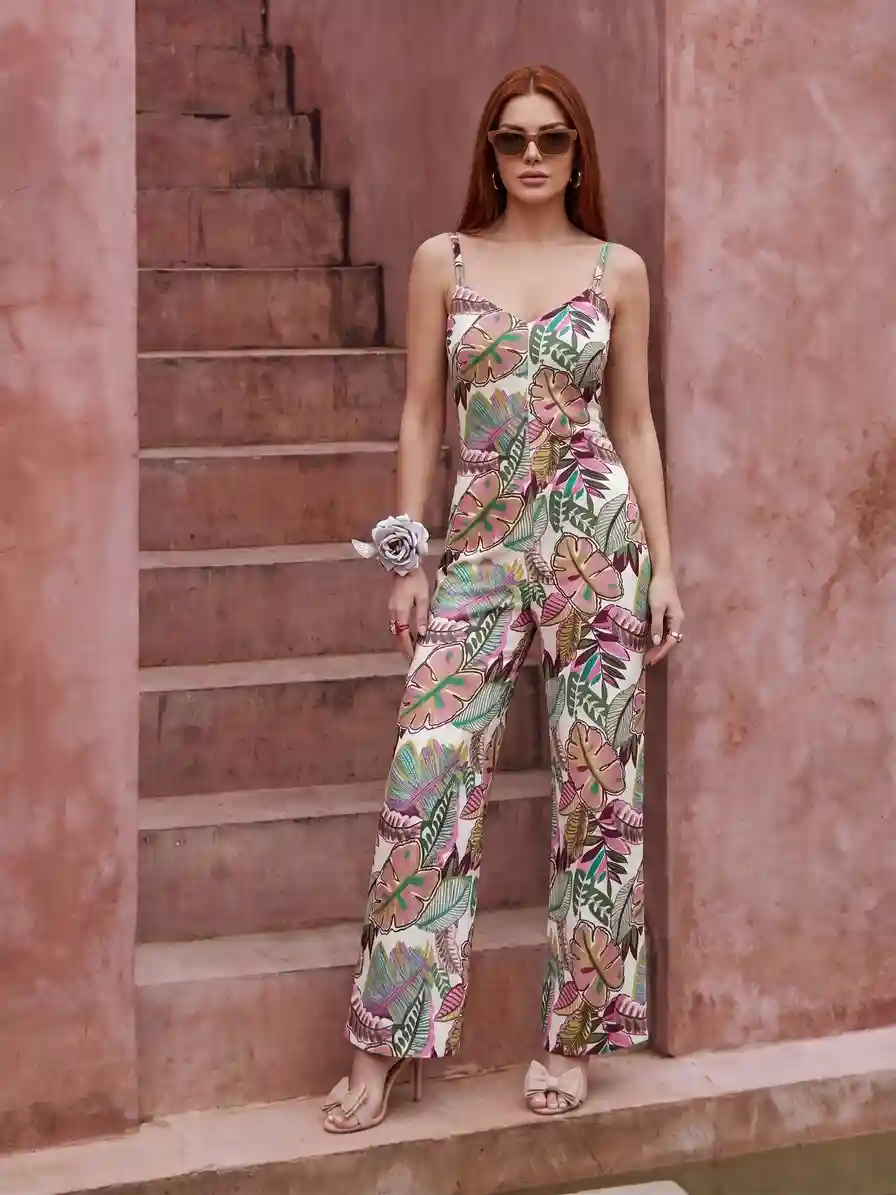
Look at how far the sleeves sweep out and how the printed fabric falls from the shoulder.
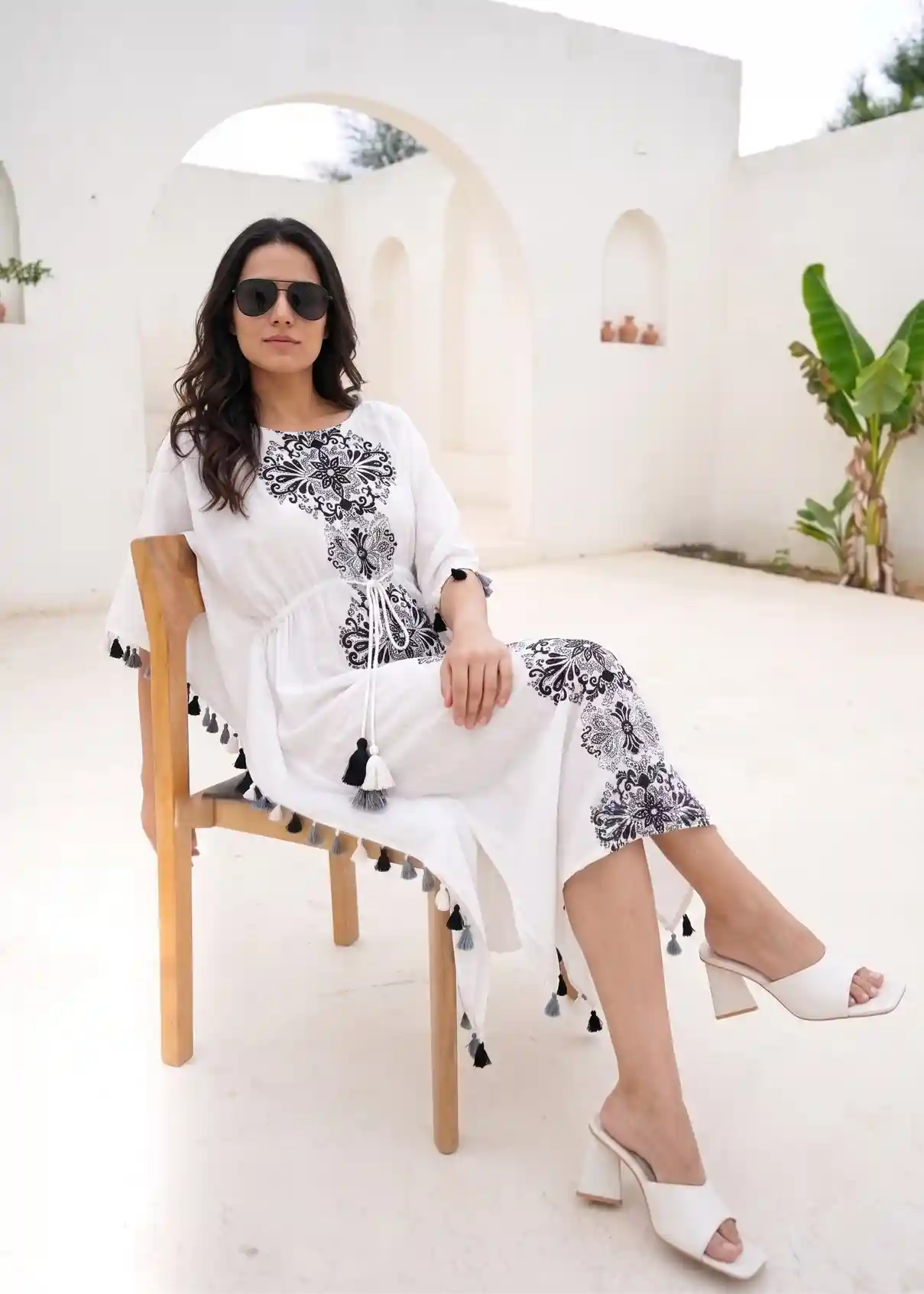
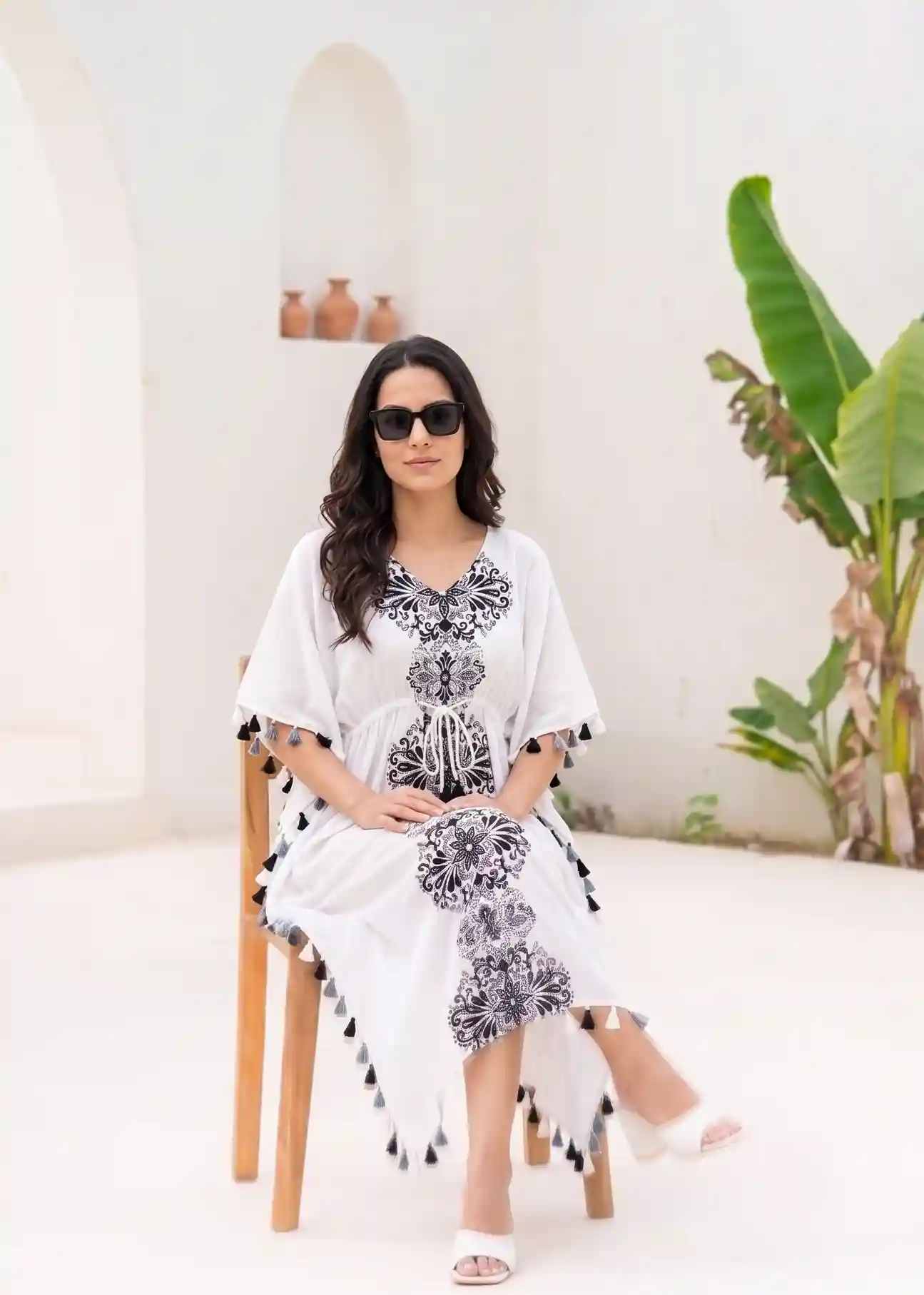
Check the linen weave, the botanical embroidery and the relaxed sleeve opening in both frames.
What are the steps from hanger to finished set?
- Hang and steam
Hang the kaftan, spread the sleeves, set the waist tie, and steam out any sharp folds.
- Photograph the fall
Shoot from the front at chest height in soft daylight, with the full length and both sleeve tips in frame.
- Choose the category
Open Catalogue Studio, pick Kaftan and upload the photo.
- Choose model, pose and backdrop
A standing front pose shows the sleeves, and a three-quarter or walking pose shows the movement. Choose first, then order.
- Check the summary
Read the list of combinations you are about to order, then place the order.
- Review each shot
Zoom in on the embroidery, the waist tie and the sleeve edge. Use Recreate on any shot that missed.
Which backdrop suits resort and everyday styles?
A warm cream studio wall suits listings, and a coastal, terrace or whitewashed villa setting suits resort lookbooks.
| Backdrop | Best for | Effect |
|---|---|---|
| Warm cream studio wall | Marketplace and store listings | Clean and true to colour |
| Sunlit coastal setting | Resort and holiday edits | Breezy and aspirational |
| Whitewashed villa | Linen and white kaftans | Fresh and Mediterranean |
| Neutral terrace | Everyday and modest kaftans | Calm and understated |
What works well, and what to watch
- One model, light and backdrop across every print and colourway
- Sleeve sweep and waist shown in the poses you choose
- A new print only needs its own source photo
- A folded or flat source photo gives a flat result
- Sheer or white fabric against a pale wall can disappear
- Embroidery and print repeats need a close check at full size
What flattens a photo of loose, flowing fabric?
Four habits flatten most kaftan photos.
- Photographing the kaftan flat on a table, which hides the fall of the fabric.
- Pinning the sleeves to the body so their width never shows.
- Leaving the drawstring or tassels tangled.
- Shooting a white or pastel kaftan on a wall of the same shade.
How many frames make a complete listing?
Plan on a front, a three-quarter, a back and one close frame as a base set, then check the marketplace's own rules before you export. Requirements differ by marketplace, so we keep them in a separate guide.
Questions sellers ask about photographing kaftans
Should I photograph a kaftan flat or hanging?
Hang it. A kaftan is read by its fall, and a flat photo gives the result nothing to copy. A hanger with the sleeves spread works well.
How do I show the waist tie?
Set the drawstring or tassels the way you want them to look on the model, then take the photo. The result follows the source, so a neat tie in the photo gives a neat tie in the shot.
Will a sheer or white kaftan work?
Yes, if the background contrasts with the fabric and the light is soft and even. Check the edges at full size after you generate.
Can one kaftan be shown in several prints?
Photograph each print the same way and run them through the same model, pose and backdrop. The set then reads as one range.
Can I use the images on a marketplace?
The images are yours to use commercially. Presets for Myntra, Amazon, Flipkart and Meesho set the background and size those marketplaces ask for.
Try it on one piece first
Photograph one kaftan as described above, choose your model and backdrop, and check the summary before you order.