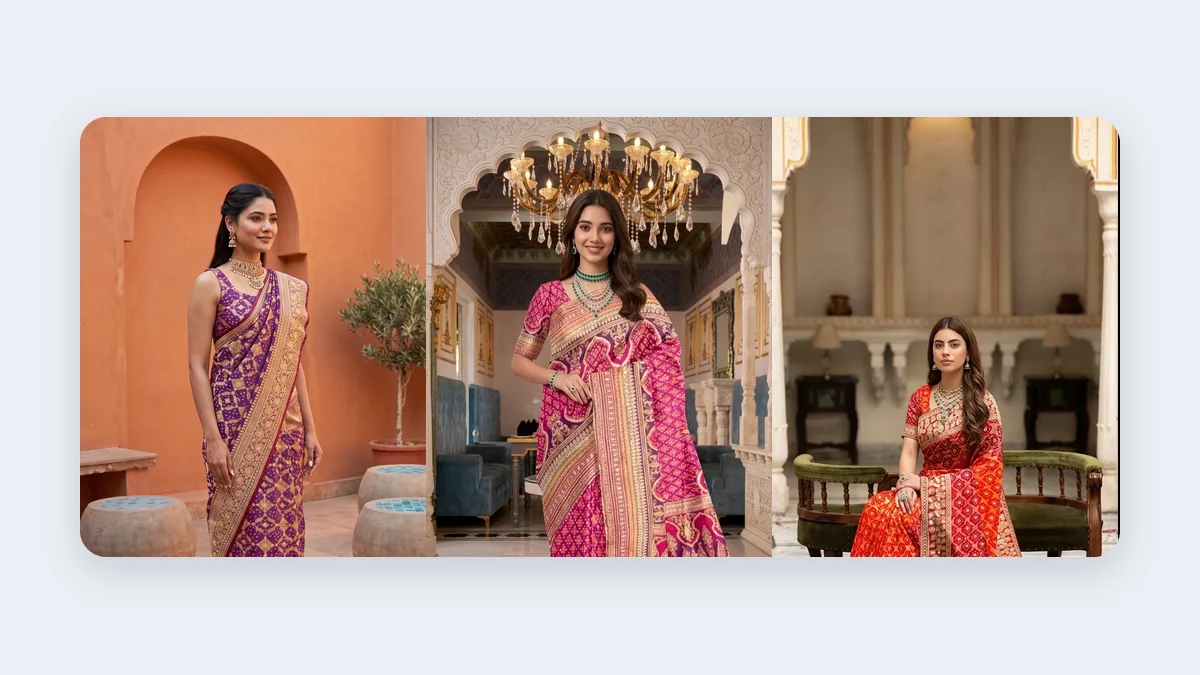
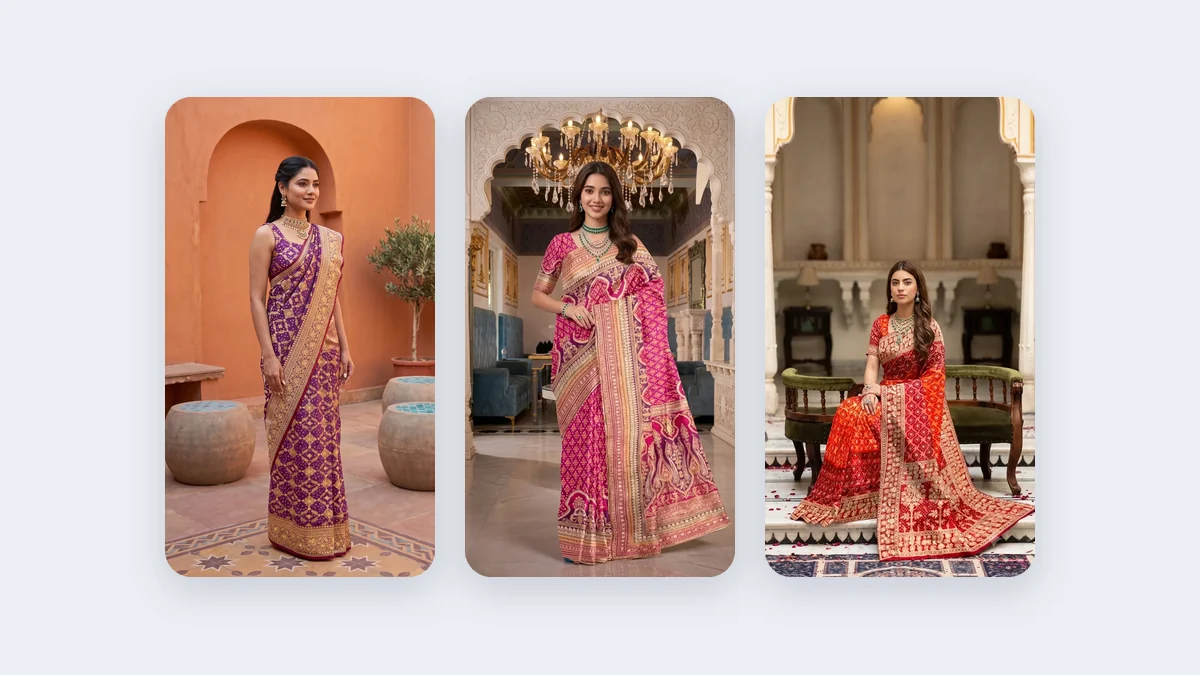
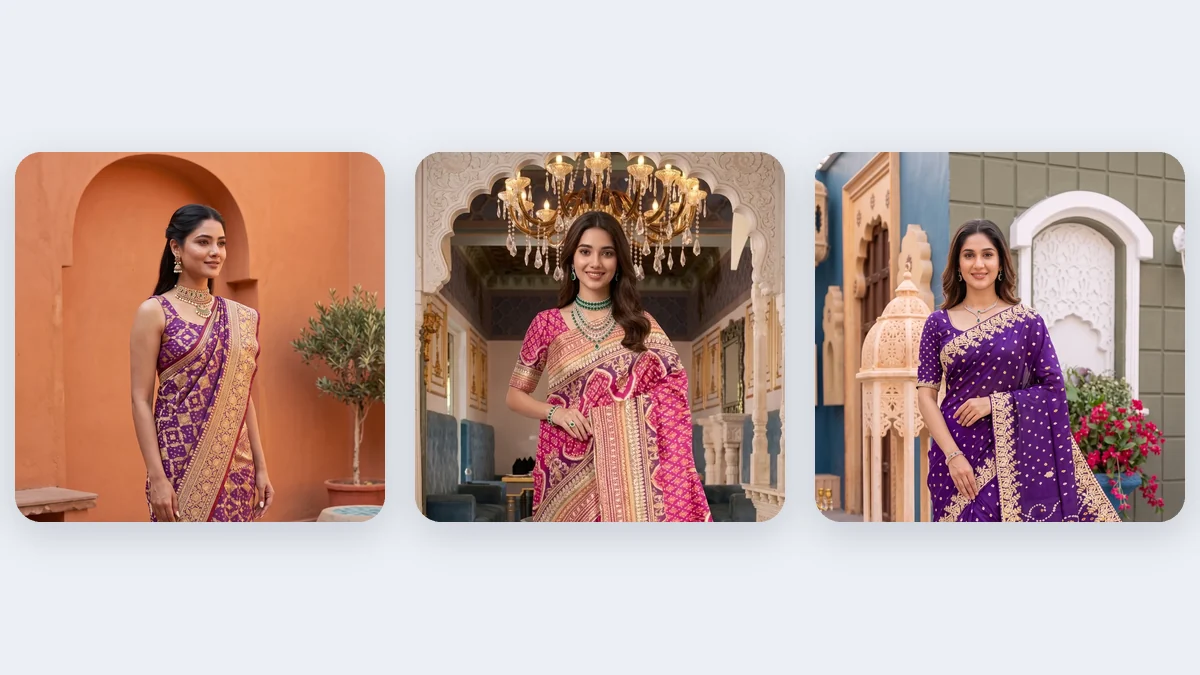
Lingerie is judged on fit and finish, so a product photo has to show the cups, straps, closure and fabric clearly without hiding any of them. This guide covers how to prepare the source photo, how to light lace and satin, and which angles help a buyer judge the fit.
What does lingerie need from a source photo?
It needs a flat, smooth garment at its natural size, with seams and panels visible and nothing pulled out of shape. Stretching a bra or brief to look larger makes the result fit a body no customer has.
- The garment is smooth and relaxed at its natural size, with no stretch.
- Cups keep their shape, with tissue paper inside if they collapse when laid flat.
- Straps are straightened and the adjusters are visible.
- The back closure, hooks and any wings are shown in a second photo.
- The seam lines and panels are visible, because they define the fit.
- Lace edges and trims are flat and not curling.
- The background differs in tone from the garment, so sheer or lace edges stay visible.
How should you light lace, satin and seamless fabric?
Use a large, soft light from the side for almost everything, and change only the distance and angle for each fabric. Avoid a flash pointed straight at the garment, because it flattens lace and puts bright spots on satin.
| Fabric | Light that works | Why |
|---|---|---|
| Lace | Soft light from the side | Shows the pattern without flattening it |
| Satin | A large soft source set well away from the garment | Keeps the sheen smooth instead of spotty |
| Seamless microfibre | Even light from the front | Shows the smooth surface and the absence of seams |
| Mesh or sheer panels | Soft light against a contrasting backdrop | The transparency only reads against a different tone |
Which angles help a buyer judge the fit?
A front view, a three-quarter view and a back view cover most listings. The back matters more here than for most garments, because buyers check the closure, the strap adjusters and how the wings sit.
- Prepare the garment
Steam or smooth it, shape the cups gently and straighten the straps.
- Photograph the front
Shoot straight on from above the flat garment, with the cups, centre panel and straps in frame.
- Photograph the back
Show the hooks, wings and strap adjusters laid out as they are worn.
- Add a detail close-up
Take a tight photo of the lace edge, trim or logo, so the quality of the finish is visible.
- Upload and choose the look
In Catalogue Studio, pick the model, pose and background before you order, and check each result at full zoom.
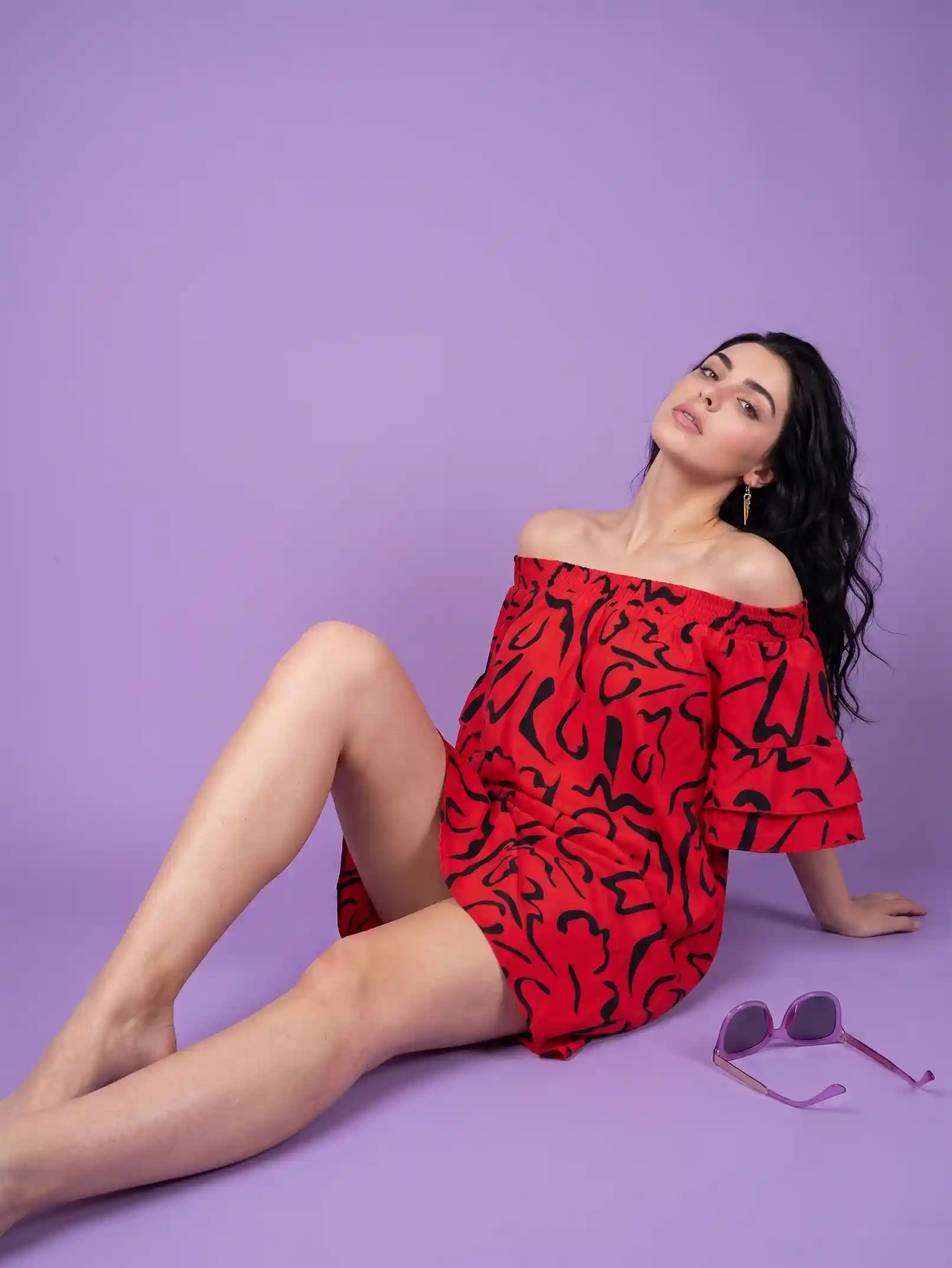
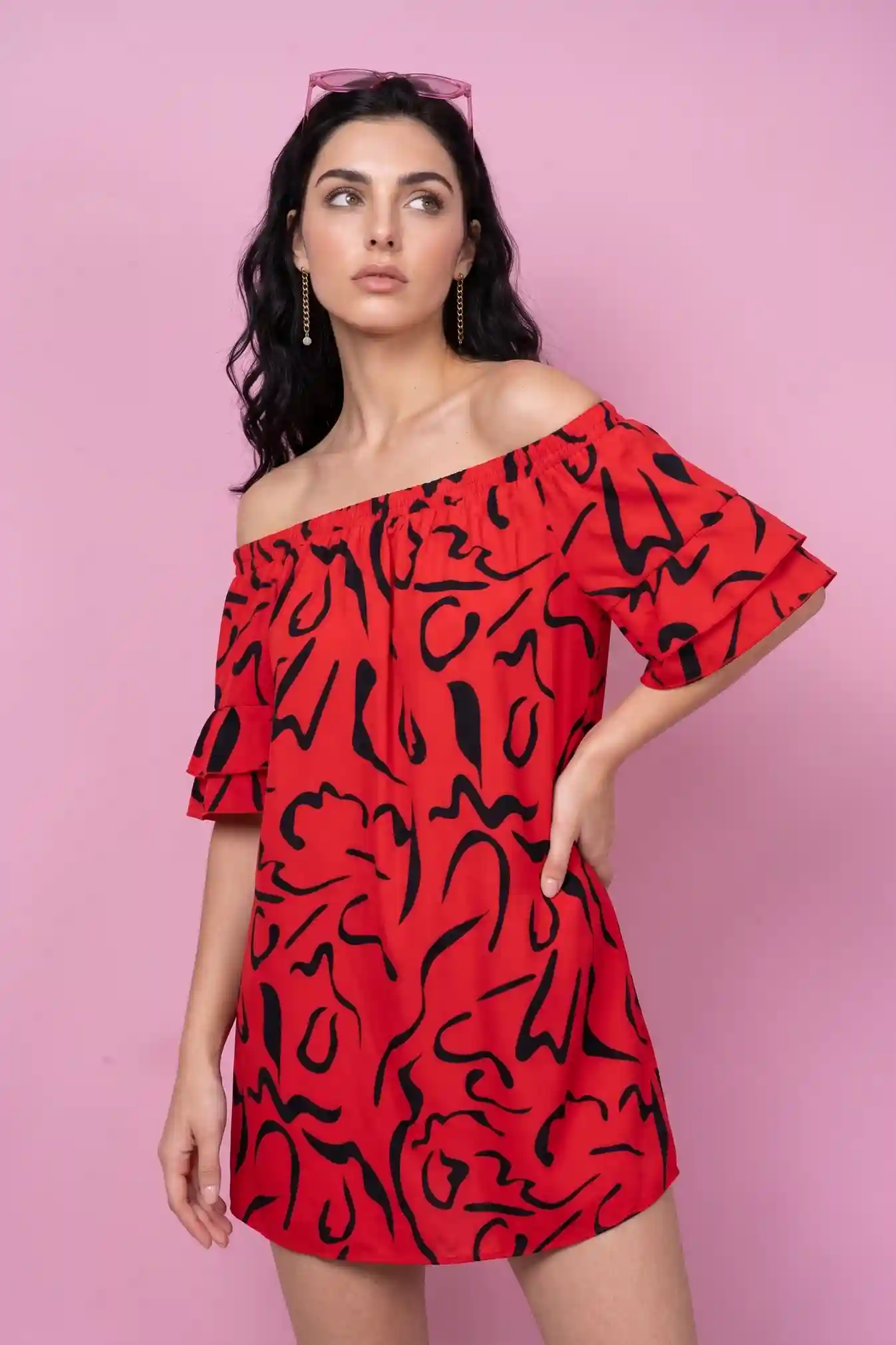
Look at the strap alignment and the soft, low-key light in these two frames. This package sits in the Casual Wear category, so it is one example of the style rather than a lingerie-only setting.
Which background suits lingerie?
A plain, softly lit background suits marketplace listings, and a warmer home-style setting suits your own storefront. Choose a tone that contrasts with the garment, so lace edges stay readable.
| Background | Works for | Keep in mind |
|---|---|---|
| Soft grey or white seamless backdrop | Marketplace and product pages | Pick a tone that differs from the garment colour |
| Warm, daylit room with sheer curtains | Your own storefront and lookbooks | Keep the room tidy and plain, so the garment stays the focus |
| Dark, low-key studio | Evening and occasion collections | Pale lace needs enough light to stay visible |
| Blush or warm neutral backdrop | Everyday and cotton ranges | Skin-tone garments can vanish into skin-tone backdrops |
Should I photograph a bra and its matching brief together?
If you sell them as a set, put both in one frame, arranged as they are worn. A set uploaded as one piece comes back as one piece.
How do I keep cups from collapsing when I lay them flat?
Put a little tissue paper inside each cup to hold its shape, and remove it for any close-up where it would show. Do not stretch the fabric to fill the cup.
Can I show lingerie on a model?
Yes. You choose the model, pose and background before you order, and every shot is yours to check. Each marketplace has its own rules for intimate apparel images, so read those before you publish.
Why does lace look flat in my photo?
Front light flattens lace. Move the light to the side and use a background that contrasts with the lace colour.
What if a result misses?
You can Recreate the shot, or ask for half the credits back if it missed.
Start with one best-selling set, compare the on-model photo with your flat photo at full zoom, and then run the rest of the range with the same settings.