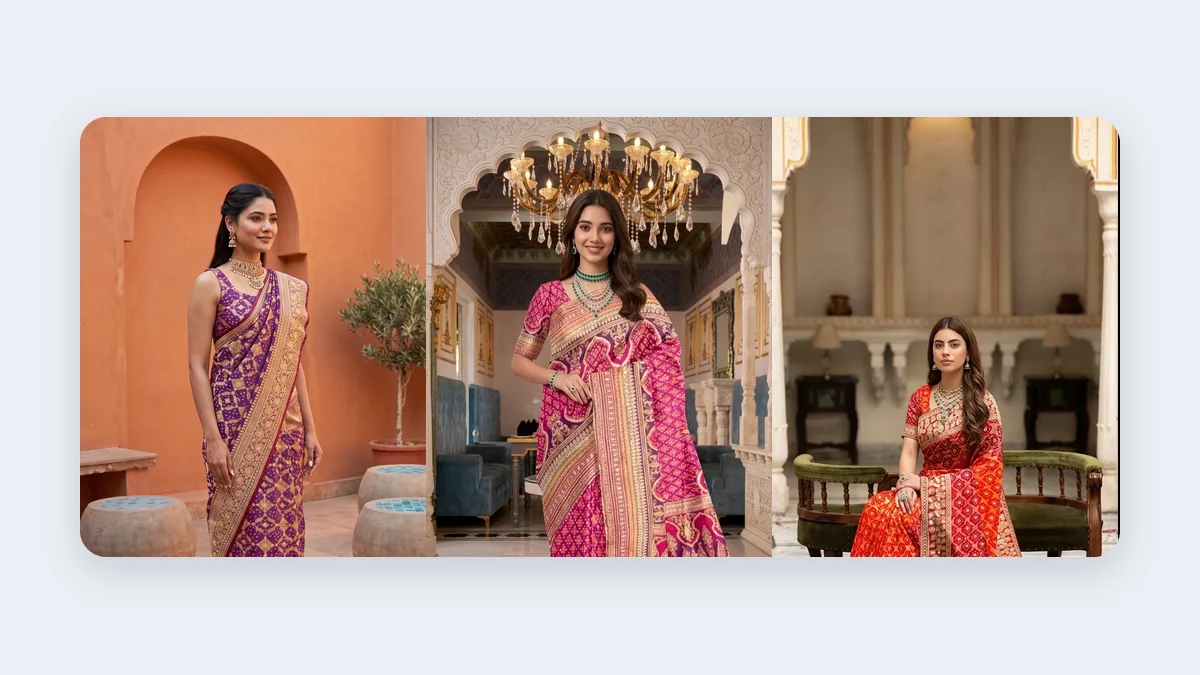
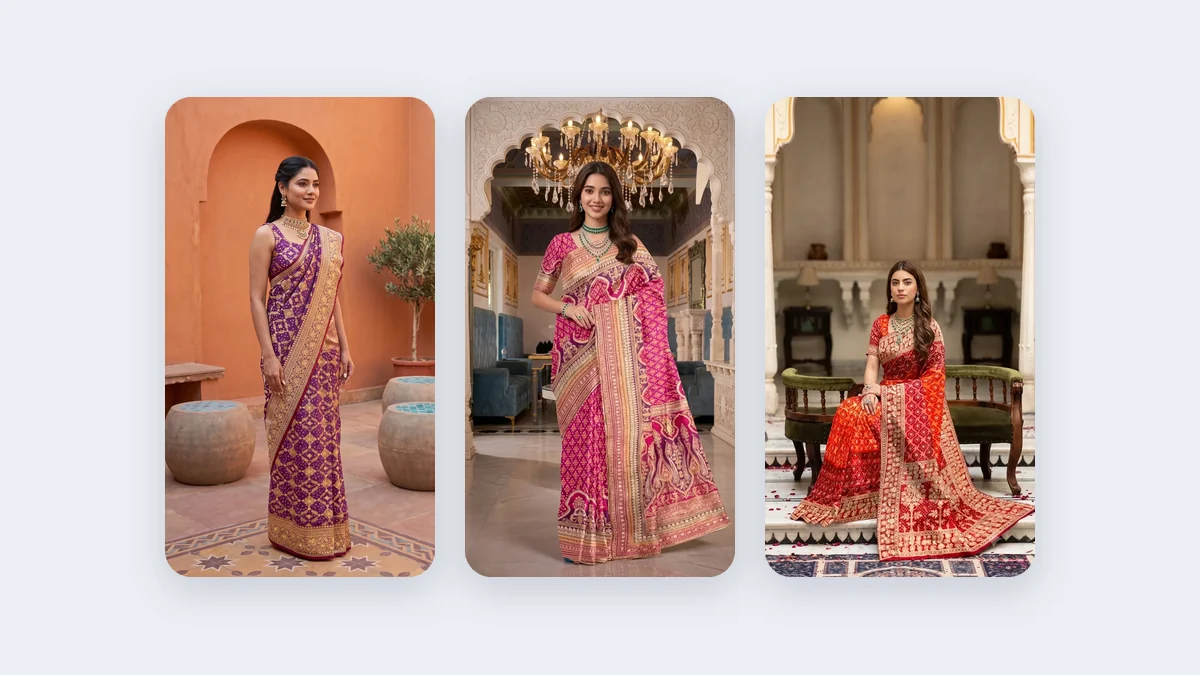
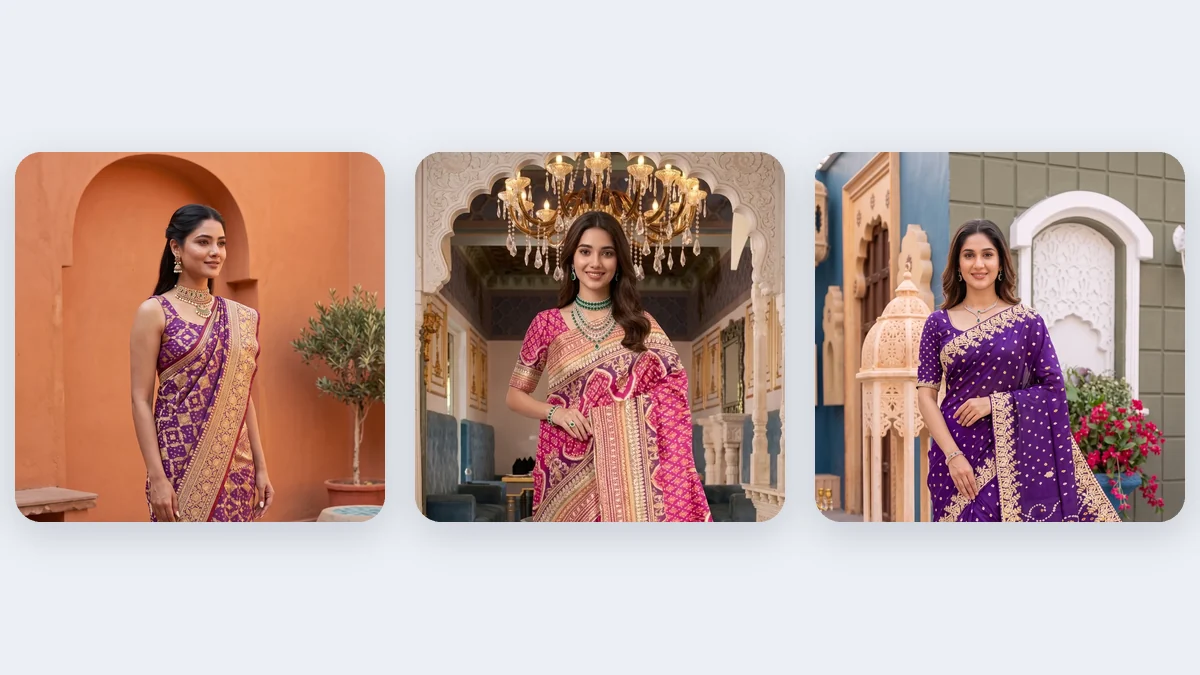
A model photoshoot can make or break your brand imagery. The model, the pose and the direction decide whether a garment looks aspirational or ordinary. Yet many brands treat modelling as an afterthought: they book someone last minute, send a vague brief and hope for the best.
This guide explains the whole process: types of model shoots, how to find models, how to write a brief, contracts and usage rights, posing and direction, on-set workflow, budgeting, and when AI-generated models are a smarter choice. It also covers the basics for anyone who wants to become a photo model.
Types of model work
| Type | Description | Typical use |
|---|---|---|
| Catalogue / ecommerce | Simple poses, clear view of the product | Product pages |
| Editorial | Creative, story-led, styled | Magazines, brand stories |
| Lookbook | Seasonal collection with a theme | Campaign pages |
| Commercial / ads | Campaign visuals with messaging | Ads and billboards |
| Fit modelling | Model tests garment fit | Design and production |
| Street / lifestyle | Candid, real-world | Social media |
Knowing which type you need decides who you hire and how long the shoot takes.
How to find models for a shoot
- Modelling agencies give reliable, professional talent with contracts and portfolios, but cost more.
- Freelance and new faces found through Instagram and portfolio platforms are often affordable and fresh.
- Local casting calls are useful for regional looks and specific body types.
- Friends, customers and staff work for relaxed, authentic lifestyle content with proper consent.
- Referrals from photographers, stylists and other brands are often the best source.
What to check in a model's portfolio
- Experience in your category (ethnic wear, western, kidswear)
- Range of expressions and poses
- Comfort with movement and drapes
- Consistent quality across photographers
- Reliability reviews
Choose models who resemble your customers. Check body type fit for your sample sizes.
Writing a model brief
A good brief prevents misunderstandings and saves time.
| Section | What to include |
|---|---|
| Date, time, location | Include arrival time and duration |
| Outfits and looks | Number of looks and garment types |
| Hair and makeup | Style and who provides it |
| Mood references | 5 to 10 reference images |
| Poses | Catalogue basics or editorial style |
| Usage | Where and how long photos will be used |
| Payment | Rate, method and timeline |
| Cancellation | Policy and rescheduling terms |
| Contact | On-site coordinator and phone number |
Send the brief at least a week ahead and confirm the day before.
Contracts, usage rights and payment
Always sign a release. Specify:
- Whether images may be used on your website, marketplaces, ads, print or social media
- The duration of usage (6 months, 1 year, perpetual)
- Territory (India, worldwide)
- Exclusivity (can the model work for competitors?)
- Whether usage rights extend to AI editing or generation
- Payment schedule and late fees
Unclear rights are the most common source of disputes in model photography.
Posing basics
- Keep shoulders relaxed and chin slightly lowered.
- Shift weight onto one leg for natural posture.
- Use hands naturally: touch hair, hold a dupatta, adjust sleeves.
- For catalogue images, hold neutral poses long enough for sharp frames.
- Show movement for flowy garments.
- Avoid stiff, locked knees.
Pose list for a clothing shoot
| Pose | Purpose |
|---|---|
| Straight front | Main listing image |
| Three-quarter turn | Silhouette |
| Back view | Closure and back design |
| Walking | Movement |
| Seated | Casual and comfort |
| Hand on hip | Confidence |
| Over-the-shoulder look | Editorial |
| Close detail pose | Sleeves, neckline, jewellery |
On-set tips
- Steam and fit garments before the model arrives.
- Keep a stylist to clip and adjust outfits.
- Take breaks to keep energy up.
- Shoot wide, mid and detail frames for each look.
- Show the model the back of the camera sometimes. It builds confidence.
- Give clear, positive, one-step directions.
Shoot-day checklist
- Signed contracts and releases
- Outfit steaming and fitting done
- Hair and makeup artist confirmed
- Shot list printed
- Water, snacks and a private changing area
- Backup garments, safety pins and clips
- Charged batteries and spare memory cards
- Payments ready
Size, diversity and casting
Use models across sizes and skin tones where possible. Shoppers respond to seeing people like themselves wearing the product, and it can lower returns because fit expectations are clearer. Cast based on your customer base, not only on a narrow ideal.
Budgeting for a model photoshoot
| Cost item | Notes |
|---|---|
| Model fee | Per hour, half-day or full-day |
| Photographer | Includes basic editing or not |
| Makeup and hair | Often priced per look |
| Stylist | Needed for multiple outfits |
| Studio or location | Rental and permits |
| Retouching | Per image |
| Usage rights | Can raise the price for ads |
See our photoshoot cost guide for how to compare quotes by cost per final image.
How to become a photo model
- Practise with friends and local photographers through test shoots.
- Build a portfolio of 10 to 15 strong images.
- Create profiles on casting platforms and professional social accounts.
- Approach agencies with a clear, honest submission.
- Learn posing, expression and how to take direction.
- Protect yourself: sign contracts, avoid unsafe shoots, and check usage terms.
AI models as an alternative
If you have many SKUs or colourways, hiring models for every shoot is expensive. AI-generated models let you show the same garment on different body types and skin tones from a single garment photo. Vastralook is built for this: upload a product image and get on-model results to review and use. Many brands do a live model shoot for a hero campaign and use AI models for the rest of the catalogue.
| Factor | Live model shoot | AI model |
|---|---|---|
| Authentic movement | Excellent | Limited |
| Cost for many SKUs | High | Lower |
| Speed | Days | Hours |
| Control over variants | Limited by shoot time | High |
| Best for | Campaigns, storytelling | Catalogues, tests |
Common mistakes
- Booking a model without checking portfolio fit.
- Vague briefs with no references.
- Not clarifying usage rights.
- Scheduling too many looks in too little time.
- Ignoring the model's comfort and breaks.
Directing models: a practical communication guide
Great model photography is mostly good communication. Use these habits:
- Start with the mood, not the pose. Say "elegant and calm" before demonstrating a posture.
- Give one instruction at a time. "Lower your chin slightly" works better than a list of five changes.
- Use positive language. "Soften your shoulders" beats "stop looking stiff".
- Demonstrate when unsure. A quick pose from the photographer saves minutes of explanation.
- Keep energy steady. Music, short breaks and quick previews keep models relaxed and expressive.
- Pay attention to garment behaviour. Re-adjust pallu, dupatta and hems between frames.
Common model shoot problems and solutions
| Problem | Solution |
|---|---|
| Stiff poses | Give movement tasks, like walking or turning |
| Garment slipping | Clip at the back and re-check between looks |
| Model fatigue | Schedule breaks and keep looks to a manageable number |
| Inconsistent expressions | Share reference images and review frames together |
| Running late | Build a 15 percent time buffer into the plan |
Respecting the model's time, comfort and boundaries leads to better photos and better working relationships.
Conclusion
Choose models who match your customer, brief them clearly and secure usage rights. For high-volume catalogues, combine live models with AI-generated ones to keep quality high and costs manageable.
Frequently asked questions
How do I become a photo model?
Build a portfolio with test shoots, create profiles on casting platforms and approach agencies.
How do I find models for a shoot?
Use agencies, freelance platforms, social media, referrals and local casting calls.
Should I pay models in cash or with photos?
Paid work is more professional. Time-for-prints deals only suit tests and must be agreed in writing.
How long should a model shoot last?
Half a day for three to five looks is a good target.
What is the difference between model photography and fashion photography?
Model photography focuses on people in photos, while fashion photography focuses on clothing and style, usually with models.
Do I need a model for every product?
Not always, but on-model images usually boost conversion for apparel.