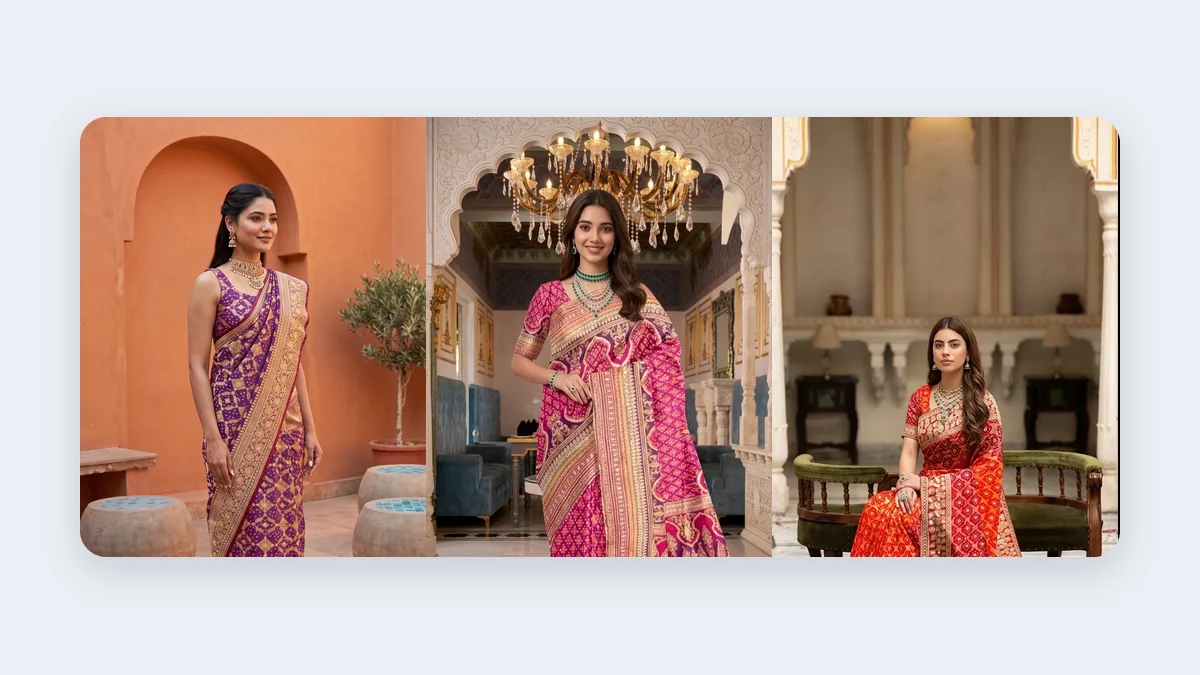
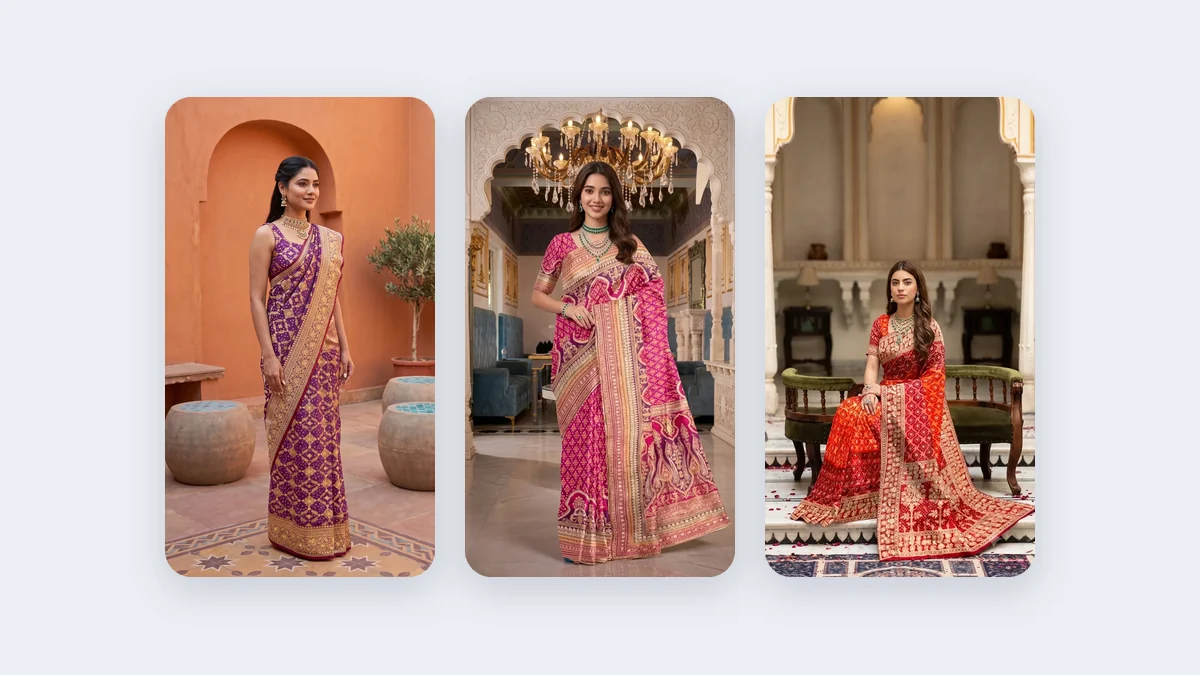
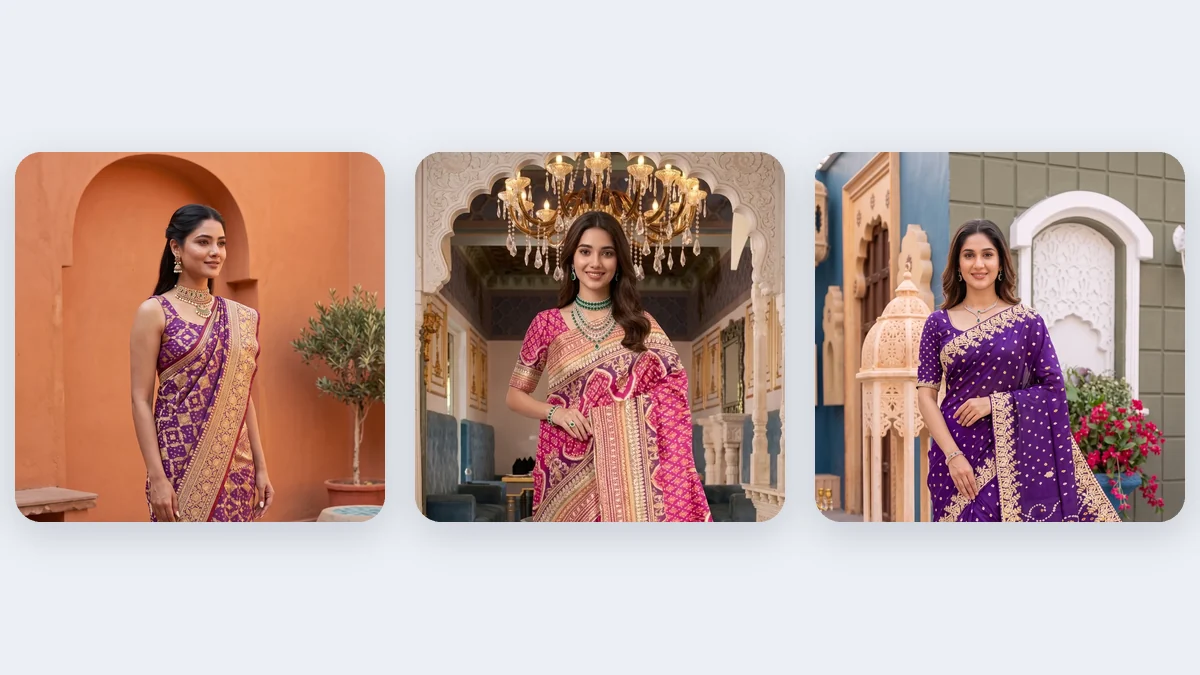
AI image generators can now create pictures that look like real photographs. But realistic AI images do not happen by accident. Results depend on the tool, your input and how carefully you review the output. This guide explains how photorealistic AI photos are made, how to write better prompts, what to compare when choosing the best AI image generator, and how fashion and ecommerce brands can use AI images responsibly.
What makes an AI image look realistic?
Real photographs follow the rules of physics and optics. AI images look fake when they break those rules. Check for:
- Natural lighting and shadows that agree with the light source
- Correct anatomy, especially hands, teeth and eyes
- Believable textures in skin, fabric, hair and surfaces
- Consistent perspective and depth of field
- Clean details without warped text, logos or jewellery
- Natural imperfections, such as slight asymmetry and skin texture
How to generate realistic AI photos
1. Be specific in your prompt
Describe subject, setting, lighting, camera style and mood. Vague prompts produce generic results.
2. Use reference images where possible
Tools that accept a reference photo, such as a garment image, keep products accurate. This is vital for ecommerce.
3. Iterate
Generate several versions, then refine the prompt based on what worked.
4. Check details at 100%
Zoom in on hands, eyes, fabric edges and background objects.
5. Edit lightly
Colour grade, crop and retouch to match your brand.
A prompt formula that works
Subject + action + setting + lighting + camera + mood + quality notes
| Part | Example |
|---|---|
| Subject | Woman in a red silk saree |
| Action | Standing, looking slightly to the side |
| Setting | Courtyard with warm stone walls |
| Lighting | Soft window light, golden hour |
| Camera | 85 mm portrait lens, shallow depth of field |
| Mood | Elegant, warm, festive |
| Quality | Natural skin texture, sharp fabric detail |
Combined: "Woman in a red silk saree standing in a sunlit stone courtyard, looking slightly to the side, soft golden-hour light, 85 mm portrait lens, shallow depth of field, natural skin texture, sharp fabric detail."
Prompt tips
- Name the lens and light, not just "high quality".
- Add "natural skin texture" to avoid plastic-looking faces.
- Keep prompts focused. Overlong prompts can confuse the model.
- Use negative prompts, where available, to exclude extra fingers or text.
How the technology works (in plain language)
Most image generators are trained on huge collections of images paired with descriptions. They learn what things look like and how they are arranged. When you type a prompt, the model builds an image step by step from noise until it matches your description. Better models handle detail and consistency better, while specialist tools add controls such as reference images, pose guidance and background changes.
What to compare in an AI image website
| Feature | Why it matters |
|---|---|
| Realism and detail | Core quality |
| Reference image support | Product accuracy |
| Resolution | Print and zoom needs |
| Speed | Workflow efficiency |
| Commercial licence | Use in ads and stores |
| Privacy and data policy | Protects uploads |
| Pricing and credits | Cost control |
| Editing tools | Fix flaws without leaving the platform |
| Consistency across images | Same model or style across a catalogue |
| Specialised features | Fashion, product, background tools |
Questions to ask before choosing a tool
- Can I use the images commercially?
- How are my uploads and outputs stored?
- Can I generate the same person or product style repeatedly?
- What resolution can I export?
- Does it work for my product category?
General generators vs. fashion-focused tools
General tools create any image from text, but they can struggle to reproduce a specific garment exactly. Fashion-focused platforms such as Vastralook start from your real garment photo, so prints, borders and colours stay close to the product you sell.
| Aspect | General AI generator | Fashion-focused tool |
|---|---|---|
| Starting point | Text prompt | Garment photo plus options |
| Product accuracy | Variable | Higher, built for it |
| Consistency across SKUs | Harder | Easier |
| Creative freedom | Very high | Focused |
| Best for | Concept art, moodboards | Ecommerce, catalogues |
Using AI images for business
- Ecommerce: on-model product photos and lifestyle scenes.
- Social media: campaign visuals and mood content.
- Ads: test several creatives quickly.
- Design: moodboards and concept exploration.
- Blog and email: custom illustrations and headers.
Common problems and fixes
| Problem | Fix |
|---|---|
| Distorted hands | Regenerate or crop; choose poses that hide hands |
| Plastic-looking skin | Add "natural skin texture", reduce smoothing |
| Wrong fabric pattern | Use a reference image |
| Strange text or logos | Add text later in an editor |
| Inconsistent faces | Use a tool with consistency or reference features |
| Over-saturated colour | Colour grade manually |
| Odd background objects | Simplify the scene or edit out |
Responsible use
- Do not misrepresent products.
- Follow platform rules on AI-generated content.
- Respect copyright and likeness rights.
- Do not create deceptive images of real people.
- Keep a record of tools and licences you use.
- Label AI-generated images where policies or laws require.
Checklist before publishing an AI image
- Product is accurate
- Hands, eyes and edges look natural
- No distorted text or logos
- Colours match reality
- Licence allows your use
- Disclosure added where needed
Practical examples: AI images for fashion and ecommerce
Example 1: Festive banner. Prompt: "Elegant woman in a maroon silk lehenga, diya-lit courtyard background, warm evening light, wide composition with empty space on the left for text." The empty space makes the image banner-ready.
Example 2: Lifestyle scene for a kurta. Prompt: "Young woman in a mustard cotton kurta sitting in a sunlit cafe, candid, soft window light, 50 mm lens."
Example 3: Colour variant preview. Use a garment reference and ask for the same pose in three colours to compare before ordering stock.
Prompt do's and don'ts
| Do | Don't |
|---|---|
| Describe light and lens | Rely only on "ultra realistic" |
| Mention fabric and texture | Ask for readable text inside the image |
| Specify composition and space | Overload with 20 unrelated details |
| Use references for products | Expect exact prints from text alone |
Building a repeatable AI image workflow
- Define the brand style: colours, mood, framing.
- Save your best prompts as templates.
- Generate in batches, then shortlist.
- Run the quality checklist above.
- Keep a folder of approved images and prompts for consistency.
Quality control at scale: reviewing hundreds of AI images
When you generate many images, a simple review system saves time. Create a shared sheet with columns for image name, product accuracy, hands and edges, colour match, and approved or rejected. Have a second person spot-check ten percent of approved images. Reject anything you would not be comfortable explaining to a customer. Over time, the notes from rejected images show which prompts, poses or source photos cause the most problems, so you can fix them at the source.
Conclusion
Realism comes from good inputs, careful review and the right tool for the job. For fashion and ecommerce, use a platform that works from your actual product.
Frequently asked questions
Which is the best AI image generator?
It depends on your need. For fashion, choose one that supports garment references and keeps products accurate.
Are AI-generated images free to use commercially?
Check each tool's licence. Some free tiers restrict commercial use.
How can I tell if an image is AI-generated?
Look for inconsistencies in hands, text and reflections, or check metadata where available.
How do I make an AI image look more like a real photo?
Use specific lighting and camera details, add natural skin texture, review at full size and edit lightly.
Can I generate the same model repeatedly?
Some tools support consistency features. Check before committing to a catalogue project.
What is the best AI photo website for fashion?
Look for tools built around apparel with garment inputs, such as Vastralook.