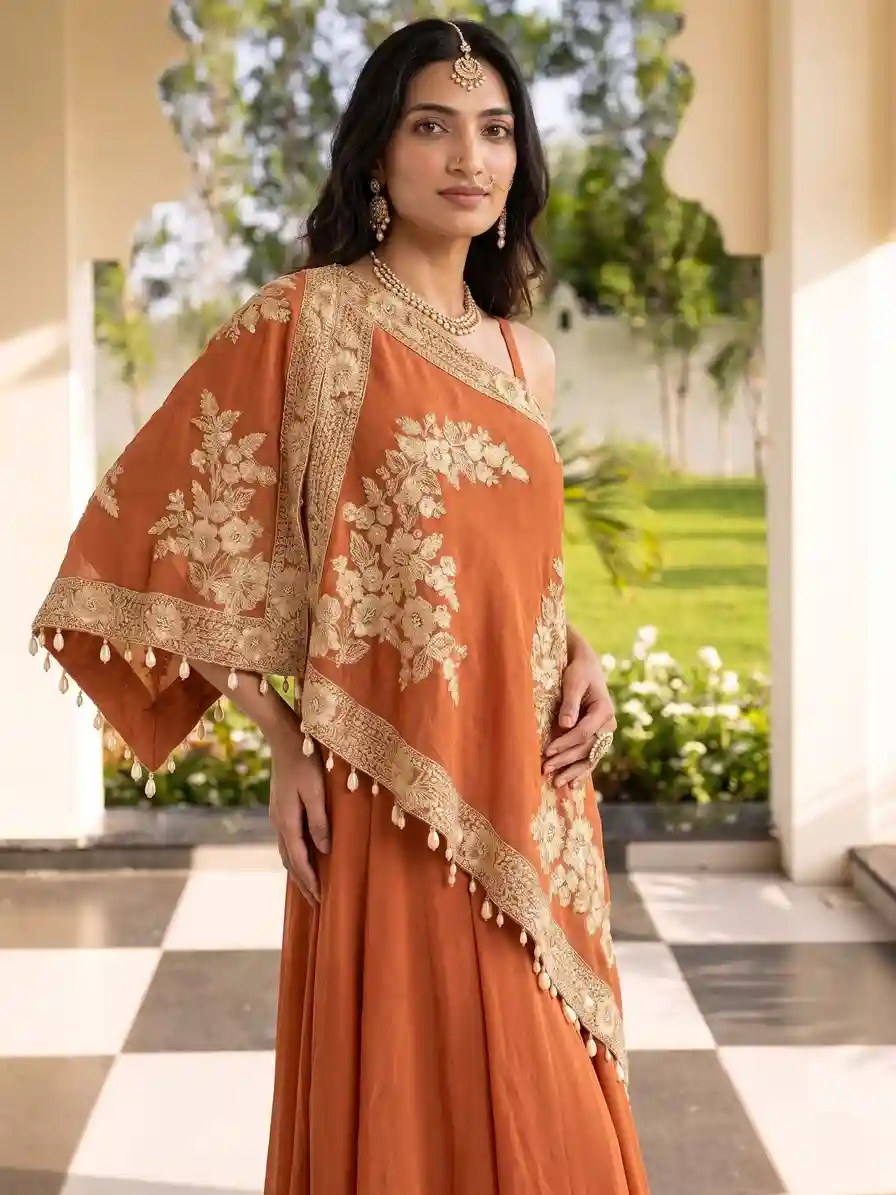
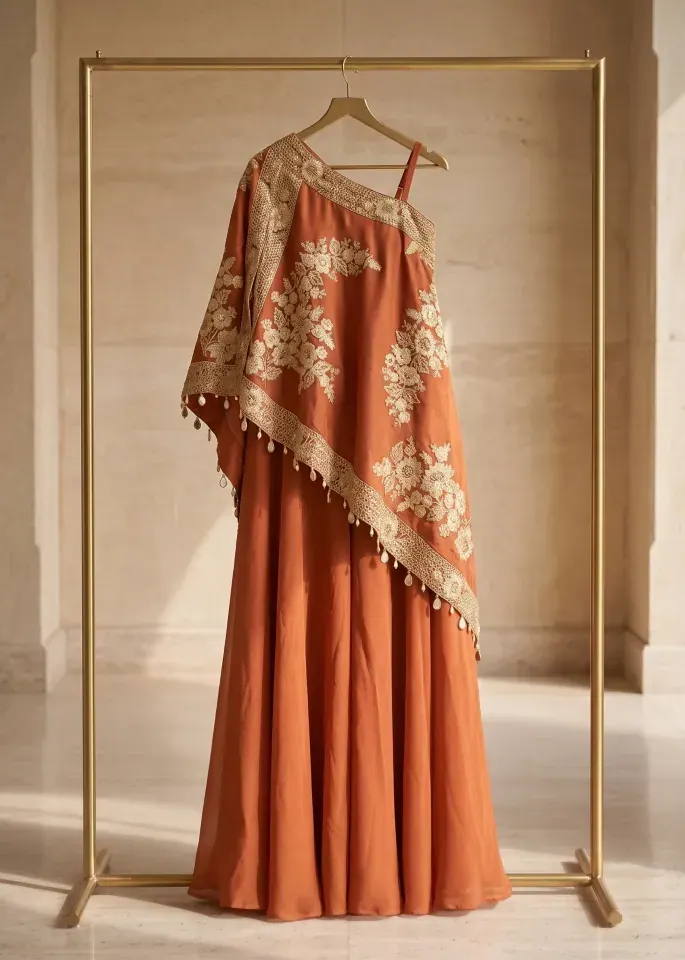
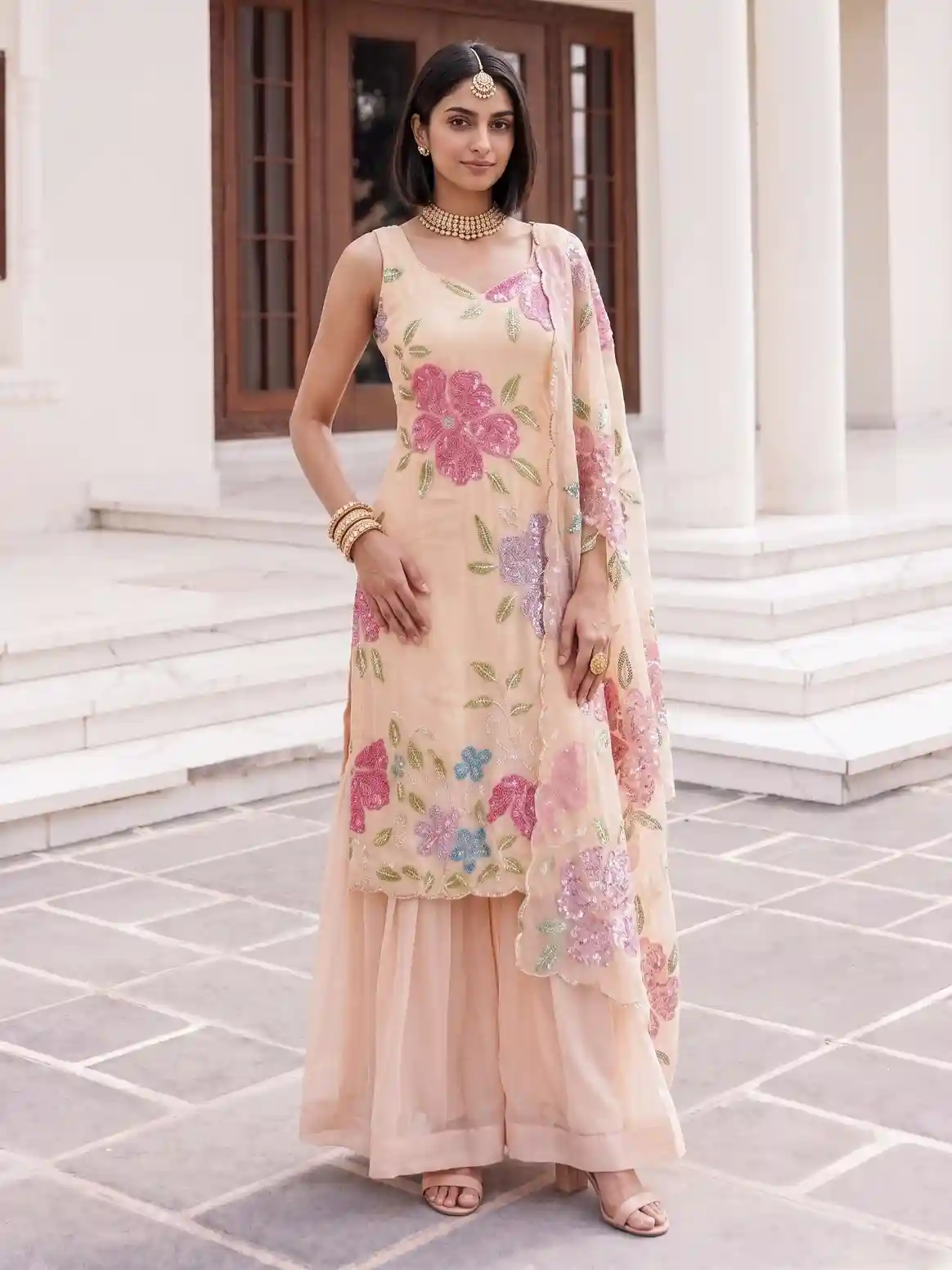
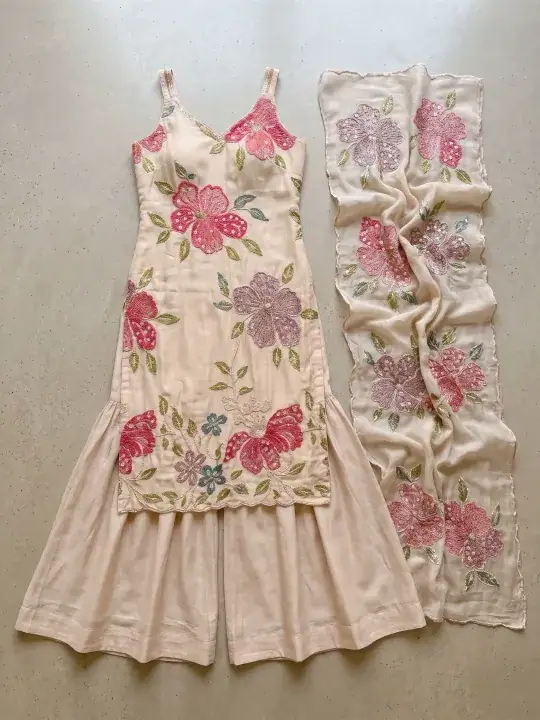
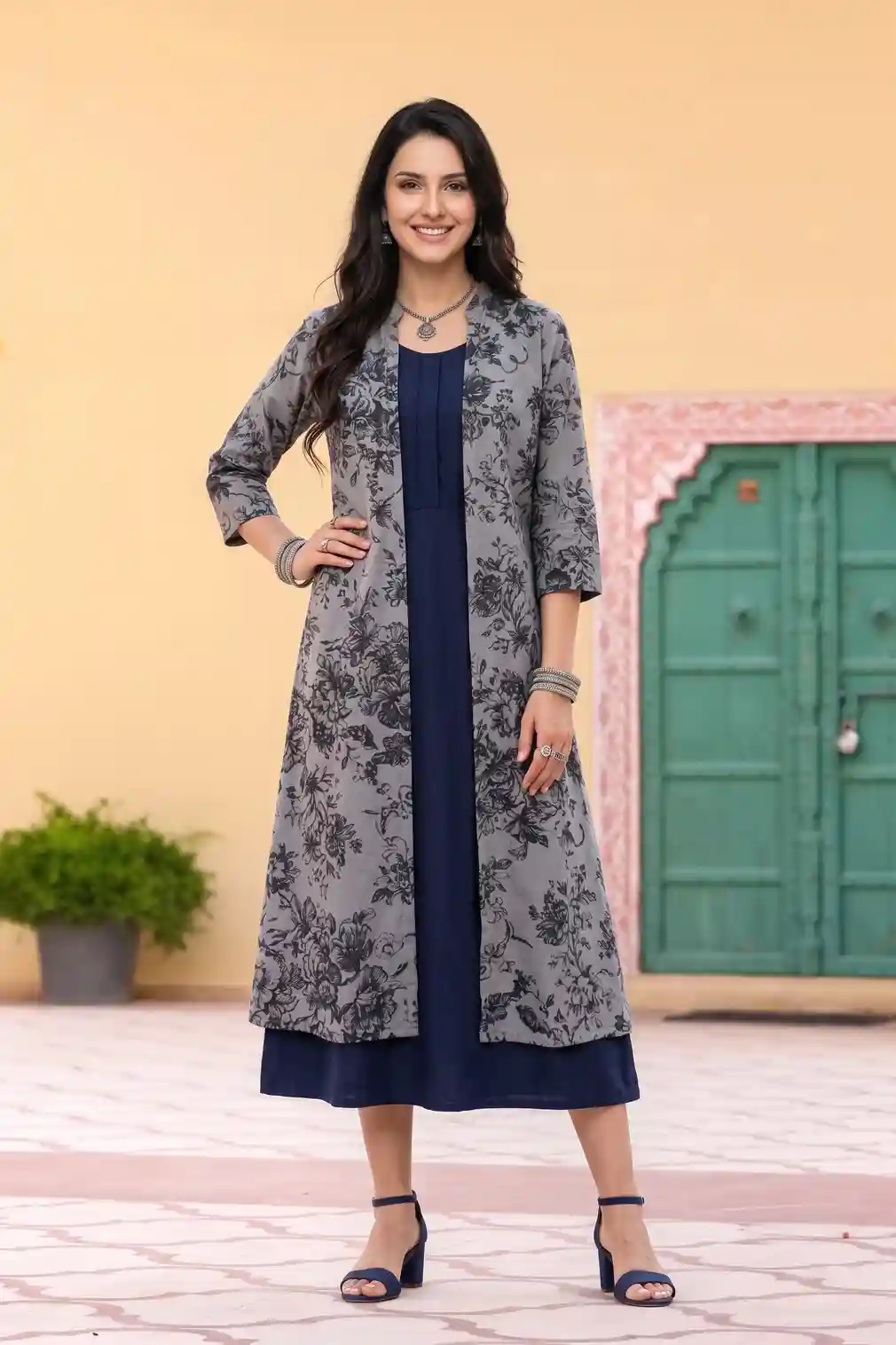
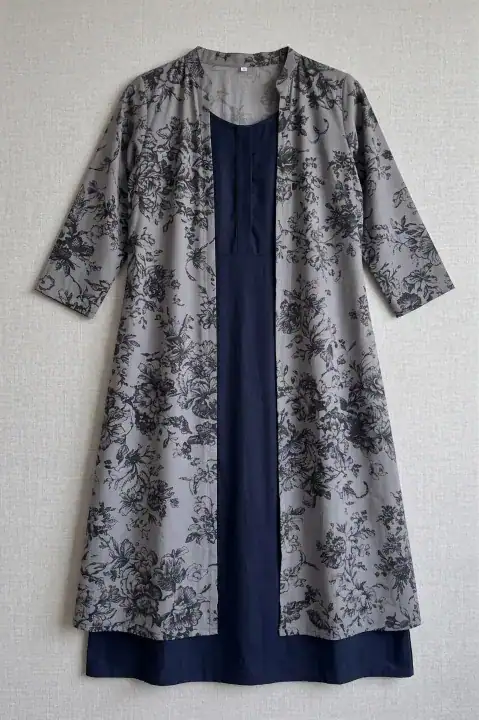
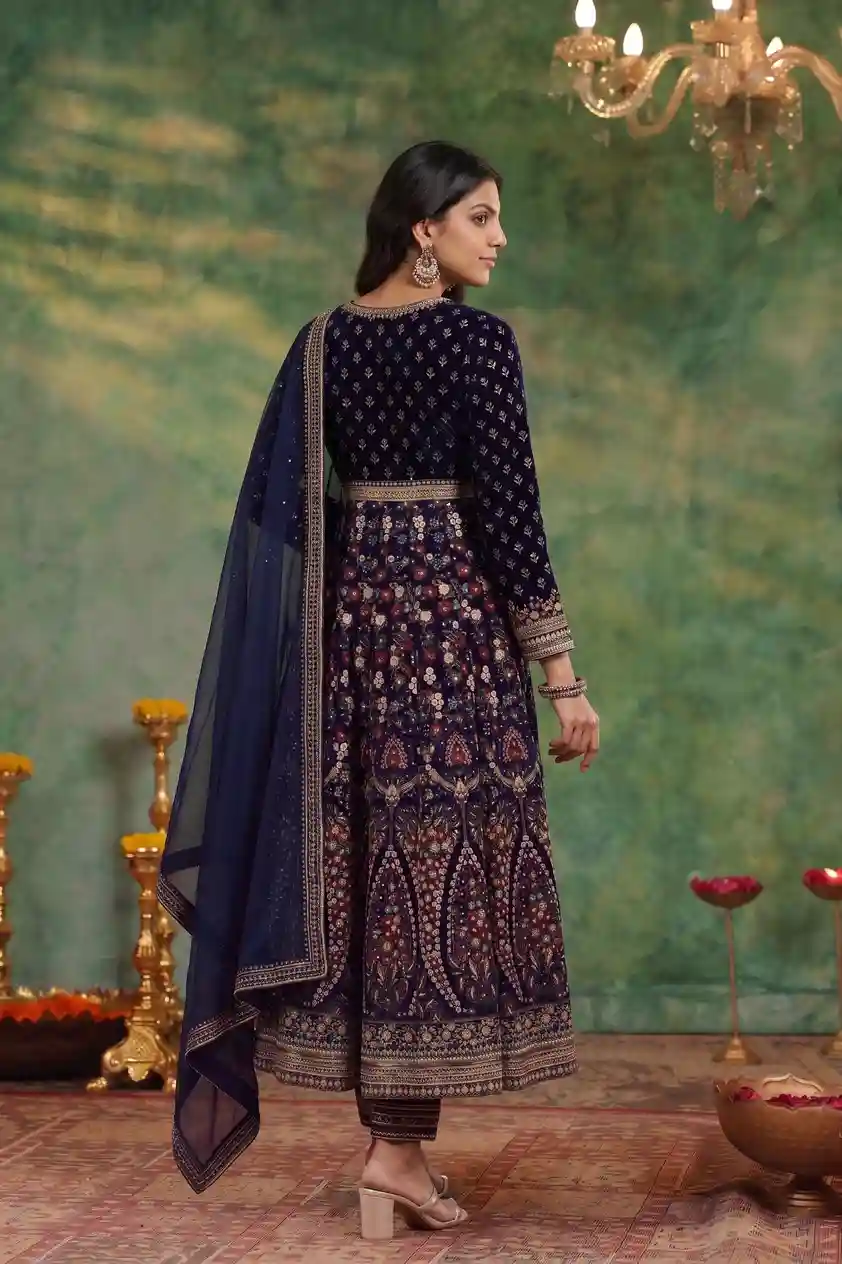
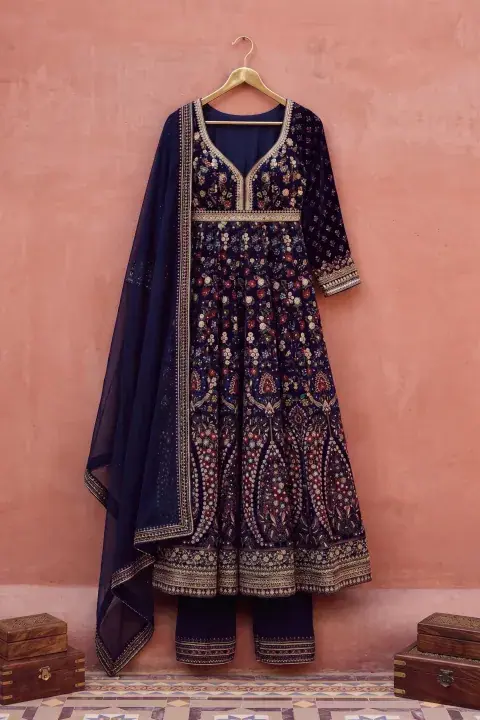
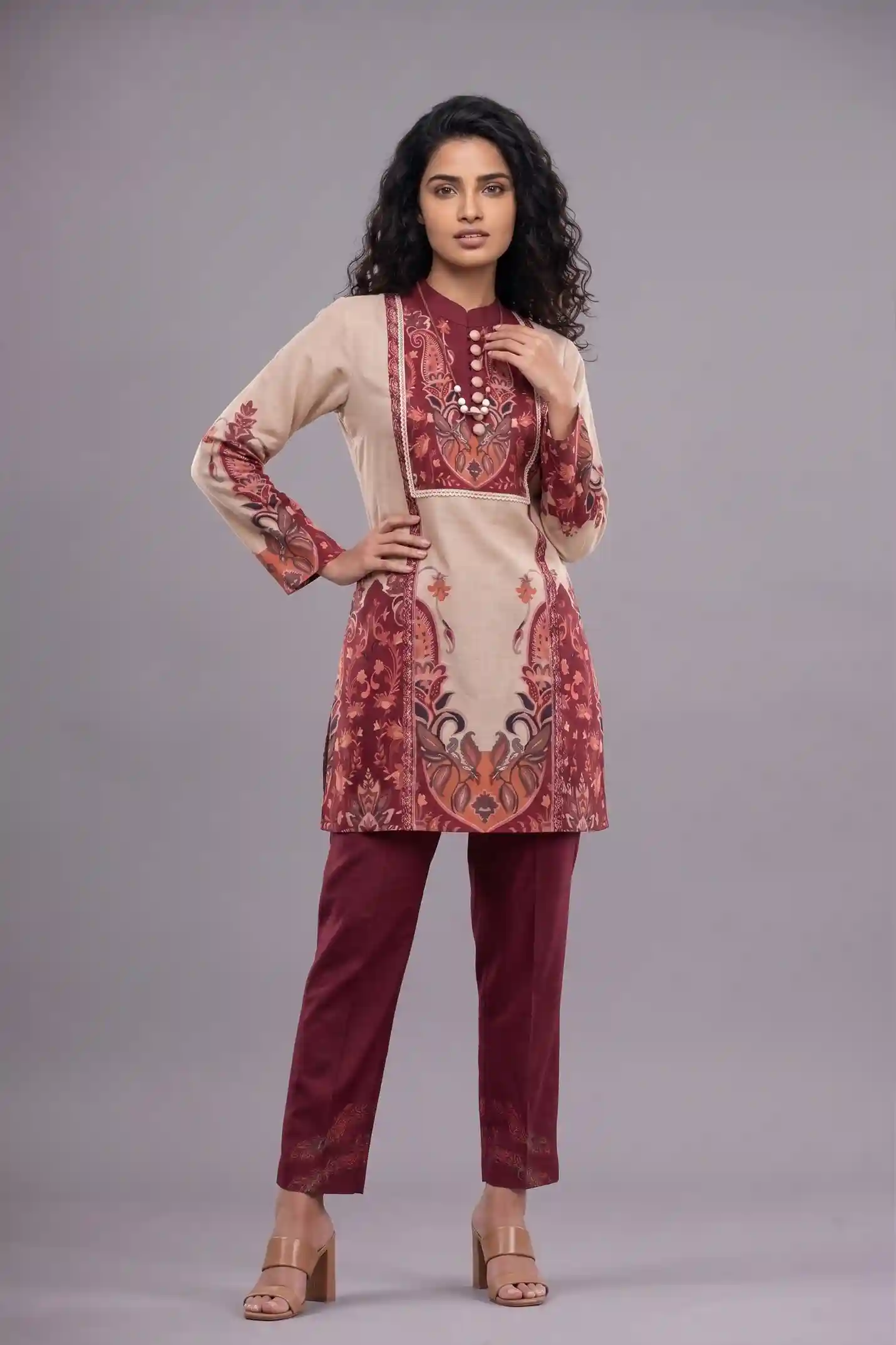
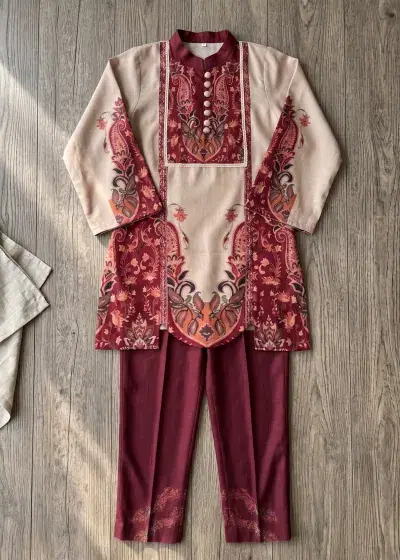
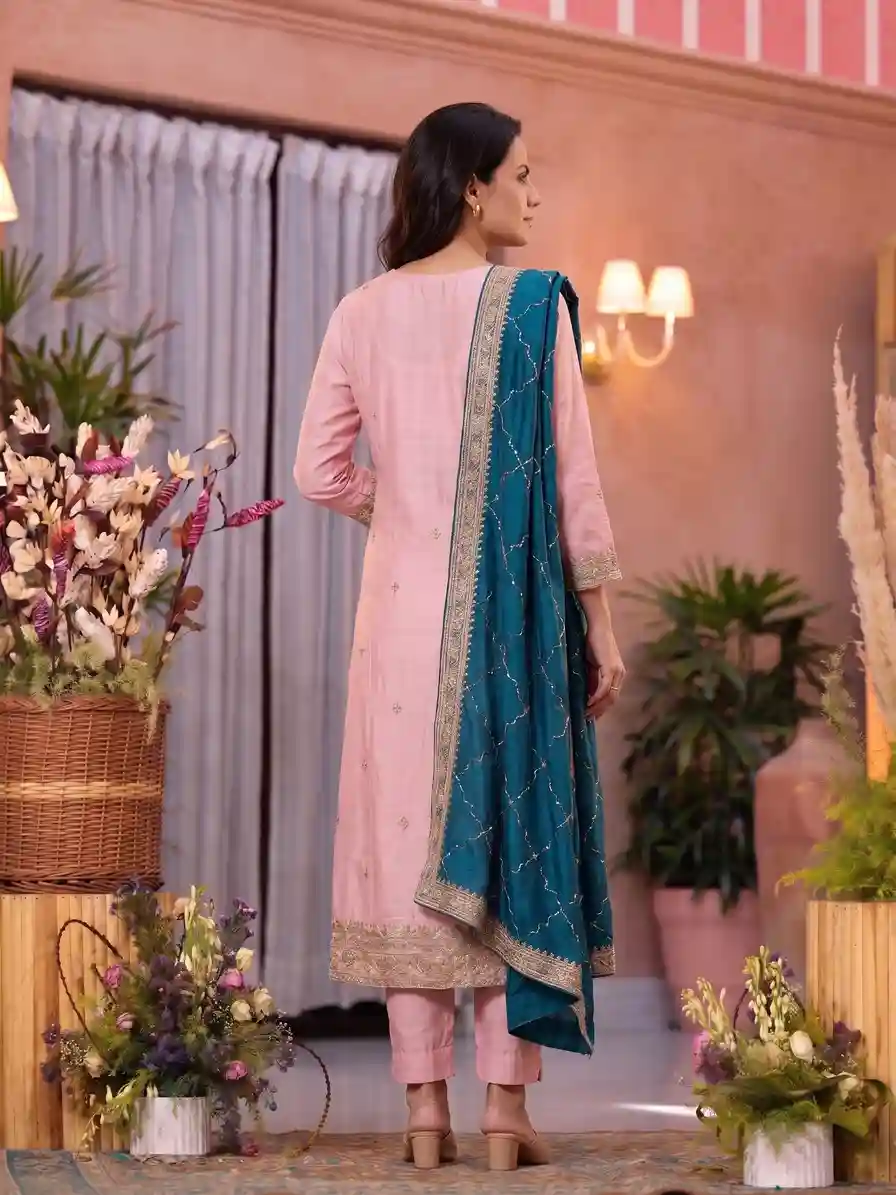
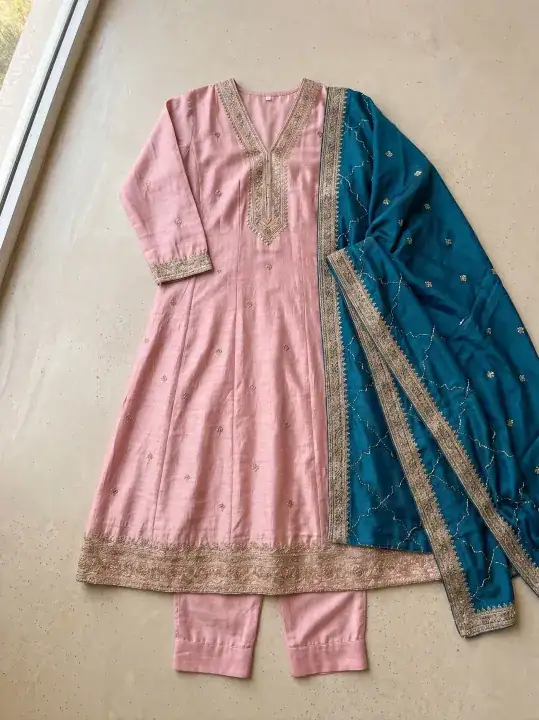
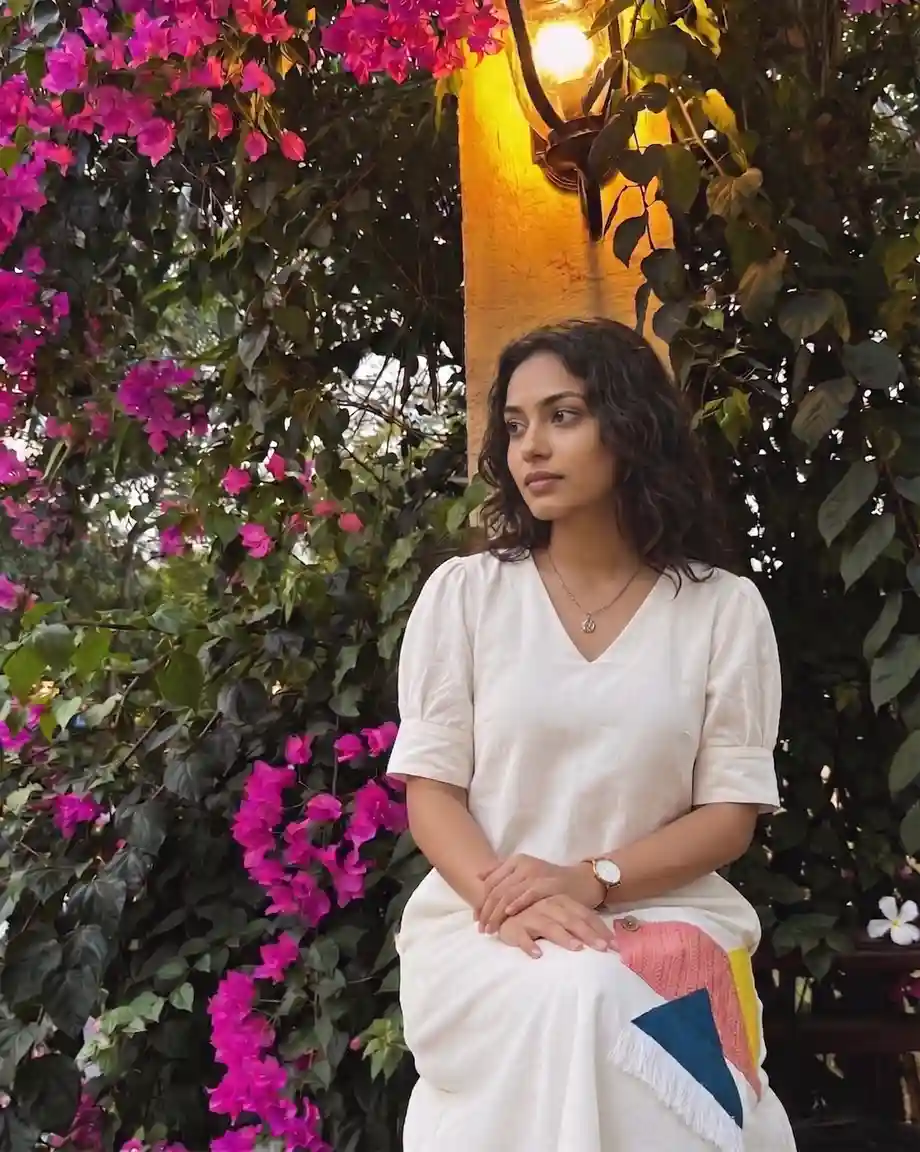
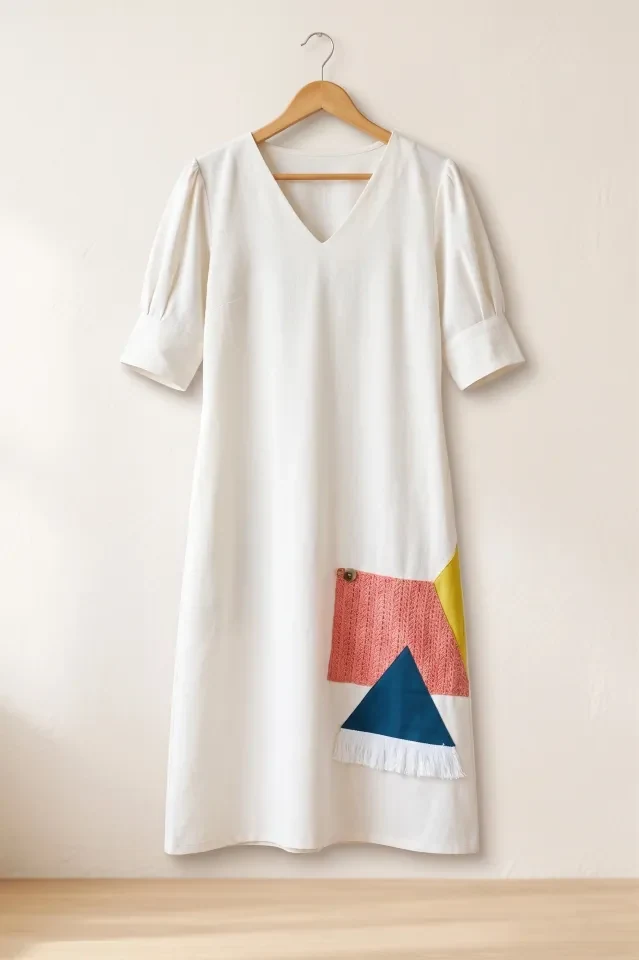
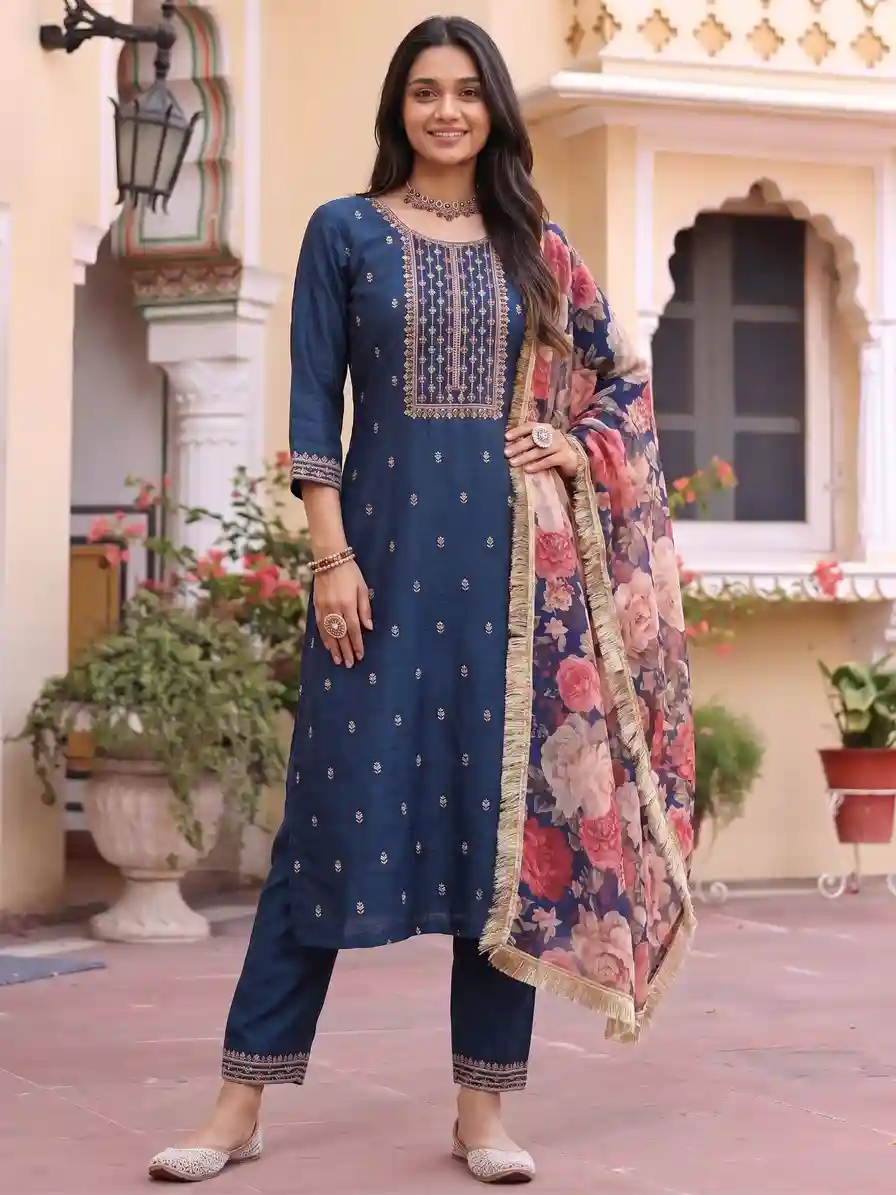
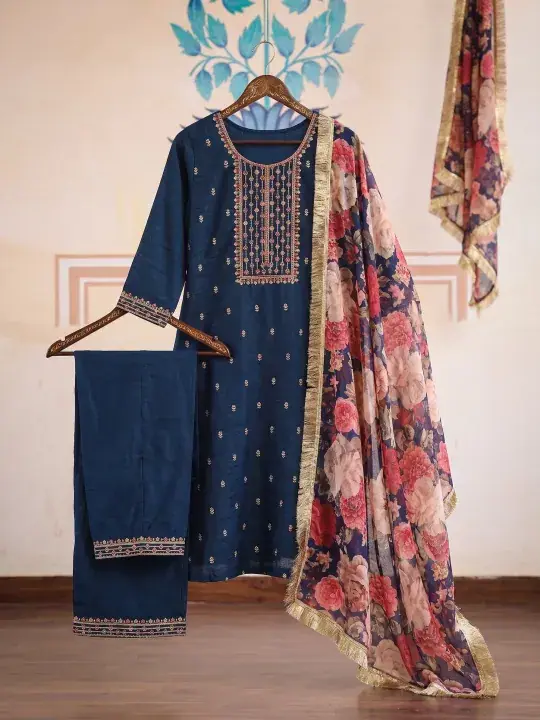
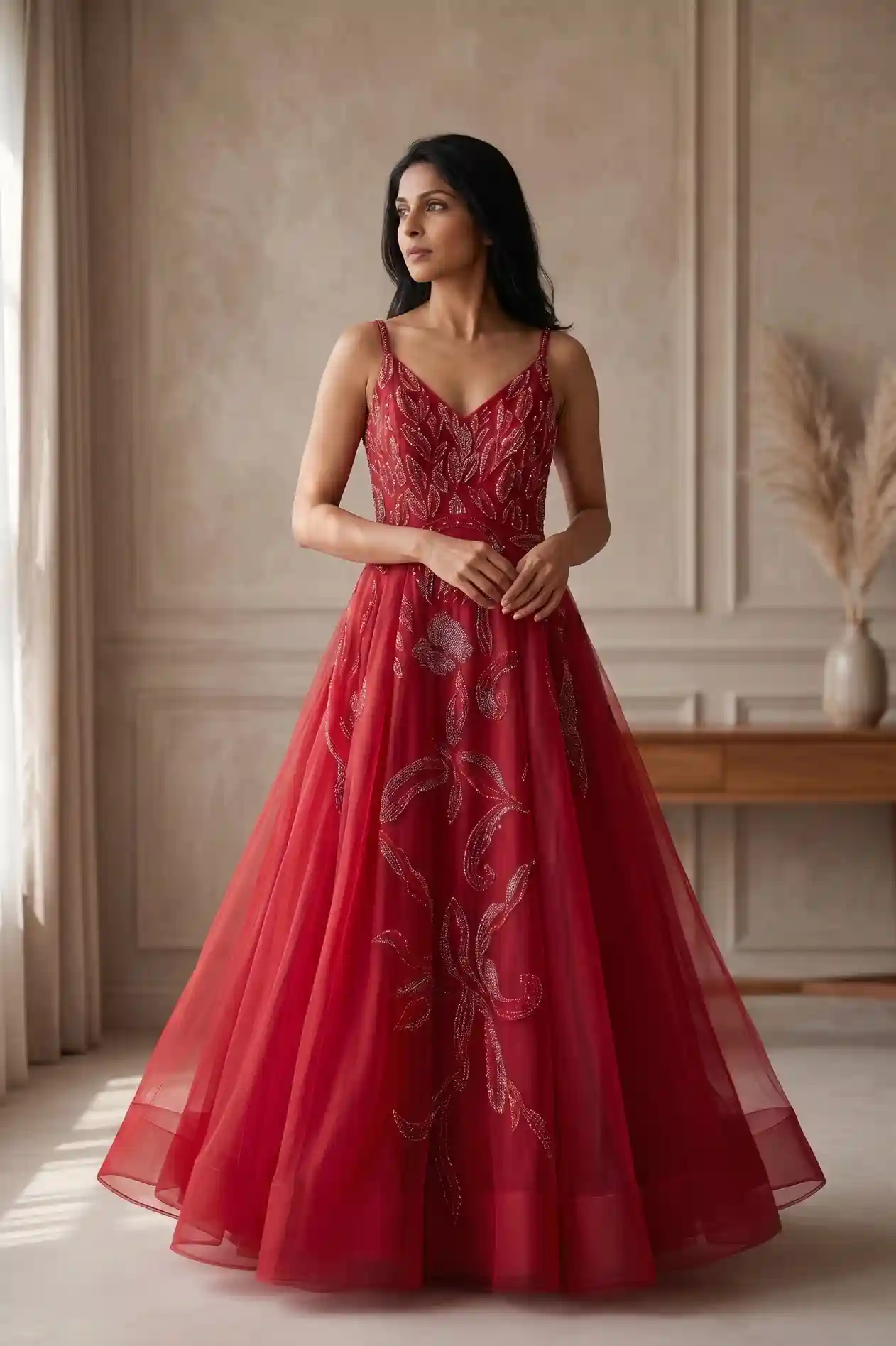
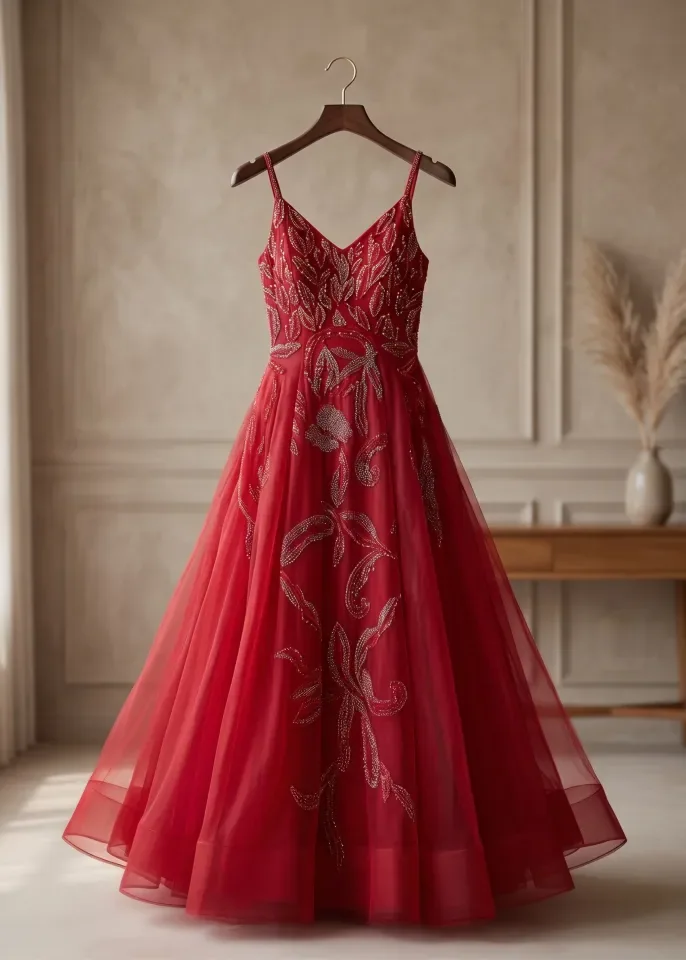
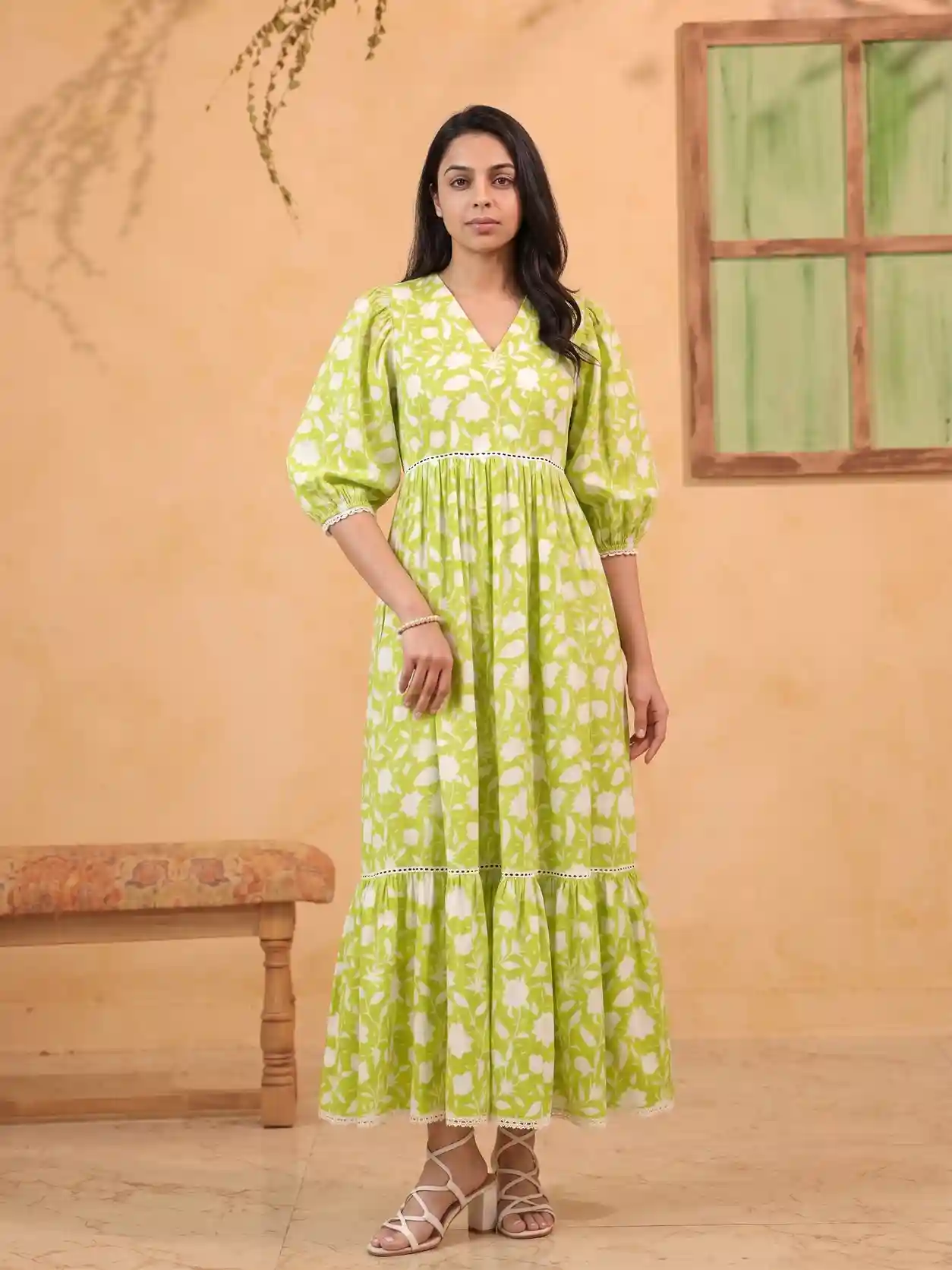
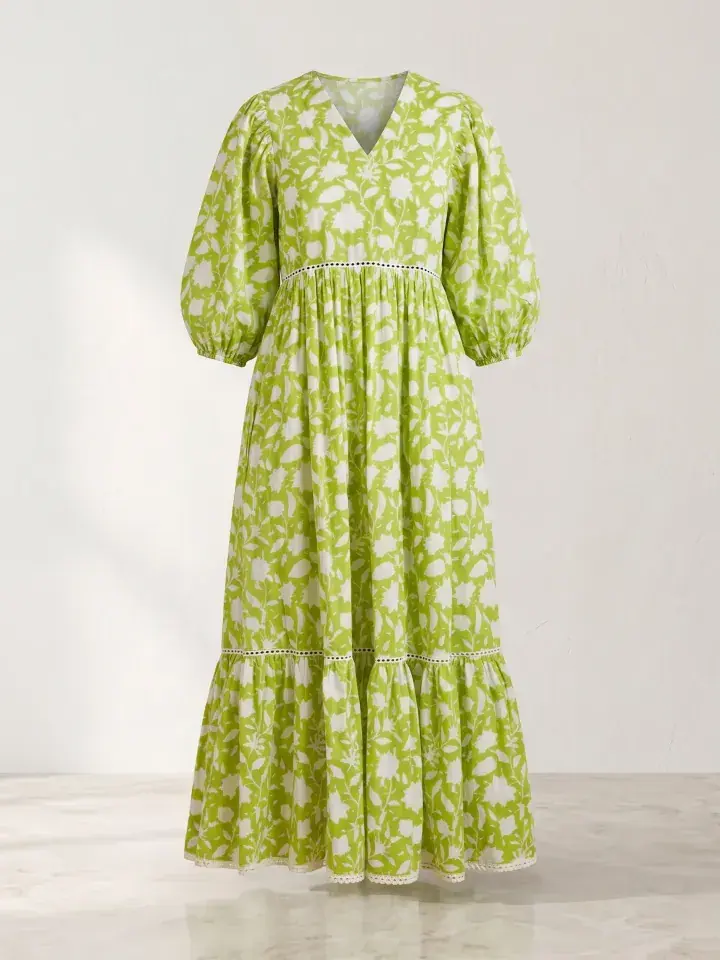
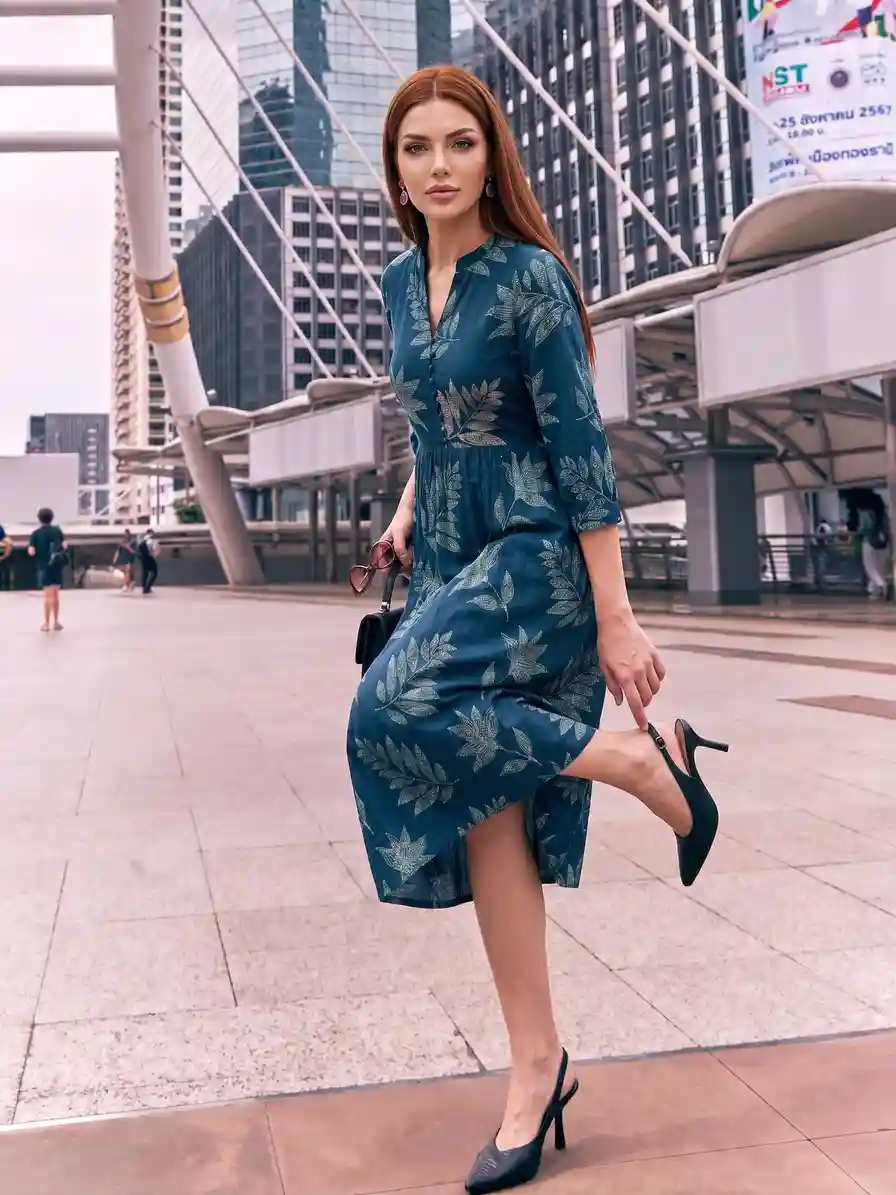
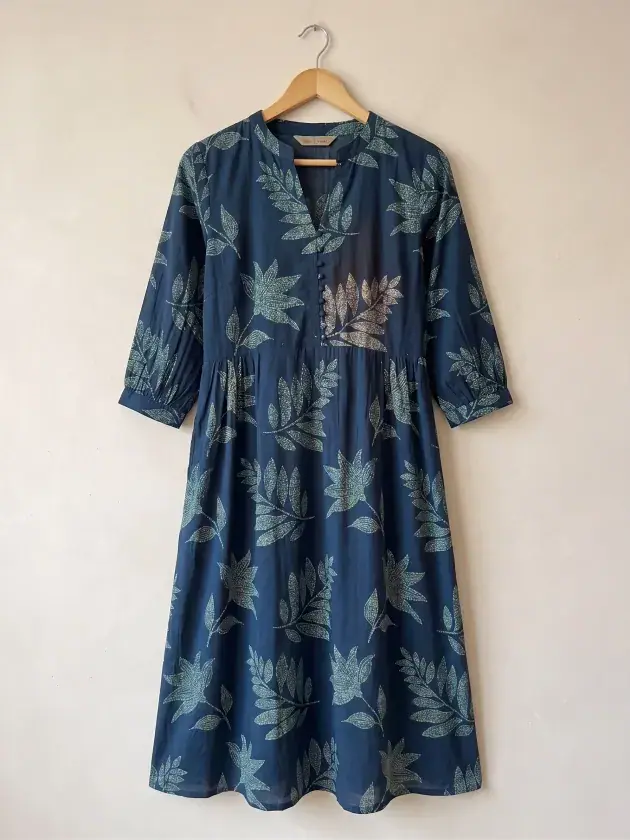
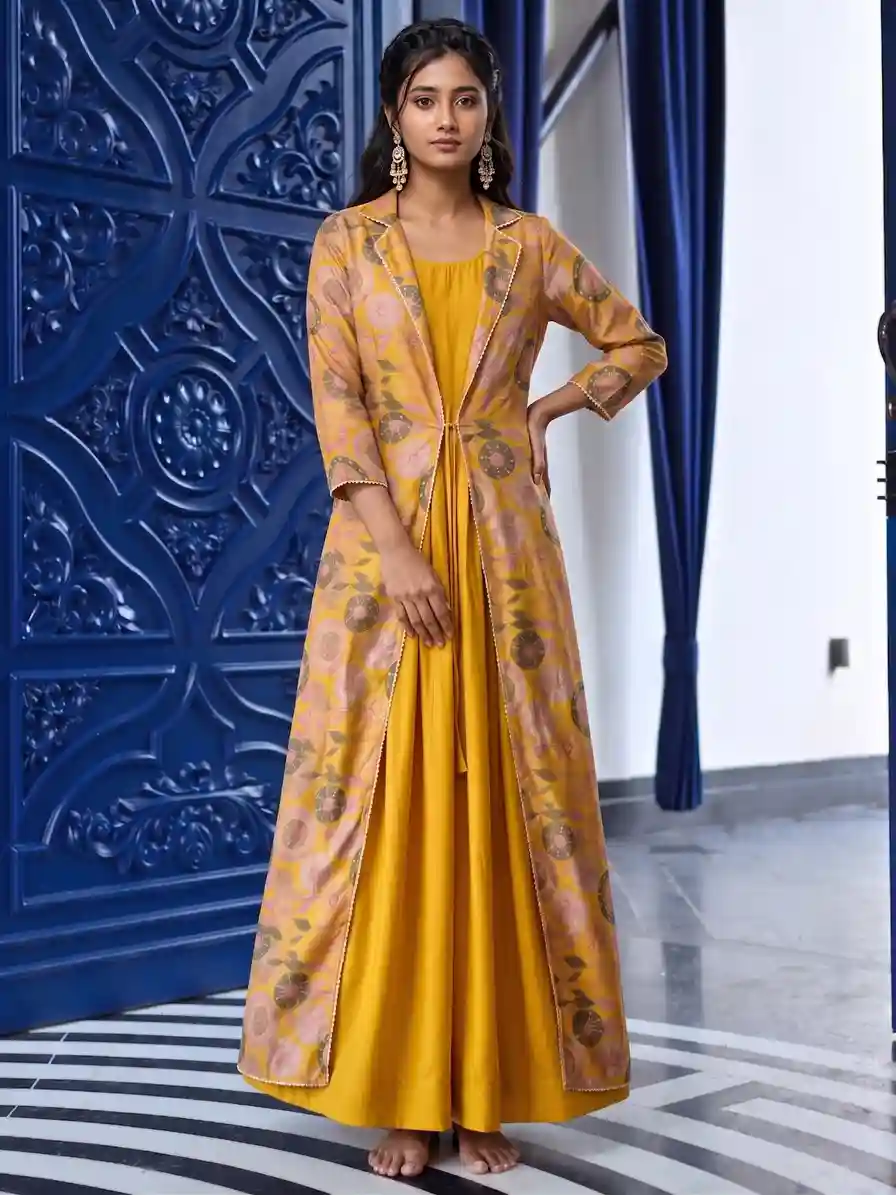
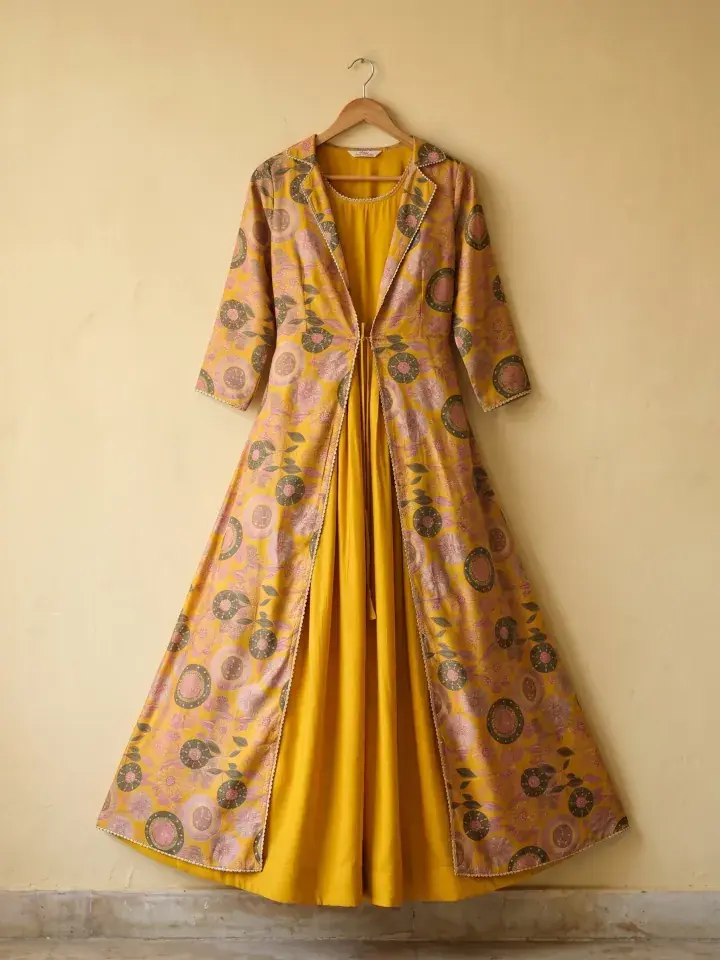
A good garment photo is flat, square-on and fills the frame. The guide lists six rules that always apply and has advice for Every garment type, with real reference shots. Photos are JPG, PNG or WebP, up to 20 MB.
Every shot is built from your one photo, so whatever is wrong in it is copied into the shots. These three are the most common.
Good photo
✕ At an angle
A photo taken at an angle bends the garment, and the output bends with it. Shoot square-on.
✕ Too small in the frame
A garment filling a fifth of the photo gives a fifth of the detail. Fill the frame.
✕ Shadows from a bulb
A bulb overhead casts fold shadows the model will inherit. Use soft daylight.
The three wrong examples are drawn from the good photo, to show the mistake.
Advice for your type of garment
A saree is photographed differently from a blazer. Pick your family to see how to lay it, what goes wrong, and what the studio must see.
How to lay it
Hang your saree so the fall is visible rather than folding it flat. Your saree is read by its drape, and a flat rectangle throws that information away.
What goes wrong most
Photographing the folded fabric as it came out of the packet. The generator can only place what it can see, so a folded saree comes back as a flat panel.
What the studio must see
The full length in one frame, including the border or edge finish
The pallu, hem or trailing edge clearly separated from the body of the cloth
Any zari, embroidery or block-print at a size where the motif is legible
A second angle
A close frame of the border pays for itself on your saree — it is the detail buyers zoom into.
The studio checks your photo for you
Right after you upload, the studio reads the photo. A flat photo gets a green card with the garment analysis. A photo that is hung, angled or has a hanger, a blouse piece or a table in it gets a warning that says what to upload instead.
A flat photo: good for the drape
! Not flat: the studio tells you what to upload instead